desprender Preterite Conjugation
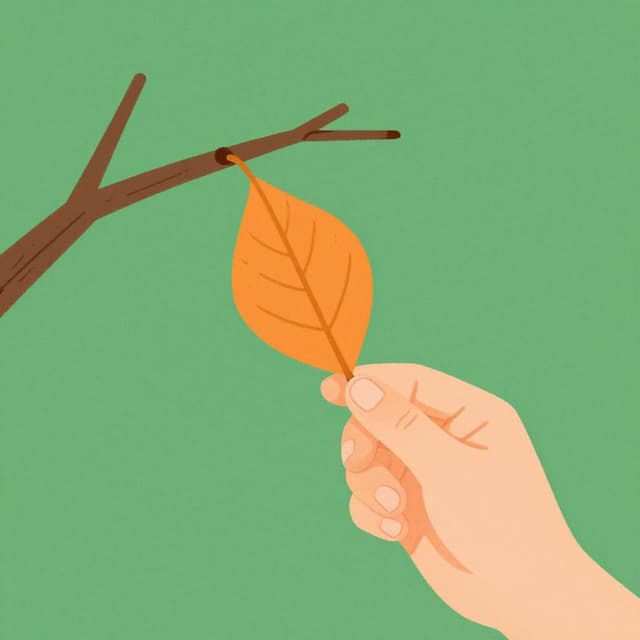
desprender — to detach
The preterite of desprender is regular: desprendí, desprendiste, desprendió, desprendimos, desprendisteis, desprendieron.
desprender Preterite Forms
When to Use the Preterite
Use the preterite to talk about a specific, completed action of detaching or releasing in the past. For example, 'Desprendí la etiqueta ayer' (I detached the label yesterday) refers to a single event that finished.
Notes on desprender in the Preterite
Desprender is regular in the preterite tense. All the forms follow the standard pattern for -er verbs: infinitive stem + -í, -iste, -ió, -imos, -isteis, -ieron.
Example Sentences
Desprendí la flor marchita del ramo.
I detached the wilted flower from the bouquet.
yo
¿Desprendiste el seguro de la puerta?
Did you detach the door's safety lock?
tú
El botón se desprendió durante la caminata.
The button detached during the hike.
él/ella/usted
Los ladrones desprendieron las rejas de la ventana.
The thieves detached the bars from the window.
ellos/ellas/ustedes
Common Mistakes
Mistake: Using the imperfect 'desprendía' instead of the preterite 'desprendió' for a single, completed action.
Correct: Use 'El botón se desprendió' for a specific past event.
Why: The preterite marks completed actions, while the imperfect describes ongoing or habitual past actions.
Mistake: Forgetting the accent on 'yo' form: 'desprendi'.
Correct: The correct form is 'desprendí'.
Why: The accent marks the stress on the final syllable for the 'yo' preterite.
Master Spanish verbs in context
Memorizing tables only gets you so far. Read 200+ illustrated and narrated Spanish stories to see verbs like 'desprender' used naturally — in the tenses you're learning.
Related Tenses
Present
yo: desprendo
The present tense 'desprendo' is for actions happening now, habits, or general truths.
Imperfect
yo: desprendía
The imperfect 'desprendía' describes ongoing or habitual past actions or background details.
Future
yo: desprenderé
The future tense 'desprenderé' indicates actions that will happen.
Conditional
yo: desprendería
The conditional 'desprendería' is for hypotheticals ('would'), polite requests, or future-in-the-past.
Present Subjunctive
yo: desprenda
The present subjunctive 'desprenda' is used for wishes, doubts, emotions, and after impersonal expressions.
Imperfect Subjunctive
yo: desprendiera
The imperfect subjunctive 'desprendiera'/'desprendiese' is used for past hypotheticals, wishes, or doubts.
Affirmative Imperative
yo: desprende
Use the tú form 'desprende' for direct commands; 'desprenda' for usted; 'desprendamos' for nosotros; 'desprendan' for ustedes; 'desprended' for vosotros.
Negative Imperative
yo: no desprendas
Negative commands use 'no' + present subjunctive: 'no desprendas' (tú), 'no desprenda' (usted), 'no desprendamos' (nosotros), 'no desprendan' (ustedes), 'no desprendáis' (vosotros).