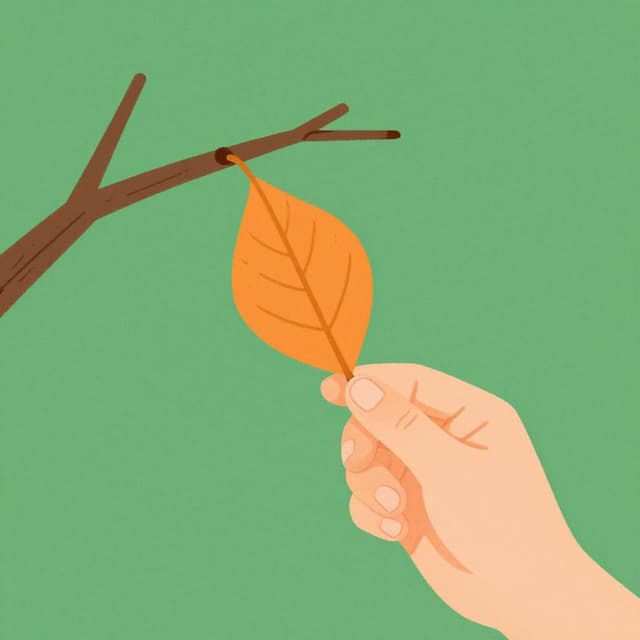
desprender Imperfect Conjugation
desprender — to detach
The imperfect 'desprendía' describes ongoing or habitual past actions or background details.
desprender Imperfect Forms
When to Use the Imperfect
Use the imperfect to describe past situations where something was continuously detaching or habitually happened. For example, 'Antes, la pintura se desprendeía por la humedad' (Before, the paint used to peel off due to humidity) describes a recurring past situation.
Notes on desprender in the Imperfect
Desprender is regular in the imperfect indicative. The forms are desprendía, desprendías, desprendía, desprendíamos, desprendíais, desprendían.
Example Sentences
Cuando era niño, me desprendía fácilmente de mis juguetes.
When I was a child, I used to easily part with my toys.
yo
Tú siempre te desprendías de tus abrigos viejos.
You always used to get rid of your old coats.
tú
El papel se desprendeía de la pared por la humedad.
The paper was peeling off the wall due to the humidity.
él/ella/usted
Ellos se desprendían de las ideas antiguas sin problema.
They used to detach themselves from old ideas without a problem.
ellos/ellas/ustedes
Common Mistakes
Mistake: Using the preterite 'desprendió' for a habitual past action.
Correct: Use the imperfect 'desprendía' for habitual actions: 'Se desprendía cada año' (It detached every year).
Why: The imperfect describes repeated or ongoing actions in the past, not single completed events.
Mistake: Confusing the 'yo' and 'él/ella/usted' forms: 'desprendía' for both.
Correct: 'Yo me desprendía', 'Él se desprendía'.
Why: Although they look the same, they refer to different subjects.
Master Spanish verbs in context
Memorizing tables only gets you so far. Read 200+ illustrated and narrated Spanish stories to see verbs like 'desprender' used naturally — in the tenses you're learning.
Related Tenses
Present
yo: desprendo
The present tense 'desprendo' is for actions happening now, habits, or general truths.
Preterite
yo: desprendí
The preterite of desprender is regular: desprendí, desprendiste, desprendió, desprendimos, desprendisteis, desprendieron.
Future
yo: desprenderé
The future tense 'desprenderé' indicates actions that will happen.
Conditional
yo: desprendería
The conditional 'desprendería' is for hypotheticals ('would'), polite requests, or future-in-the-past.
Present Subjunctive
yo: desprenda
The present subjunctive 'desprenda' is used for wishes, doubts, emotions, and after impersonal expressions.
Imperfect Subjunctive
yo: desprendiera
The imperfect subjunctive 'desprendiera'/'desprendiese' is used for past hypotheticals, wishes, or doubts.
Affirmative Imperative
yo: desprende
Use the tú form 'desprende' for direct commands; 'desprenda' for usted; 'desprendamos' for nosotros; 'desprendan' for ustedes; 'desprended' for vosotros.
Negative Imperative
yo: no desprendas
Negative commands use 'no' + present subjunctive: 'no desprendas' (tú), 'no desprenda' (usted), 'no desprendamos' (nosotros), 'no desprendan' (ustedes), 'no desprendáis' (vosotros).