desprender Imperfect Subjunctive Conjugation
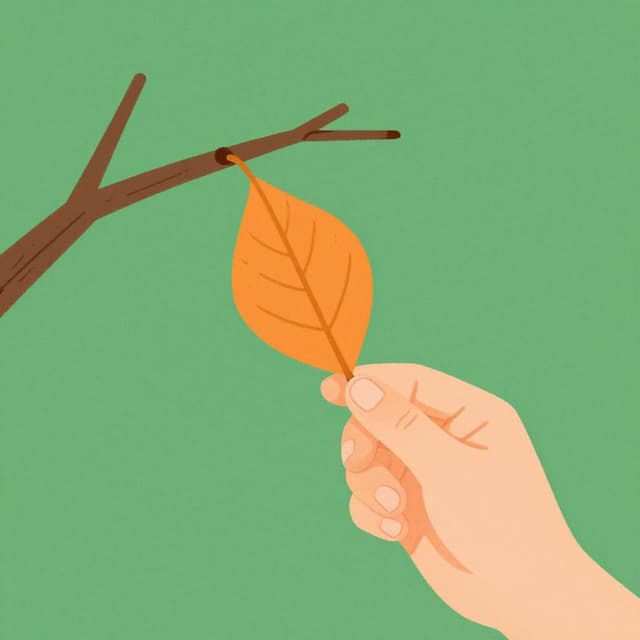
desprender — to detach
The imperfect subjunctive 'desprendiera'/'desprendiese' is used for past hypotheticals, wishes, or doubts.
desprender Imperfect Subjunctive Forms
When to Use the Imperfect Subjunctive
This tense is great for talking about past hypothetical situations or expressing wishes and doubts that were relevant in the past. For instance, 'Ojalá no se desprendiera la pieza' means 'I wish the piece wouldn't detach.' It's also common in conditional sentences about the past.
Notes on desprender in the Imperfect Subjunctive
Desprender is regular in the imperfect subjunctive. You take the preterite 'desprendieron', drop '-ron', and add the endings: '-ra' or '-se'. So, desprendiera, desprendieras, desprendiéramos, etc.
Example Sentences
Si la rueda se desprendiera, el coche se saldría de la carretera.
If the wheel were to detach, the car would go off the road.
él/ella/usted
Me pidió que no desprendiera el adjunto sin antes revisarlo.
He asked me not to detach the attachment before reviewing it.
yo
Dudaba que él se desprendiera de su viejo abrigo.
I doubted he would part with his old coat.
él/ella/usted
Ojalá no nos desprendiéramos de nuestros recuerdos.
I wish we wouldn't detach ourselves from our memories.
nosotros
Common Mistakes
Mistake: Using the imperfect indicative 'desprendía' instead of the imperfect subjunctive 'desprendiera' after 'si' in hypothetical clauses.
Correct: Use 'Si la pieza se desprendiera...' not 'Si la pieza se desprendía...'.
Why: 'Si' clauses describing unreal or hypothetical situations require the imperfect subjunctive.
Mistake: Forgetting the accent in the 'nosotros' form: 'desprendiamos'.
Correct: The correct form is 'desprendiéramos'.
Why: The accent is needed to maintain the correct pronunciation and distinguish it from other forms.
Master Spanish verbs in context
Memorizing tables only gets you so far. Read 200+ illustrated and narrated Spanish stories to see verbs like 'desprender' used naturally — in the tenses you're learning.
Related Tenses
Present
yo: desprendo
The present tense 'desprendo' is for actions happening now, habits, or general truths.
Preterite
yo: desprendí
The preterite of desprender is regular: desprendí, desprendiste, desprendió, desprendimos, desprendisteis, desprendieron.
Imperfect
yo: desprendía
The imperfect 'desprendía' describes ongoing or habitual past actions or background details.
Future
yo: desprenderé
The future tense 'desprenderé' indicates actions that will happen.
Conditional
yo: desprendería
The conditional 'desprendería' is for hypotheticals ('would'), polite requests, or future-in-the-past.
Present Subjunctive
yo: desprenda
The present subjunctive 'desprenda' is used for wishes, doubts, emotions, and after impersonal expressions.
Affirmative Imperative
yo: desprende
Use the tú form 'desprende' for direct commands; 'desprenda' for usted; 'desprendamos' for nosotros; 'desprendan' for ustedes; 'desprended' for vosotros.
Negative Imperative
yo: no desprendas
Negative commands use 'no' + present subjunctive: 'no desprendas' (tú), 'no desprenda' (usted), 'no desprendamos' (nosotros), 'no desprendan' (ustedes), 'no desprendáis' (vosotros).