dibujar Conditional Conjugation
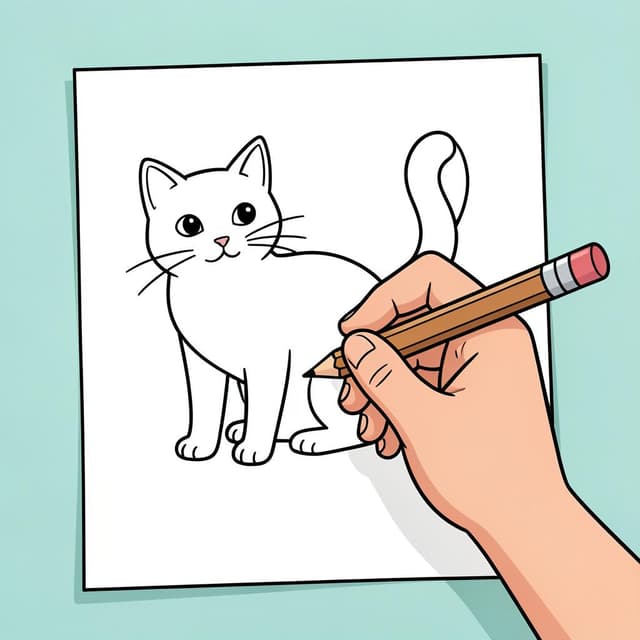
dibujar — to draw
The conditional of dibujar (dibujaría, dibujarías, dibujaría, dibujaríamos, dibujaríais, dibujarían) expresses 'would' actions, hypotheticals, or polite requests.
dibujar Conditional Forms
When to Use the Conditional
Use this tense for hypothetical situations ('I would draw if I had time'), polite requests ('Would you draw this for me?'), or to express future actions from a past perspective.
Notes on dibujar in the Conditional
Dibujar is regular in the conditional tense. The stem is the infinitive 'dibujar', and you add the standard conditional endings.
Example Sentences
Yo dibujaría la escena si tuviera los materiales.
I would draw the scene if I had the materials.
yo
¿Tú dibujarías un retrato de mí?
Would you draw a portrait of me?
tú
Él dibujaría un mapa para guiarnos.
He would draw a map to guide us.
él/ella/usted
Ellos dibujarían si el tiempo lo permitiera.
They would draw if the weather allowed.
ellos/ellas/ustedes
Nosotros dibujaríamos las ideas principales.
We would draw the main ideas.
nosotros
Common Mistakes
Mistake: Using the conditional for a completed past action.
Correct: Use the preterite: 'Dibujé' not 'Dibujaría'.
Why: The conditional is for hypothetical or polite situations, not for finished past events.
Mistake: Confusing conditional endings with imperfect subjunctive.
Correct: Conditional endings are -ía, -ías, -ía, -íamos, -íais, -ían. Imperfect subjunctive endings are different (-ara/-ase).
Why: Both express non-factual situations but apply in different grammatical structures.
Master Spanish verbs in context
Memorizing tables only gets you so far. Read 200+ illustrated and narrated Spanish stories to see verbs like 'dibujar' used naturally — in the tenses you're learning.
Related Tenses
Present
yo: dibujo
The present indicative of dibujar (dibujo, dibujas, dibuja, dibujamos, dibujáis, dibujan) describes current actions, habits, or general truths.
Preterite
yo: dibujé
The preterite of dibujar is regular: dibujé, dibujaste, dibujó, dibujamos, dibujasteis, dibujaron, used for completed past actions.
Imperfect
yo: dibujaba
The imperfect of dibujar (dibujaba, dibujabas, dibujaba, dibujábamos, dibujabais, dibujaban) describes ongoing or habitual past actions.
Future
yo: dibujaré
The future of dibujar (dibujaré, dibujarás, dibujará, dibujaremos, dibujaréis, dibujarán) indicates actions that will happen.
Present Subjunctive
yo: dibuje
The present subjunctive of dibujar (dibuje, dibujes, dibuje, dibujemos, dibujéis, dibujen) is used after expressions of doubt, desire, emotion, or uncertainty.
Imperfect Subjunctive
yo: dibujara
The imperfect subjunctive of dibujar (dibujara/dibujase) is used for past hypotheticals, wishes, or polite requests.
Affirmative Imperative
yo: dibuja
Use 'dibuja' for tú, 'dibuje' for usted, 'dibujemos' for nosotros, 'dibujen' for ustedes, and 'dibujad' for vosotros to give commands.
Negative Imperative
yo: no dibujes
Use 'no dibujes' for tú, 'no dibuje' for usted, 'no dibujemos' for nosotros, 'no dibujen' for ustedes, and 'no dibujéis' for vosotros to give negative commands.