dibujar Preterite Conjugation
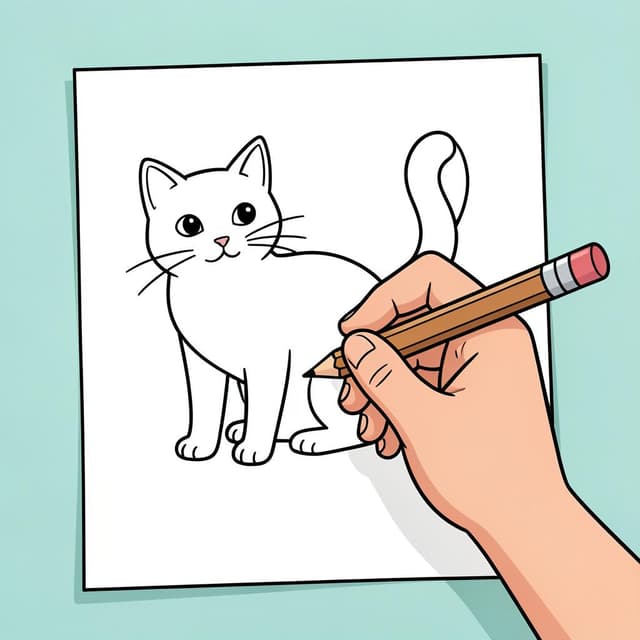
dibujar — to draw
The preterite of dibujar is regular: dibujé, dibujaste, dibujó, dibujamos, dibujasteis, dibujaron, used for completed past actions.
dibujar Preterite Forms
When to Use the Preterite
Use the preterite of 'dibujar' for actions of drawing that were completed at a specific point in the past. Think of finishing a drawing or completing a sketch yesterday.
Notes on dibujar in the Preterite
Dibujar is completely regular in the preterite tense. All the forms follow the standard pattern for -ar verbs.
Example Sentences
Ayer dibujé un retrato de mi perro.
Yesterday I drew a portrait of my dog.
yo
¿Dibujaste algo interesante en clase?
Did you draw anything interesting in class?
tú
Ella dibujó un mapa para nosotros.
She drew a map for us.
él/ella/usted
Los niños dibujaron un sol gigante.
The children drew a giant sun.
ellos/ellas/ustedes
Nosotros dibujamos las escenas principales de la obra.
We drew the main scenes of the play.
nosotros
Common Mistakes
Mistake: Using 'dibujamos' (preterite) for an ongoing past action.
Correct: For ongoing past actions, use the imperfect: 'Dibujábamos cuando sonó el teléfono'.
Why: The preterite is for completed actions, while the imperfect describes actions in progress or habitual ones in the past.
Mistake: Forgetting the accent on 'dibujó' (él/ella/usted).
Correct: The third-person singular form is 'dibujó' with an accent on the 'ó'.
Why: The accent distinguishes this form from the present indicative ('dibuja') and marks the stressed syllable.
Master Spanish verbs in context
Memorizing tables only gets you so far. Read 200+ illustrated and narrated Spanish stories to see verbs like 'dibujar' used naturally — in the tenses you're learning.
Related Tenses
Present
yo: dibujo
The present indicative of dibujar (dibujo, dibujas, dibuja, dibujamos, dibujáis, dibujan) describes current actions, habits, or general truths.
Imperfect
yo: dibujaba
The imperfect of dibujar (dibujaba, dibujabas, dibujaba, dibujábamos, dibujabais, dibujaban) describes ongoing or habitual past actions.
Future
yo: dibujaré
The future of dibujar (dibujaré, dibujarás, dibujará, dibujaremos, dibujaréis, dibujarán) indicates actions that will happen.
Conditional
yo: dibujaría
The conditional of dibujar (dibujaría, dibujarías, dibujaría, dibujaríamos, dibujaríais, dibujarían) expresses 'would' actions, hypotheticals, or polite requests.
Present Subjunctive
yo: dibuje
The present subjunctive of dibujar (dibuje, dibujes, dibuje, dibujemos, dibujéis, dibujen) is used after expressions of doubt, desire, emotion, or uncertainty.
Imperfect Subjunctive
yo: dibujara
The imperfect subjunctive of dibujar (dibujara/dibujase) is used for past hypotheticals, wishes, or polite requests.
Affirmative Imperative
yo: dibuja
Use 'dibuja' for tú, 'dibuje' for usted, 'dibujemos' for nosotros, 'dibujen' for ustedes, and 'dibujad' for vosotros to give commands.
Negative Imperative
yo: no dibujes
Use 'no dibujes' for tú, 'no dibuje' for usted, 'no dibujemos' for nosotros, 'no dibujen' for ustedes, and 'no dibujéis' for vosotros to give negative commands.