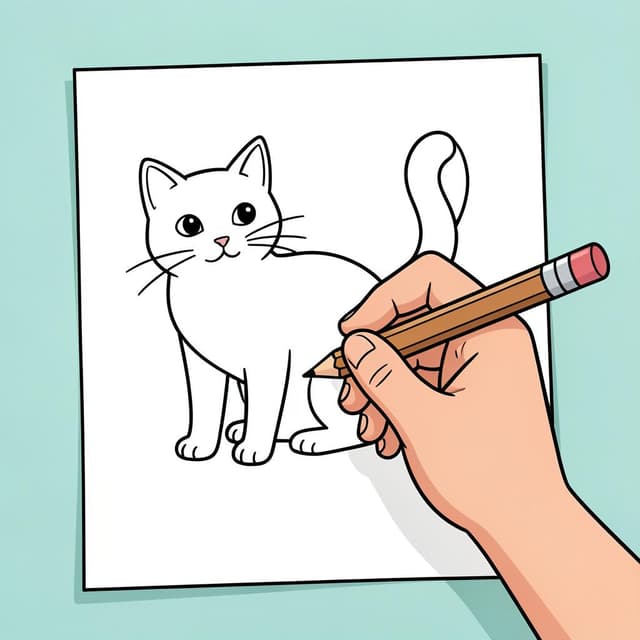
dibujar Affirmative Imperative Conjugation
dibujar — to draw
Use 'dibuja' for tú, 'dibuje' for usted, 'dibujemos' for nosotros, 'dibujen' for ustedes, and 'dibujad' for vosotros to give commands.
dibujar Affirmative Imperative Forms
When to Use the Affirmative Imperative
The imperative is for direct commands. You'll use it to tell someone what to do, like 'Draw this!' or 'Let's draw!'. It's very direct and action-oriented.
Notes on dibujar in the Affirmative Imperative
Dibujar is regular in the affirmative imperative. The tú form is derived from the present subjunctive ('dibuja'), while usted, nosotros, and ustedes follow the present subjunctive pattern. The vosotros form is unique, ending in '-ad'.
Example Sentences
¡Dibuja un gato!
Draw a cat!
tú
Señor, dibuje la línea aquí.
Sir, draw the line here.
usted
¡Dibujemos un paisaje juntos!
Let's draw a landscape together!
nosotros
Niños, dibujen en sus cuadernos.
Children, draw in your notebooks.
¡Dibujad con cuidado!
Draw carefully!
vosotros
Common Mistakes
Mistake: Using the present indicative instead of imperative for commands.
Correct: Use 'Dibuja' (imperative) not 'Dibujas' (present indicative) when telling 'tú' to draw.
Why: The imperative mood is specifically for commands, while the present indicative describes current actions.
Mistake: Confusing tú and usted forms.
Correct: Use 'dibuja' for informal 'tú' and 'dibuje' for formal 'usted'.
Why: Spanish has different forms for informal and formal address, and this applies to commands too.
Master Spanish verbs in context
Memorizing tables only gets you so far. Read 200+ illustrated and narrated Spanish stories to see verbs like 'dibujar' used naturally — in the tenses you're learning.
Related Tenses
Present
yo: dibujo
The present indicative of dibujar (dibujo, dibujas, dibuja, dibujamos, dibujáis, dibujan) describes current actions, habits, or general truths.
Preterite
yo: dibujé
The preterite of dibujar is regular: dibujé, dibujaste, dibujó, dibujamos, dibujasteis, dibujaron, used for completed past actions.
Imperfect
yo: dibujaba
The imperfect of dibujar (dibujaba, dibujabas, dibujaba, dibujábamos, dibujabais, dibujaban) describes ongoing or habitual past actions.
Future
yo: dibujaré
The future of dibujar (dibujaré, dibujarás, dibujará, dibujaremos, dibujaréis, dibujarán) indicates actions that will happen.
Conditional
yo: dibujaría
The conditional of dibujar (dibujaría, dibujarías, dibujaría, dibujaríamos, dibujaríais, dibujarían) expresses 'would' actions, hypotheticals, or polite requests.
Present Subjunctive
yo: dibuje
The present subjunctive of dibujar (dibuje, dibujes, dibuje, dibujemos, dibujéis, dibujen) is used after expressions of doubt, desire, emotion, or uncertainty.
Imperfect Subjunctive
yo: dibujara
The imperfect subjunctive of dibujar (dibujara/dibujase) is used for past hypotheticals, wishes, or polite requests.
Negative Imperative
yo: no dibujes
Use 'no dibujes' for tú, 'no dibuje' for usted, 'no dibujemos' for nosotros, 'no dibujen' for ustedes, and 'no dibujéis' for vosotros to give negative commands.