dibujar Imperfect Conjugation
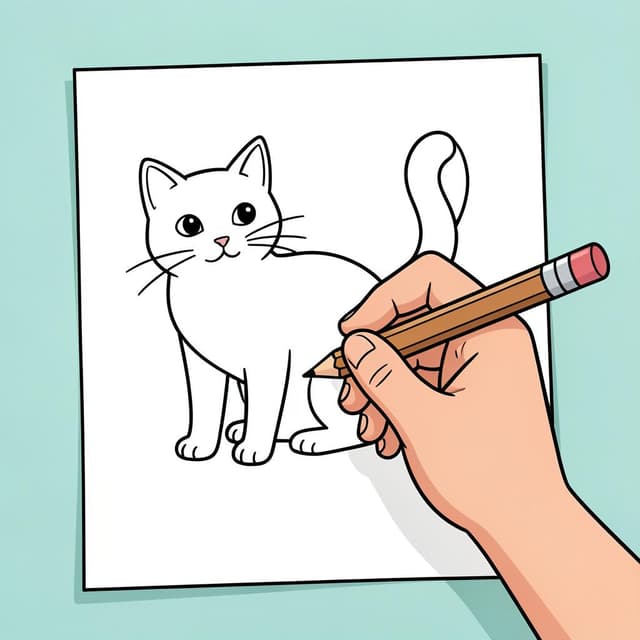
dibujar — to draw
The imperfect of dibujar (dibujaba, dibujabas, dibujaba, dibujábamos, dibujabais, dibujaban) describes ongoing or habitual past actions.
dibujar Imperfect Forms
When to Use the Imperfect
Use the imperfect for describing what someone *used to do* or *was doing* in the past. It sets the scene or describes background actions without a defined end.
Notes on dibujar in the Imperfect
Dibujar is regular in the imperfect tense. All forms follow the standard -ar verb pattern for the imperfect.
Example Sentences
Cuando era niño, dibujaba todos los días.
When I was a child, I used to draw every day.
yo
Tú dibujabas mientras esperábamos.
You were drawing while we waited.
tú
El artista dibujaba con gran detalle.
The artist was drawing with great detail.
él/ella/usted
Ellos dibujaban en sus cuadernos durante la clase.
They were drawing in their notebooks during class.
ellos/ellas/ustedes
Nosotros dibujábamos el plano de la casa.
We were drawing the house plan.
nosotros
Common Mistakes
Mistake: Using the imperfect for a single, completed past action.
Correct: Use the preterite for completed actions: 'Dibujé el cuadro' not 'Dibujaba el cuadro'.
Why: The imperfect describes ongoing or habitual actions, not specific finished events.
Mistake: Confusing the imperfect nosotros form with the preterite.
Correct: Imperfect: 'dibujábamos'. Preterite: 'dibujamos'.
Why: These are distinct tenses with different meanings; the '-ba-' ending signals imperfect.
Master Spanish verbs in context
Memorizing tables only gets you so far. Read 200+ illustrated and narrated Spanish stories to see verbs like 'dibujar' used naturally — in the tenses you're learning.
Related Tenses
Present
yo: dibujo
The present indicative of dibujar (dibujo, dibujas, dibuja, dibujamos, dibujáis, dibujan) describes current actions, habits, or general truths.
Preterite
yo: dibujé
The preterite of dibujar is regular: dibujé, dibujaste, dibujó, dibujamos, dibujasteis, dibujaron, used for completed past actions.
Future
yo: dibujaré
The future of dibujar (dibujaré, dibujarás, dibujará, dibujaremos, dibujaréis, dibujarán) indicates actions that will happen.
Conditional
yo: dibujaría
The conditional of dibujar (dibujaría, dibujarías, dibujaría, dibujaríamos, dibujaríais, dibujarían) expresses 'would' actions, hypotheticals, or polite requests.
Present Subjunctive
yo: dibuje
The present subjunctive of dibujar (dibuje, dibujes, dibuje, dibujemos, dibujéis, dibujen) is used after expressions of doubt, desire, emotion, or uncertainty.
Imperfect Subjunctive
yo: dibujara
The imperfect subjunctive of dibujar (dibujara/dibujase) is used for past hypotheticals, wishes, or polite requests.
Affirmative Imperative
yo: dibuja
Use 'dibuja' for tú, 'dibuje' for usted, 'dibujemos' for nosotros, 'dibujen' for ustedes, and 'dibujad' for vosotros to give commands.
Negative Imperative
yo: no dibujes
Use 'no dibujes' for tú, 'no dibuje' for usted, 'no dibujemos' for nosotros, 'no dibujen' for ustedes, and 'no dibujéis' for vosotros to give negative commands.