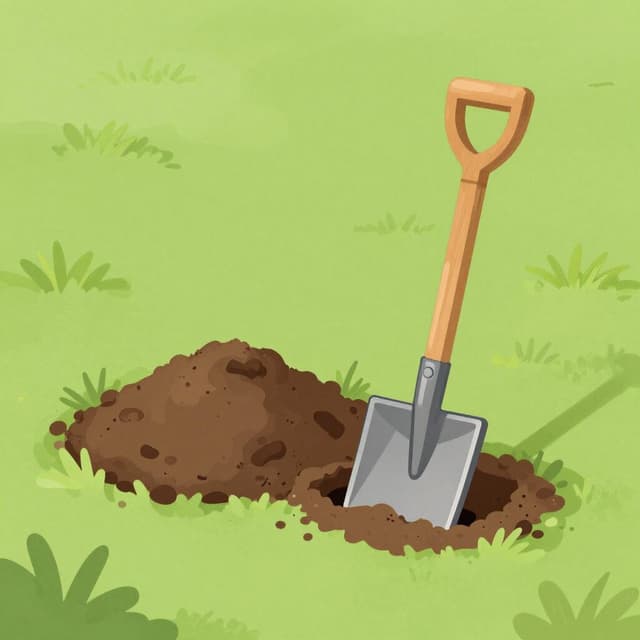
excavar Affirmative Imperative Conjugation
excavar — to dig
Commands like 'excava!' or 'excavemos!' use the imperative, with 'tú' being regular: excava.
excavar Affirmative Imperative Forms
When to Use the Affirmative Imperative
Use the imperative to give direct commands. For 'tú', it's the same as the present indicative. For other persons, it uses forms from the present subjunctive.
Notes on excavar in the Affirmative Imperative
The 'tú' form 'excava' is regular. The other affirmative imperative forms (nosotros, ustedes, vosotros, usted) are derived from the present subjunctive.
Example Sentences
¡Excava aquí, por favor!
Dig here, please!
tú
¡Excavemos un hoyo para la semilla!
Let's dig a hole for the seed!
nosotros
¡Excaven con cuidado!
Dig carefully!
¡Excavad bien profundo!
Dig really deep!
vosotros
Common Mistakes
Mistake: Using 'no excaves' for a negative 'tú' command.
Correct: The negative 'tú' command is 'no excaves', using the present subjunctive.
Why: Negative commands always use the present subjunctive, not the imperative.
Mistake: Confusing 'excava' (tú imperative) with 'excava' (él/ella/usted present indicative).
Correct: While the form is the same, context makes it clear. The imperative is a direct command.
Why: The 'tú' imperative uses the same form as the 'él/ella/usted' present indicative, but the intention is a direct command.
Master Spanish verbs in context
Memorizing tables only gets you so far. Read 200+ illustrated and narrated Spanish stories to see verbs like 'excavar' used naturally — in the tenses you're learning.
Related Tenses
Present
yo: excavo
The present tense 'excavo' is used for actions happening now or habitual digging.
Preterite
yo: excavé
The preterite of excavar is regular: excavé, excavaste, excavó, excavamos, excavasteis, excavaron.
Imperfect
yo: excavaba
The imperfect 'excavaba' describes ongoing or habitual digging in the past.
Future
yo: excavaré
The future tense 'excavaré' is used for actions that will definitely happen.
Conditional
yo: excavaría
The conditional 'excavaría' is used for hypothetical 'would' scenarios and polite requests.
Present Subjunctive
yo: excave
The present subjunctive 'excave' is used for wishes, doubts, and recommendations.
Imperfect Subjunctive
yo: excavara
The imperfect subjunctive 'excavara' or 'excavase' is used for past hypotheticals, wishes, or doubts.
Negative Imperative
yo: no excavés
Negative commands like 'no excaves' or 'no excaven' all use the present subjunctive.