excavar Present Conjugation
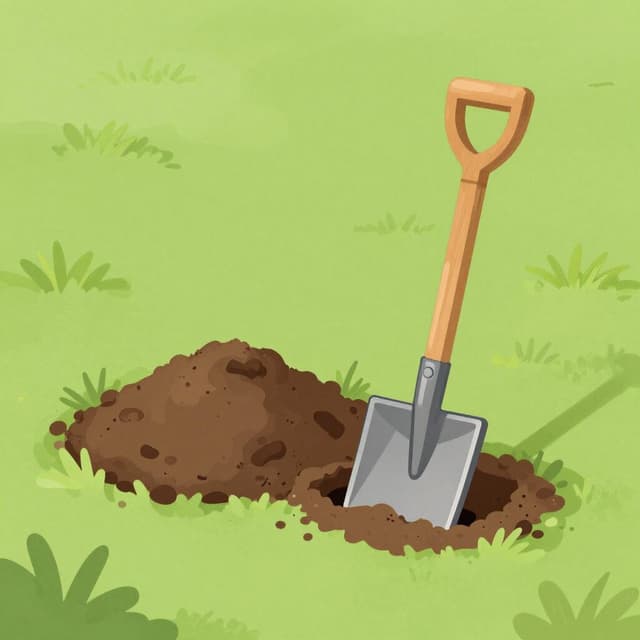
excavar — to dig
The present tense 'excavo' is used for actions happening now or habitual digging.
excavar Present Forms
When to Use the Present
Use the present tense for actions you are doing right now ('I am digging'), for habitual actions ('I dig every Saturday'), and for general truths ('This machine digs fast').
Notes on excavar in the Present
Excavar is a regular -ar verb in the present indicative tense.
Example Sentences
Ahora mismo excavo un hoyo en el jardín.
Right now I am digging a hole in the garden.
yo
¿Tú excavas mucho con esa pala?
Do you dig a lot with that shovel?
tú
Mi vecino excava para construir un sótano.
My neighbor is digging to build a basement.
él/ella/usted
Ellos excavan para encontrar tesoros.
They dig to find treasures.
ellos/ellas/ustedes
Common Mistakes
Mistake: Using the present tense for an action that just finished.
Correct: For a recently completed action, the preterite is usually better ('Excavé ayer').
Why: The present tense is for ongoing actions or general truths, not completed past events.
Mistake: Confusing 'excavo' (yo) with 'excava' (él/ella/usted).
Correct: Make sure the verb form matches the subject. 'Yo excavo', 'Él/Ella/Usted excava'.
Why: Subject-verb agreement is crucial in Spanish; different pronouns require different verb endings.
Master Spanish verbs in context
Memorizing tables only gets you so far. Read 200+ illustrated and narrated Spanish stories to see verbs like 'excavar' used naturally — in the tenses you're learning.
Related Tenses
Preterite
yo: excavé
The preterite of excavar is regular: excavé, excavaste, excavó, excavamos, excavasteis, excavaron.
Imperfect
yo: excavaba
The imperfect 'excavaba' describes ongoing or habitual digging in the past.
Future
yo: excavaré
The future tense 'excavaré' is used for actions that will definitely happen.
Conditional
yo: excavaría
The conditional 'excavaría' is used for hypothetical 'would' scenarios and polite requests.
Present Subjunctive
yo: excave
The present subjunctive 'excave' is used for wishes, doubts, and recommendations.
Imperfect Subjunctive
yo: excavara
The imperfect subjunctive 'excavara' or 'excavase' is used for past hypotheticals, wishes, or doubts.
Affirmative Imperative
yo: excava
Commands like 'excava!' or 'excavemos!' use the imperative, with 'tú' being regular: excava.
Negative Imperative
yo: no excavés
Negative commands like 'no excaves' or 'no excaven' all use the present subjunctive.