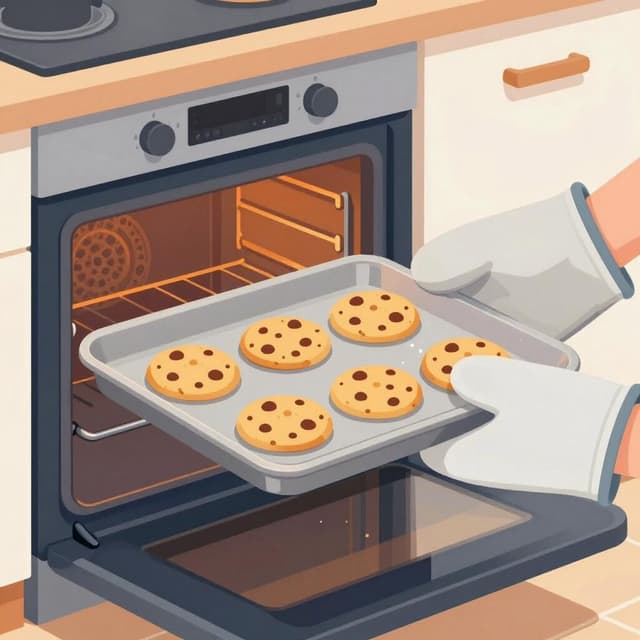
hornear Imperfect Subjunctive Conjugation
hornear — to bake
Past subjunctive uses like 'si horneara' (if I baked) or 'ojalá horneara' (I wish he/she baked).
hornear Imperfect Subjunctive Forms
When to Use the Imperfect Subjunctive
The imperfect subjunctive is used for hypothetical situations, wishes, doubts, or emotions in the past. For 'hornear,' you might say 'Quería que hornearas el pastel' (I wanted you to bake the cake) or 'Si horneara más a menudo, sería un gran chef' (If I baked more often, I would be a great chef).
Notes on hornear in the Imperfect Subjunctive
'Hornear' is regular in the imperfect subjunctive. Both the '-ra' and '-se' forms exist, but the '-ra' form (e.g., 'horneara', 'hornearas') is more common in everyday speech.
Example Sentences
Si yo horneara más, mi familia estaría más feliz.
If I baked more, my family would be happier.
yo
Me pidió que no horneara nada dulce.
He asked me not to bake anything sweet.
yo
Ojalá hornearan pan fresco todos los días.
I wish they baked fresh bread every day.
ellos/ellas/ustedes
Él actuaría como si horneara profesionalmente.
He would act as if he baked professionally.
él/ella/usted
¿Tú qué harías si te dijera que hornearas mi receta?
What would you do if I told you to bake my recipe?
tú
Common Mistakes
Mistake: Using the imperfect indicative instead of the imperfect subjunctive.
Correct: In hypothetical clauses starting with 'si' or after expressions of doubt/desire, use the imperfect subjunctive (e.g., 'si horneara').
Why: The subjunctive mood is required for non-factual or hypothetical statements.
Mistake: Confusing the '-ra' and '-se' endings.
Correct: While both are correct, 'horneara' is generally more common than 'hornease'.
Why: Regional and stylistic preferences can influence the choice between the two forms.
Master Spanish verbs in context
Memorizing tables only gets you so far. Read 200+ illustrated and narrated Spanish stories to see verbs like 'hornear' used naturally — in the tenses you're learning.
Related Tenses
Present
yo: horneo
Habits and current actions: 'Horneo pan' (I bake bread) often.
Preterite
yo: horneé
Completed actions: 'Horneé el pastel' (I baked the cake) yesterday.
Imperfect
yo: horneaba
Past habits/descriptions: 'Horneaba pan' (I used to bake bread) daily.
Future
yo: hornearé
Will bake: 'Hornearé pan' (I will bake bread) tomorrow.
Conditional
yo: hornearía
Would bake: 'Hornearía un pastel' (I would bake a cake) if I had time.
Present Subjunctive
yo: hornee
Subjunctive used after wishes, doubts, emotions: 'Espero que hornees' (I hope you bake).
Affirmative Imperative
yo: hornea
Commands like '¡Hornea!' (you bake!) and '¡Horneen!' (you all bake!).
Negative Imperative
yo: no hornees
Negative commands like '¡No hornees!' (don't bake!) and '¡No horneen!' (you all don't bake!).