hornear Preterite Conjugation
hornear — to bake
Completed actions: 'Horneé el pastel' (I baked the cake) yesterday.
hornear Preterite Forms
When to Use the Preterite
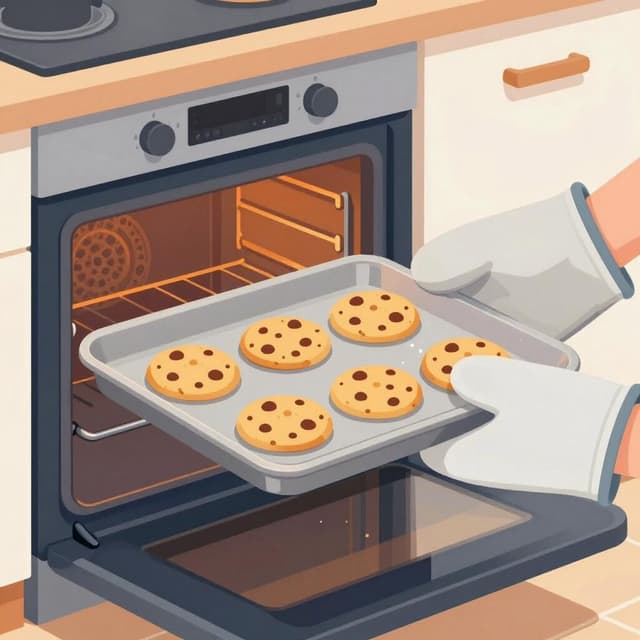
Use the preterite for actions that started and finished at a specific point in the past. For 'hornear,' think of baking something completely on a particular occasion: 'Ayer horneé pan' (Yesterday I baked bread) or 'Ella horneó galletas para la fiesta' (She baked cookies for the party).
Notes on hornear in the Preterite
'Hornear' is a regular -ar verb and is fully regular in the preterite tense. All conjugations follow the standard pattern.
Example Sentences
Yo horneé un bizcocho para su cumpleaños.
I baked a cake for his birthday.
yo
¿Horneaste las magdalenas que te pedí?
Did you bake the muffins I asked you for?
tú
Mi abuela horneó pan cada domingo.
My grandmother baked bread every Sunday.
él/ella/usted
Nosotros horneamos la cena juntos anoche.
We baked dinner together last night.
nosotros
Ellos hornearon empanadas para vender.
They baked empanadas to sell.
ellos/ellas/ustedes
Common Mistakes
Mistake: Confusing the preterite 'horneamos' (we baked) with the present 'horneamos' (we bake).
Correct: Context is key. Time expressions like 'ayer' (yesterday) or 'anoche' (last night) usually indicate the preterite.
Why: These two forms are identical, so the surrounding words in the sentence are crucial for understanding the intended tense.
Mistake: Forgetting the accent on 'horneó' (él/ella/usted).
Correct: The third-person singular preterite form needs an accent: 'horneó'.
Why: The accent marks the stress on the final syllable, distinguishing it from the infinitive.
Master Spanish verbs in context
Memorizing tables only gets you so far. Read 200+ illustrated and narrated Spanish stories to see verbs like 'hornear' used naturally — in the tenses you're learning.
Related Tenses
Present
yo: horneo
Habits and current actions: 'Horneo pan' (I bake bread) often.
Imperfect
yo: horneaba
Past habits/descriptions: 'Horneaba pan' (I used to bake bread) daily.
Future
yo: hornearé
Will bake: 'Hornearé pan' (I will bake bread) tomorrow.
Conditional
yo: hornearía
Would bake: 'Hornearía un pastel' (I would bake a cake) if I had time.
Present Subjunctive
yo: hornee
Subjunctive used after wishes, doubts, emotions: 'Espero que hornees' (I hope you bake).
Imperfect Subjunctive
yo: horneara
Past subjunctive uses like 'si horneara' (if I baked) or 'ojalá horneara' (I wish he/she baked).
Affirmative Imperative
yo: hornea
Commands like '¡Hornea!' (you bake!) and '¡Horneen!' (you all bake!).
Negative Imperative
yo: no hornees
Negative commands like '¡No hornees!' (don't bake!) and '¡No horneen!' (you all don't bake!).