pulir Affirmative Imperative Conjugation
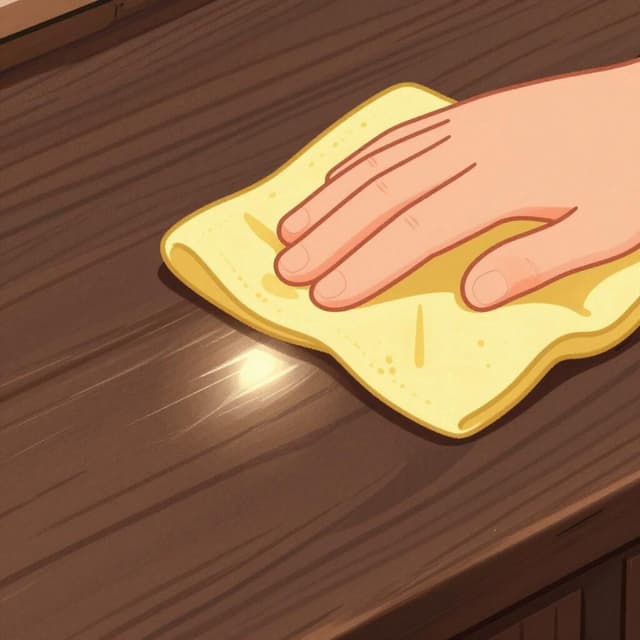
pulir — to polish
Use imperative forms like 'pule' (tú) and 'pulan' (ustedes) for direct commands.
pulir Affirmative Imperative Forms
When to Use the Affirmative Imperative
The imperative mood is for giving direct commands or making requests. For 'pulir', you'd use it to tell someone directly to polish something, like '¡Pule tus zapatos!' (Polish your shoes!).
Notes on pulir in the Affirmative Imperative
'Pulir' is regular in the imperative mood. The tú form is 'pule', and other forms follow standard -ir verb patterns.
Example Sentences
¡Pule la mesa, por favor!
Polish the table, please!
tú
Señora, pula el metal con este paño.
Ma'am, polish the metal with this cloth.
usted
Amigos, pulamos las ideas antes de la reunión.
Friends, let's polish the ideas before the meeting.
nosotros
¡Ustedes, pulan sus zapatos antes de entrar!
You all, polish your shoes before coming in!
ustedes
Vosotros, pulid la plata con cuidado.
You all (Spain), polish the silver carefully.
vosotros
Common Mistakes
Mistake: Using the present indicative instead of imperative for commands.
Correct: Use 'pule' for 'tú', not 'pules'. Use 'pula' for 'usted', not 'pule'.
Why: The imperative mood has distinct forms for commands, especially for tú and usted.
Mistake: Forgetting the 'no' with negative commands.
Correct: Always use 'no' before the verb in negative commands, e.g., 'No pules' is incorrect; it should be 'No pules' (subjunctive).
Why: Negative commands use the present subjunctive, and the 'no' is mandatory.
Master Spanish verbs in context
Memorizing tables only gets you so far. Read 200+ illustrated and narrated Spanish stories to see verbs like 'pulir' used naturally — in the tenses you're learning.
Related Tenses
Present
yo: pulo
The present tense of 'pulir' is regular: pulo, pules, pule, pulimos, pulís, pulen.
Preterite
yo: pulí
The preterite of 'pulir' is regular: pulí, puliste, pulió, pulimos, pulisteis, pulieron.
Imperfect
yo: pulía
The imperfect of 'pulir' is regular: pulía, pulías, pulía, pulíamos, pulíais, pulían.
Future
yo: puliré
The future tense of 'pulir' is regular: puliré, pulirás, pulirá, puliremos, puliréis, pulirán.
Conditional
yo: puliría
The conditional of 'pulir' is regular: puliría, pulirías, puliría, puliríamos, puliríais, pulirían.
Present Subjunctive
yo: pula
Use present subjunctive forms like 'pula' (yo/él/ella/usted) and 'pulan' (ellos/ellas/ustedes) after expressions of doubt, desire, or emotion.
Imperfect Subjunctive
yo: puliera
Use imperfect subjunctive forms like 'pudiera' (yo/él/ella/usted) and 'pudieran' (ellos/ellas/ustedes) for past hypotheticals or wishes.
Negative Imperative
yo: no pulas
Negative commands use the present subjunctive with 'no', like 'no pulas' (tú) and 'no pulan' (ustedes).