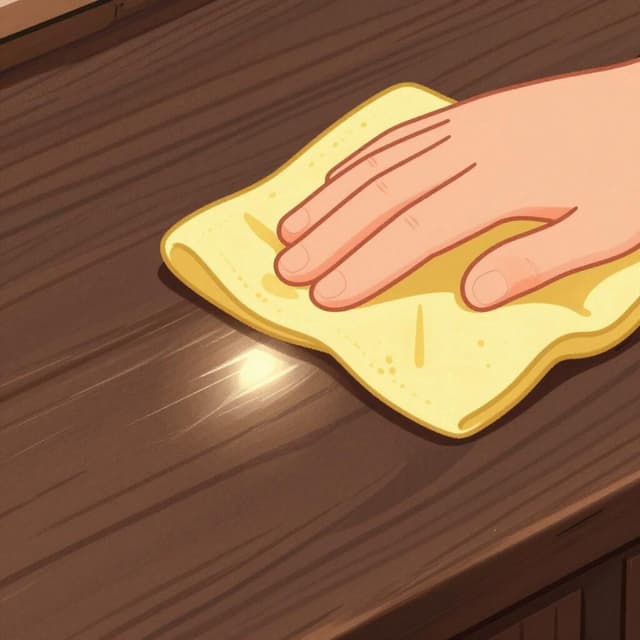
pulir Imperfect Conjugation
pulir — to polish
The imperfect of 'pulir' is regular: pulía, pulías, pulía, pulíamos, pulíais, pulían.
pulir Imperfect Forms
When to Use the Imperfect
Use the imperfect for ongoing actions in the past, habitual actions, or descriptions. For 'pulir', it's about the process of polishing, or polishing as a regular past activity.
Notes on pulir in the Imperfect
'Pulir' is regular in the imperfect tense. All forms are regular and follow the standard -ir verb pattern.
Example Sentences
Cuando era niño, pulía mis zapatos todos los domingos.
When I was a child, I polished my shoes every Sunday.
yo
Tú pulías la mesa mientras yo leía.
You were polishing the table while I was reading.
tú
Ella pulía las joyas de la abuela.
She used to polish her grandmother's jewelry.
él/ella/usted
Ellos pulían el metal hasta que brillaba.
They were polishing the metal until it shone.
ellos/ellas/ustedes
Nosotros pulíamos los faros del coche.
We used to polish the car headlights.
nosotros
Common Mistakes
Mistake: Using the preterite instead of the imperfect for ongoing or habitual past actions.
Correct: For a repeated action like 'I used to polish', use 'pulía', not 'pulí'.
Why: The imperfect describes background actions, ongoing processes, or habits, whereas the preterite describes completed events.
Mistake: Confusing the 'yo' and 'él/ella/usted' forms.
Correct: Both 'yo' and 'él/ella/usted' use 'pulía'.
Why: These forms are identical in the imperfect tense for regular -ir verbs.
Master Spanish verbs in context
Memorizing tables only gets you so far. Read 200+ illustrated and narrated Spanish stories to see verbs like 'pulir' used naturally — in the tenses you're learning.
Related Tenses
Present
yo: pulo
The present tense of 'pulir' is regular: pulo, pules, pule, pulimos, pulís, pulen.
Preterite
yo: pulí
The preterite of 'pulir' is regular: pulí, puliste, pulió, pulimos, pulisteis, pulieron.
Future
yo: puliré
The future tense of 'pulir' is regular: puliré, pulirás, pulirá, puliremos, puliréis, pulirán.
Conditional
yo: puliría
The conditional of 'pulir' is regular: puliría, pulirías, puliría, puliríamos, puliríais, pulirían.
Present Subjunctive
yo: pula
Use present subjunctive forms like 'pula' (yo/él/ella/usted) and 'pulan' (ellos/ellas/ustedes) after expressions of doubt, desire, or emotion.
Imperfect Subjunctive
yo: puliera
Use imperfect subjunctive forms like 'pudiera' (yo/él/ella/usted) and 'pudieran' (ellos/ellas/ustedes) for past hypotheticals or wishes.
Affirmative Imperative
yo: pule
Use imperative forms like 'pule' (tú) and 'pulan' (ustedes) for direct commands.
Negative Imperative
yo: no pulas
Negative commands use the present subjunctive with 'no', like 'no pulas' (tú) and 'no pulan' (ustedes).