pulir Present Conjugation
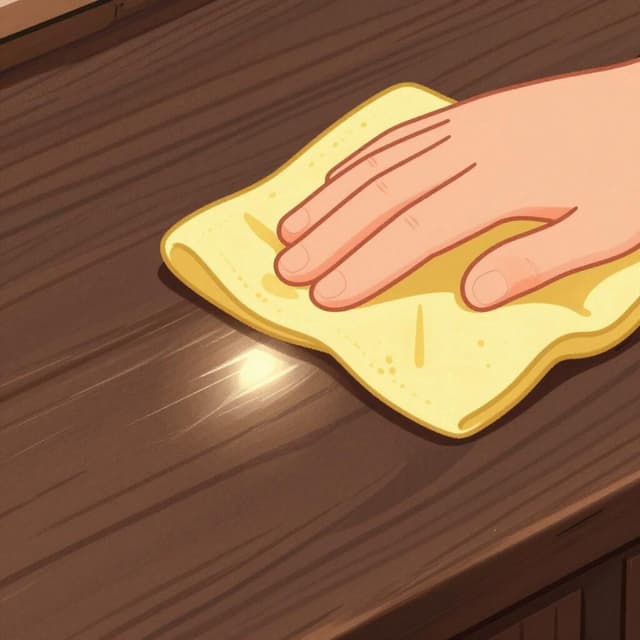
pulir — to polish
The present tense of 'pulir' is regular: pulo, pules, pule, pulimos, pulís, pulen.
pulir Present Forms
When to Use the Present
Use the present tense for actions happening right now, habitual actions, or general truths. For 'pulir', it's about polishing something regularly or at this very moment.
Notes on pulir in the Present
'Pulir' is regular in the present tense. All forms follow the standard pattern for -ir verbs.
Example Sentences
Yo pulo mis botas cada semana.
I polish my boots every week.
yo
¿Tú pules la madera a menudo?
Do you polish the wood often?
tú
Él pule su coche los domingos.
He polishes his car on Sundays.
él/ella/usted
Ellos pulen sus trofeos después de ganar.
They polish their trophies after winning.
ellos/ellas/ustedes
Nosotros pulimos los cubiertos antes de la cena.
We polish the silverware before dinner.
nosotros
Common Mistakes
Mistake: Using 'pulir' (infinitive) instead of a conjugated form.
Correct: Use 'pulo', 'pules', 'pule', etc., not just 'pulir' when talking about someone polishing.
Why: The infinitive is the base form; you need to conjugate it to match the subject and tense.
Mistake: Confusing 'pule' (él/ella/usted) with 'pules' (tú).
Correct: Remember that 'pules' is for 'tú' (you, informal) and 'pule' is for 'él/ella/usted' (he/she/it/you formal).
Why: These are distinct forms in the present indicative.
Master Spanish verbs in context
Memorizing tables only gets you so far. Read 200+ illustrated and narrated Spanish stories to see verbs like 'pulir' used naturally — in the tenses you're learning.
Related Tenses
Preterite
yo: pulí
The preterite of 'pulir' is regular: pulí, puliste, pulió, pulimos, pulisteis, pulieron.
Imperfect
yo: pulía
The imperfect of 'pulir' is regular: pulía, pulías, pulía, pulíamos, pulíais, pulían.
Future
yo: puliré
The future tense of 'pulir' is regular: puliré, pulirás, pulirá, puliremos, puliréis, pulirán.
Conditional
yo: puliría
The conditional of 'pulir' is regular: puliría, pulirías, puliría, puliríamos, puliríais, pulirían.
Present Subjunctive
yo: pula
Use present subjunctive forms like 'pula' (yo/él/ella/usted) and 'pulan' (ellos/ellas/ustedes) after expressions of doubt, desire, or emotion.
Imperfect Subjunctive
yo: puliera
Use imperfect subjunctive forms like 'pudiera' (yo/él/ella/usted) and 'pudieran' (ellos/ellas/ustedes) for past hypotheticals or wishes.
Affirmative Imperative
yo: pule
Use imperative forms like 'pule' (tú) and 'pulan' (ustedes) for direct commands.
Negative Imperative
yo: no pulas
Negative commands use the present subjunctive with 'no', like 'no pulas' (tú) and 'no pulan' (ustedes).