pulir Negative Imperative Conjugation
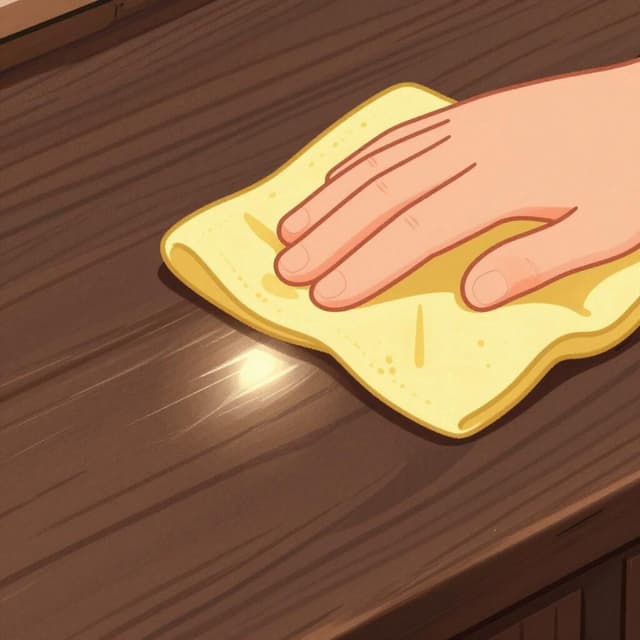
pulir — to polish
Negative commands use the present subjunctive with 'no', like 'no pulas' (tú) and 'no pulan' (ustedes).
pulir Negative Imperative Forms
When to Use the Negative Imperative
You use the negative imperative to tell someone *not* to do something. For 'pulir', it's like saying 'Don't polish this!' or 'Don't polish it like that!'.
Notes on pulir in the Negative Imperative
Negative commands for 'pulir' are regular and use the present subjunctive forms: no pulas (tú), no pula (usted), no pulamos (nosotros), no puláis (vosotros), no pulan (ustedes).
Example Sentences
No pulas el mueble viejo con ese producto.
Don't polish the old furniture with that product.
tú
Por favor, no pula la pantalla del televisor.
Please, don't polish the TV screen.
usted
No pulamos estas llaves, son nuevas.
Let's not polish these keys, they're new.
nosotros
No pulan el coche todavía, está sucio.
Don't polish the car yet, it's dirty.
ustedes
No puláis la madera sin preguntar.
Don't polish the wood without asking.
vosotros
Common Mistakes
Mistake: Using the imperative affirmative form with 'no'.
Correct: It should be 'No pules' (subjunctive), not 'No pule' (imperative).
Why: Negative commands always use the subjunctive mood, which has different forms than the affirmative imperative.
Mistake: Forgetting the 'no' entirely.
Correct: Always include 'no' before the subjunctive verb in negative commands.
Why: The 'no' is essential to make it a negative command.
Master Spanish verbs in context
Memorizing tables only gets you so far. Read 200+ illustrated and narrated Spanish stories to see verbs like 'pulir' used naturally — in the tenses you're learning.
Related Tenses
Present
yo: pulo
The present tense of 'pulir' is regular: pulo, pules, pule, pulimos, pulís, pulen.
Preterite
yo: pulí
The preterite of 'pulir' is regular: pulí, puliste, pulió, pulimos, pulisteis, pulieron.
Imperfect
yo: pulía
The imperfect of 'pulir' is regular: pulía, pulías, pulía, pulíamos, pulíais, pulían.
Future
yo: puliré
The future tense of 'pulir' is regular: puliré, pulirás, pulirá, puliremos, puliréis, pulirán.
Conditional
yo: puliría
The conditional of 'pulir' is regular: puliría, pulirías, puliría, puliríamos, puliríais, pulirían.
Present Subjunctive
yo: pula
Use present subjunctive forms like 'pula' (yo/él/ella/usted) and 'pulan' (ellos/ellas/ustedes) after expressions of doubt, desire, or emotion.
Imperfect Subjunctive
yo: puliera
Use imperfect subjunctive forms like 'pudiera' (yo/él/ella/usted) and 'pudieran' (ellos/ellas/ustedes) for past hypotheticals or wishes.
Affirmative Imperative
yo: pule
Use imperative forms like 'pule' (tú) and 'pulan' (ustedes) for direct commands.