trepar Conditional Conjugation
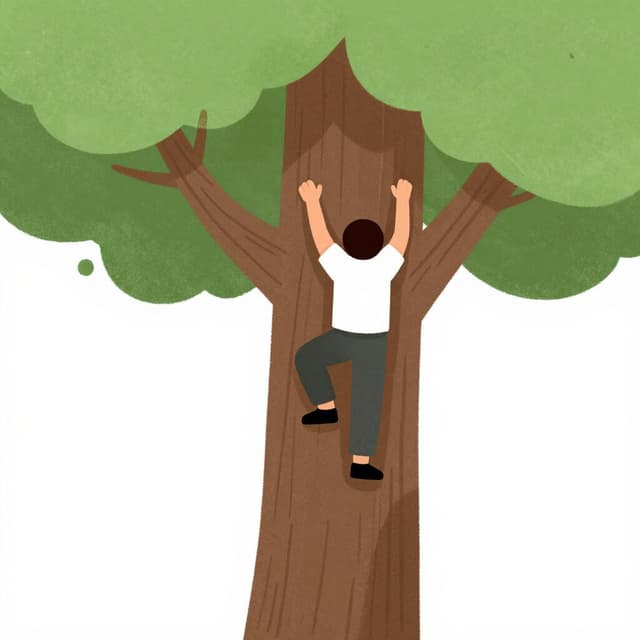
trepar — to climb
Use 'treparía' and 'treparían' for hypothetical 'would' scenarios.
trepar Conditional Forms
When to Use the Conditional
The conditional is used for hypothetical situations ('I would climb if I could'), polite requests ('Would you climb this?'), or future actions from a past perspective ('He said he would climb').
Notes on trepar in the Conditional
Trepar is regular in the conditional tense. The stem is the infinitive 'trepar-'.
Example Sentences
Yo treparía si tuviera más tiempo.
I would climb if I had more time.
yo
¿Tú treparías por esa pared?
Would you climb that wall?
tú
Él dijo que treparía con nosotros.
He said he would climb with us.
él/ella/usted
Ellos treparían si no tuvieran miedo.
They would climb if they weren't afraid.
ellos/ellas/ustedes
Common Mistakes
Mistake: Using the conditional for a definite future action.
Correct: For 'I will climb', use the future 'treparé', not the conditional 'treparía'.
Why: The conditional expresses uncertainty or hypothetical outcomes, not definite future events.
Mistake: Confusing conditional endings with future endings.
Correct: Future endings are -é, -ás, -á, -emos, -éis, -án. Conditional endings are -ía, -ías, -ía, -íamos, -íais, -ían.
Why: Both tenses use the infinitive as the stem, but the endings are different.
Master Spanish verbs in context
Memorizing tables only gets you so far. Read 200+ illustrated and narrated Spanish stories to see verbs like 'trepar' used naturally — in the tenses you're learning.
Related Tenses
Present
yo: trepo
Use 'trepo' and 'trepa' for actions happening now or habitual climbing.
Preterite
yo: trepé
Use 'trepé' and 'trepó' for completed climbing actions in the past.
Imperfect
yo: trepaba
Use 'trepaba' and 'trepaban' for ongoing or habitual climbing in the past.
Future
yo: treparé
Use 'treparé' and 'trepará' for actions that will happen in the future.
Present Subjunctive
yo: trepe
Use 'trepe' and 'trepen' after expressions of doubt, desire, or emotion.
Imperfect Subjunctive
yo: trepara
Use 'trepara' or 'trepara' for past hypotheticals or wishes, like 'If I climbed...'.
Affirmative Imperative
yo: trepa
Use 'trepa' and 'trepad' for direct commands to 'tú' and 'vosotros'.
Negative Imperative
yo: no trepes
Use 'no trepes' and 'no trepéis' for negative commands to 'tú' and 'vosotros'.