trepar Preterite Conjugation
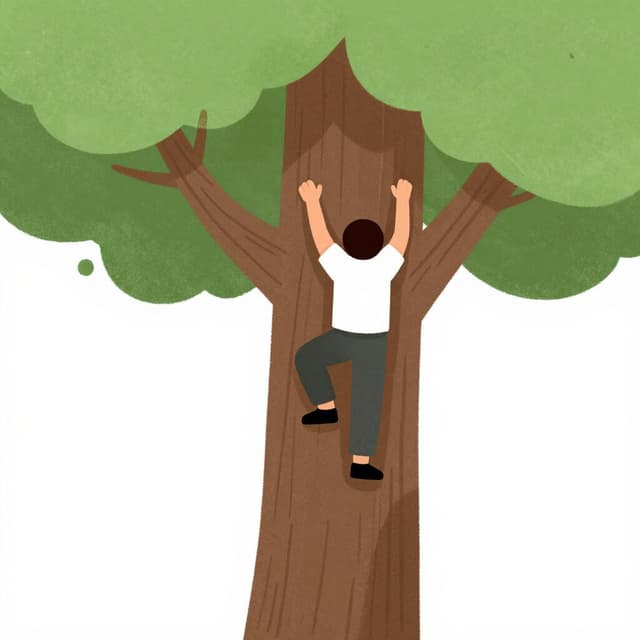
trepar — to climb
Use 'trepé' and 'trepó' for completed climbing actions in the past.
trepar Preterite Forms
When to Use the Preterite
The preterite is for actions that started and finished at a specific point in the past. If you climbed a tree yesterday and were done, you'd use the preterite: 'Ayer trepé ese árbol'.
Notes on trepar in the Preterite
Trepar is regular in the preterite. The 'yo' form 'trepé' has a written accent.
Example Sentences
Ayer trepé a la cima de la montaña.
Yesterday I climbed to the summit of the mountain.
yo
¿Tú trepaste por la escalera?
Did you climb up the ladder?
tú
El niño trepó al árbol muy rápido.
The boy climbed the tree very quickly.
él/ella/usted
Ellos treparon la pared para escapar.
They climbed the wall to escape.
ellos/ellas/ustedes
Common Mistakes
Mistake: Using the imperfect 'trepaba' for a single completed action.
Correct: For 'I climbed the tree yesterday', use 'Ayer trepé', not 'Ayer trepaba'.
Why: The preterite marks a completed event, while the imperfect describes an ongoing or habitual past action.
Mistake: Forgetting the accent on 'trepé'.
Correct: The 'yo' form requires an accent: 'trepé'.
Why: The accent on 'trepé' distinguishes it from other forms and indicates the stressed syllable.
Master Spanish verbs in context
Memorizing tables only gets you so far. Read 200+ illustrated and narrated Spanish stories to see verbs like 'trepar' used naturally — in the tenses you're learning.
Related Tenses
Present
yo: trepo
Use 'trepo' and 'trepa' for actions happening now or habitual climbing.
Imperfect
yo: trepaba
Use 'trepaba' and 'trepaban' for ongoing or habitual climbing in the past.
Future
yo: treparé
Use 'treparé' and 'trepará' for actions that will happen in the future.
Conditional
yo: treparía
Use 'treparía' and 'treparían' for hypothetical 'would' scenarios.
Present Subjunctive
yo: trepe
Use 'trepe' and 'trepen' after expressions of doubt, desire, or emotion.
Imperfect Subjunctive
yo: trepara
Use 'trepara' or 'trepara' for past hypotheticals or wishes, like 'If I climbed...'.
Affirmative Imperative
yo: trepa
Use 'trepa' and 'trepad' for direct commands to 'tú' and 'vosotros'.
Negative Imperative
yo: no trepes
Use 'no trepes' and 'no trepéis' for negative commands to 'tú' and 'vosotros'.