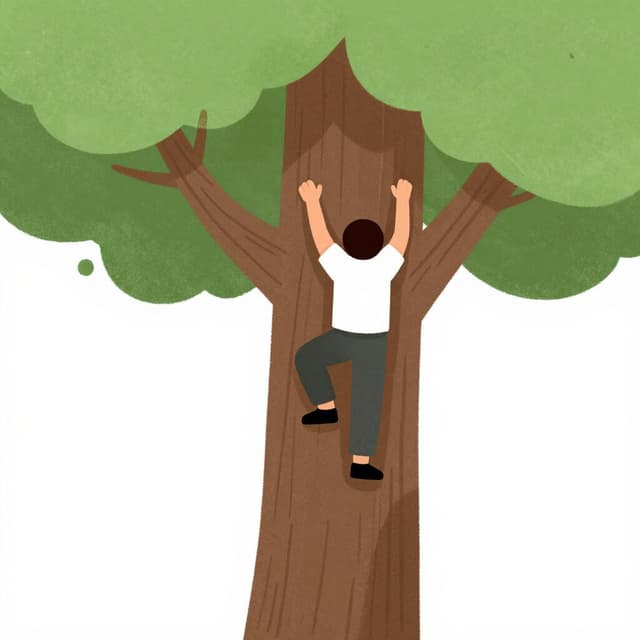
trepar Present Conjugation
trepar — to climb
Use 'trepo' and 'trepa' for actions happening now or habitual climbing.
trepar Present Forms
When to Use the Present
The present tense is for actions happening right now ('Estoy trepando' - I am climbing) or for habitual actions ('Siempre trepo por la mañana' - I always climb in the morning). It's also used for general truths.
Notes on trepar in the Present
Trepar is regular in the present indicative. The 'yo' form is 'trepo'.
Example Sentences
Yo trepo a los árboles a menudo.
I climb trees often.
yo
¿Tú trepas por la cuerda?
Do you climb the rope?
tú
Mi gato trepa a los tejados.
My cat climbs onto the roofs.
él/ella/usted
Nosotros trepamos por el rocódromo los fines de semana.
We climb the climbing wall on weekends.
nosotros
Common Mistakes
Mistake: Using the present tense for an action that just finished.
Correct: If you just finished climbing, use the preterite: 'trepé'.
Why: The present describes ongoing or habitual actions, not completed ones.
Mistake: Confusing 'trepa' (he/she/you climbs) with 'trepa' (imperative command).
Correct: Context is key. 'Él trepa' is a statement, '¡Trepa!' is a command.
Why: Both forms are identical, leading to potential confusion without context.
Master Spanish verbs in context
Memorizing tables only gets you so far. Read 200+ illustrated and narrated Spanish stories to see verbs like 'trepar' used naturally — in the tenses you're learning.
Related Tenses
Preterite
yo: trepé
Use 'trepé' and 'trepó' for completed climbing actions in the past.
Imperfect
yo: trepaba
Use 'trepaba' and 'trepaban' for ongoing or habitual climbing in the past.
Future
yo: treparé
Use 'treparé' and 'trepará' for actions that will happen in the future.
Conditional
yo: treparía
Use 'treparía' and 'treparían' for hypothetical 'would' scenarios.
Present Subjunctive
yo: trepe
Use 'trepe' and 'trepen' after expressions of doubt, desire, or emotion.
Imperfect Subjunctive
yo: trepara
Use 'trepara' or 'trepara' for past hypotheticals or wishes, like 'If I climbed...'.
Affirmative Imperative
yo: trepa
Use 'trepa' and 'trepad' for direct commands to 'tú' and 'vosotros'.
Negative Imperative
yo: no trepes
Use 'no trepes' and 'no trepéis' for negative commands to 'tú' and 'vosotros'.