trepar Imperfect Subjunctive Conjugation
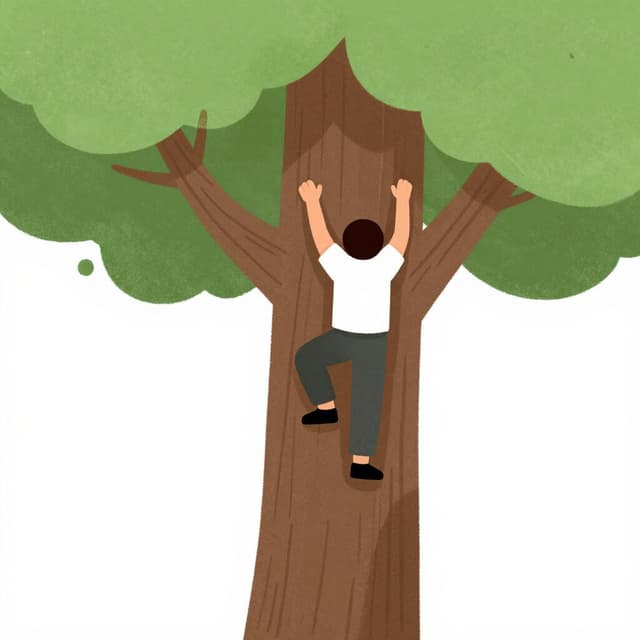
trepar — to climb
Use 'trepara' or 'trepara' for past hypotheticals or wishes, like 'If I climbed...'.
trepar Imperfect Subjunctive Forms
When to Use the Imperfect Subjunctive
This tense is used for hypothetical situations in the past, often in 'if' clauses ('si...') or after expressions of doubt or desire that occurred in the past. For instance, 'Ojalá trepara más alto' means 'I wish I climbed higher'.
Notes on trepar in the Imperfect Subjunctive
Trepar is regular in the imperfect subjunctive. Both -ra and -se forms exist, but -ra is more common in speech. The yo and él/ella/usted forms are identical.
Example Sentences
Si yo trepara más rápido, ganaría la carrera.
If I climbed faster, I would win the race.
yo
Me gustaría que tú treparas por ese árbol.
I would like you to climb that tree.
tú
Ellos habrían llegado si treparan por la otra ruta.
They would have arrived if they climbed by the other route.
ellos/ellas/ustedes
Era importante que el gato trepara al tejado.
It was important that the cat climbed onto the roof.
él/ella/usted
Common Mistakes
Mistake: Confusing imperfect subjunctive with imperfect indicative.
Correct: Use 'trepara' for hypotheticals, not 'trepaba'.
Why: The imperfect indicative describes ongoing past actions, while the imperfect subjunctive deals with unreal or hypothetical past conditions.
Mistake: Using the -se form when -ra is expected or vice versa.
Correct: While both exist (e.g., 'trepase'), the '-ra' form ('trepara') is generally more common and often preferred.
Why: Learners might be exposed to both and get confused about which to use.
Master Spanish verbs in context
Memorizing tables only gets you so far. Read 200+ illustrated and narrated Spanish stories to see verbs like 'trepar' used naturally — in the tenses you're learning.
Related Tenses
Present
yo: trepo
Use 'trepo' and 'trepa' for actions happening now or habitual climbing.
Preterite
yo: trepé
Use 'trepé' and 'trepó' for completed climbing actions in the past.
Imperfect
yo: trepaba
Use 'trepaba' and 'trepaban' for ongoing or habitual climbing in the past.
Future
yo: treparé
Use 'treparé' and 'trepará' for actions that will happen in the future.
Conditional
yo: treparía
Use 'treparía' and 'treparían' for hypothetical 'would' scenarios.
Present Subjunctive
yo: trepe
Use 'trepe' and 'trepen' after expressions of doubt, desire, or emotion.
Affirmative Imperative
yo: trepa
Use 'trepa' and 'trepad' for direct commands to 'tú' and 'vosotros'.
Negative Imperative
yo: no trepes
Use 'no trepes' and 'no trepéis' for negative commands to 'tú' and 'vosotros'.