abeja
“abeja” means “bee” in Spanish (the flying insect that makes honey).
bee
Also: hard worker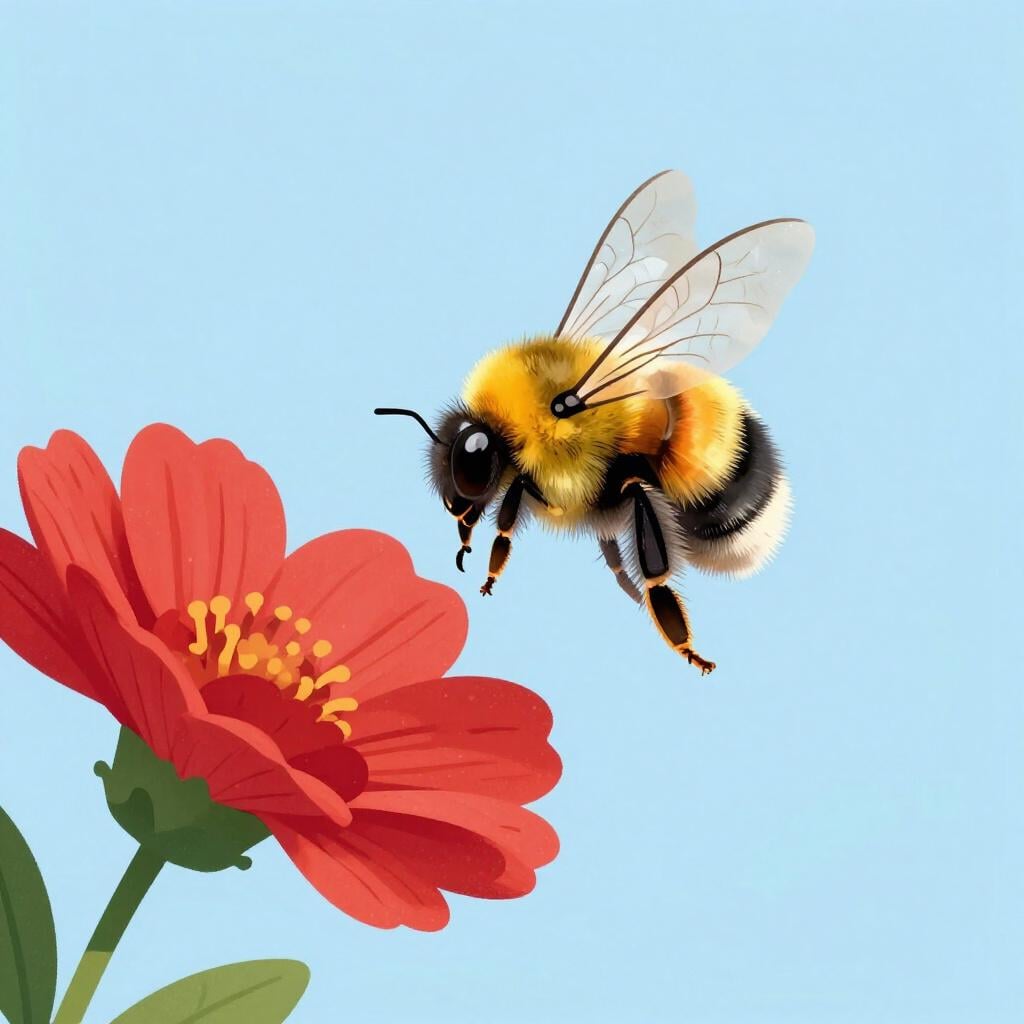
📝 In Action
La abeja vuela de flor en flor.
A1The bee flies from flower to flower.
Las abejas viven en una colmena.
A2Bees live in a beehive.
Ella es una abeja obrera en su oficina.
B1She is a worker bee in her office.
Translate to Spanish
✏️ Quick Practice
Quick Quiz: abeja
Question 1 of 2
Which of these animals is an 'abeja'?
📚 More Resources
👥 Word Family▼
📚 Etymology▼
From the Latin word 'apicula', which was a cute way of saying 'little bee'.
First recorded: 10th century
Cognates (Related words)
💡 Master Spanish
Take your Spanish to the next level. Read 200+ illustrated and narrated Spanish stories tailored to your level with the Inklingo app!
Frequently Asked Questions
What is the difference between 'abeja' and 'avispa'?
An 'abeja' is a bee (usually fuzzy and makes honey), while an 'avispa' is a wasp (usually smoother and more aggressive).
Is 'abeja' a common nickname?
Not usually as a name, but people use the phrase 'trabajar como una abeja' to praise someone's work ethic.