miel
“miel” means “honey” in Spanish. It has 2 different meanings depending on context:

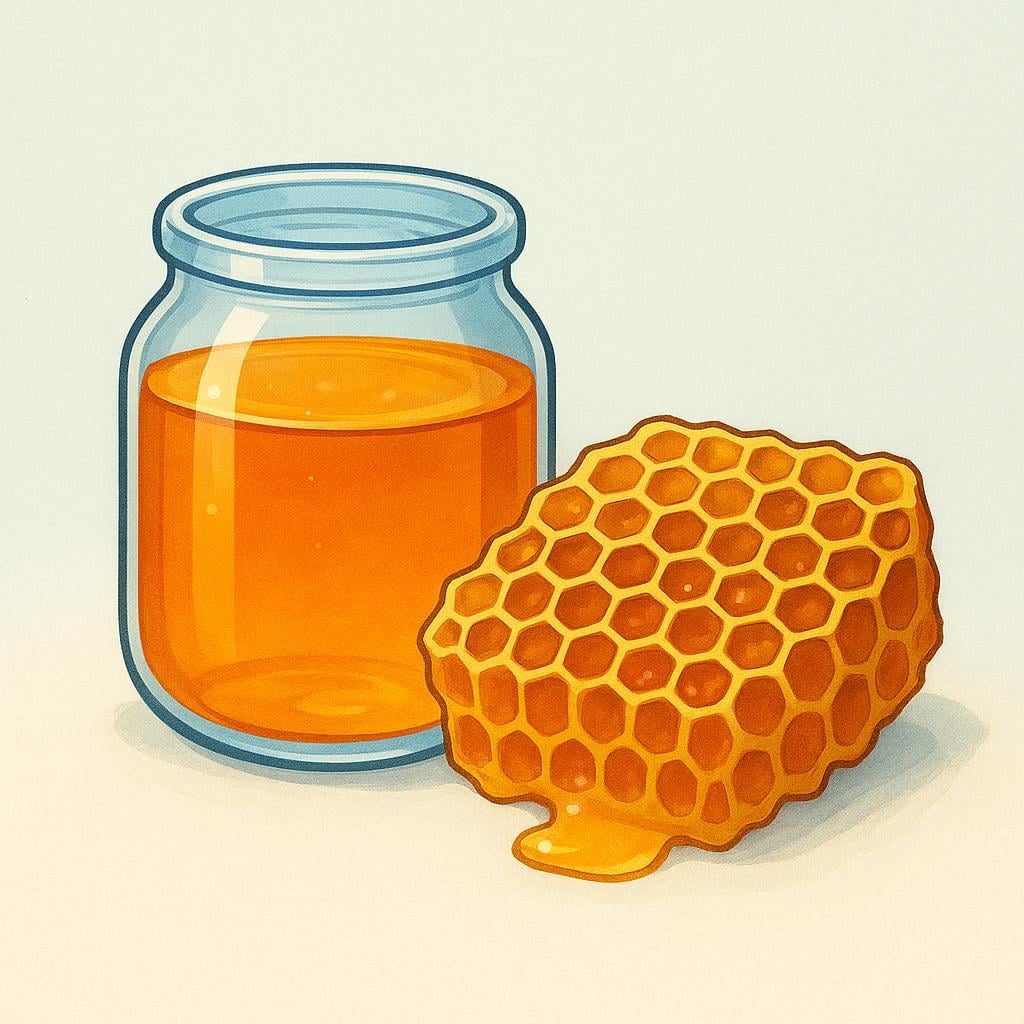
honey
📝 In Action
Me gusta poner miel en mi tostada del desayuno.
A1I like to put honey on my breakfast toast.
La miel de abeja es un remedio natural para la tos.
A2Bee honey is a natural remedy for coughs.
El sabor de esta miel es muy fuerte, debe ser de flores silvestres.
B1The flavor of this honey is very strong; it must be from wild flowers.
Word Connections
sweetnessAlso: darling / honey, charm

📝 In Action
La luna de miel de los recién casados fue en la playa.
B1The newlyweds' honeymoon was at the beach.
No te creas todo lo que dice; sus palabras son pura miel.
B2Don't believe everything he says; his words are pure sweetness (insincerely charming).
Word Connections
✏️ Quick Practice
Quick Quiz: miel
Question 1 of 2
Which sentence uses 'miel' in its literal meaning?
📚 More Resources
👥 Word Family
🎵 Rhymes
📚 Etymology
The word comes directly from the Latin word *mel*, which also meant 'honey.' This shared root is why 'miel' sounds similar to words like 'mellifluous' in English.
First recorded: Pre-10th century (as part of Vulgar Latin evolution)
Cognates (Related words)
💡 Master Spanish
Take your Spanish to the next level. Read 200+ illustrated and narrated Spanish stories tailored to your level with the Inklingo app!
Frequently Asked Questions
Is 'miel' a feminine or masculine noun?
'Miel' is definitively a feminine noun. You must use 'la' before it (la miel), and any adjectives describing it must also be feminine (miel pura, not puro).
How do you say 'honeymoon' in Spanish?
The common phrase is 'luna de miel,' which literally translates to 'moon of honey.' It is used exactly like the English term.