abejas
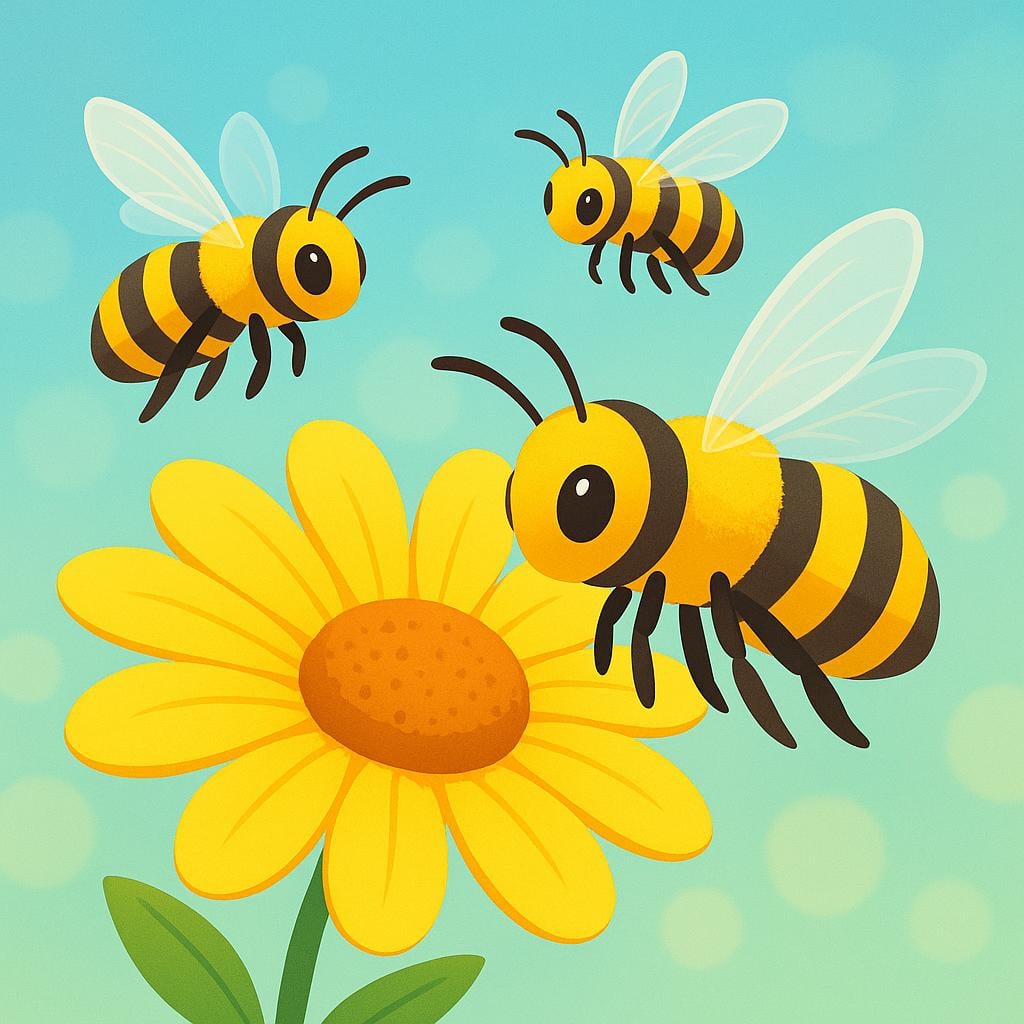
“abejas” means “bees” in Spanish (the flying insects).
beesAlso: honeybees
📝 In Action
Las abejas son muy importantes para el planeta.
A1Bees are very important for the planet.
Ten cuidado, hay muchas abejas en el jardín.
A2Be careful, there are many bees in the garden.
El apicultor revisa las colmenas para ver si las abejas están sanas.
B1The beekeeper checks the hives to see if the bees are healthy.
Word Connections
✏️ Quick Practice
Quick Quiz: abejas
Question 1 of 1
If you want to talk about just ONE bee, which word do you use?
📚 More Resources
👥 Word Family
🎵 Rhymes
📚 Etymology
The word 'abeja' comes from the Latin word *apicula*, which was a diminutive (a smaller version) of the Latin word *apis*, meaning 'bee.'
First recorded: 13th century
Cognates (Related words)
💡 Master Spanish
Take your Spanish to the next level. Read 200+ illustrated and narrated Spanish stories tailored to your level with the Inklingo app!
Frequently Asked Questions
What is the difference between 'abeja' and 'abejas'?
'Abeja' means 'one bee' (singular). 'Abejas' means 'two or more bees' (plural). It is a simple singular/plural difference.