Inklingo

arranca

/ah-RRAHN-kah/

starts

A simple red car sitting stationary, with a small puff of white smoke coming out of its tailpipe, signifying the engine has just started.

The engine arranca (starts) when the car begins to work.

arranca(verb)

A2regular (with spelling change in subjunctive/some tenses) ar

starts

?

(engine, machine, car) begins to work

,

takes off

?

(person) begins to run or move quickly

Also:

gets going

?

informal way of saying something begins

📝 In Action

El coche no arranca por el frío.

A2

The car won't start because of the cold.

Ella arranca a correr cuando ve el autobús.

B1

She starts running when she sees the bus.

Word Connections

Synonyms

Antonyms

Common Collocations

  • arrancar el motorto start the engine
  • arrancar en primerato start in first gear

💡 Grammar Points

Verb Form Identification

In this context, 'arranca' is the verb form used when the subject is 'he,' 'she,' 'it,' or 'you' (the formal 'usted') in the present tense.

Spelling Change Rule (C-to-QU)

When conjugating 'arrancar,' the 'c' changes to 'qu' whenever it is followed by an 'e,' such as in the special forms used for wishes and commands (subjunctive and preterite 'yo' form).

⭐ Usage Tips

Starting vs. Turning On

Use 'arrancar' specifically for starting engines or machines that need to be powered up, like a car or a lawnmower. Use 'encender' for lights or electronics.

A green hand forcefully pulling a large, rooted dandelion weed straight up out of the brown soil.

To arranca is to pull something out by force, like a stubborn weed from the garden.

arranca(verb)

B1regular ar

pulls out

?

removes by force, such as a weed or a tooth

,

rips off

?

tears or detaches something violently

Also:

yanks

?

informal synonym for pulling hard

📝 In Action

El dentista le arranca la muela sin dolor.

B1

The dentist pulls out his tooth without pain.

Arranca las malas hierbas del jardín cada semana.

A2

She pulls out the weeds from the garden every week.

Word Connections

Synonyms

  • extraer (to extract)
  • sacar (to take out)

Common Collocations

  • arrancar una hojato tear off a page
  • arrancar de raízto tear out by the root (figurative: to eliminate completely)

⭐ Usage Tips

Forceful Removal

Remember that 'arrancar' implies a forceful or violent removal, often involving roots or strong adhesion, unlike simply 'sacar' (to take out).

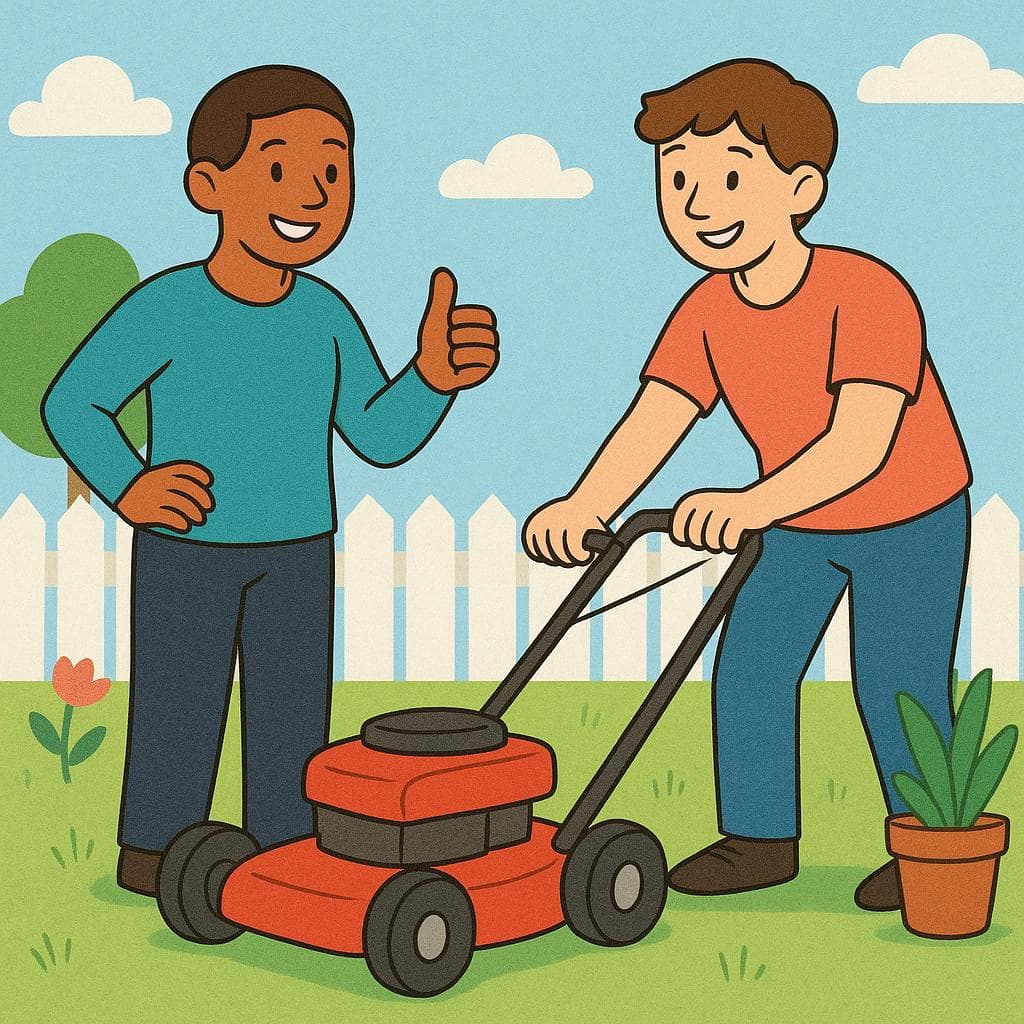
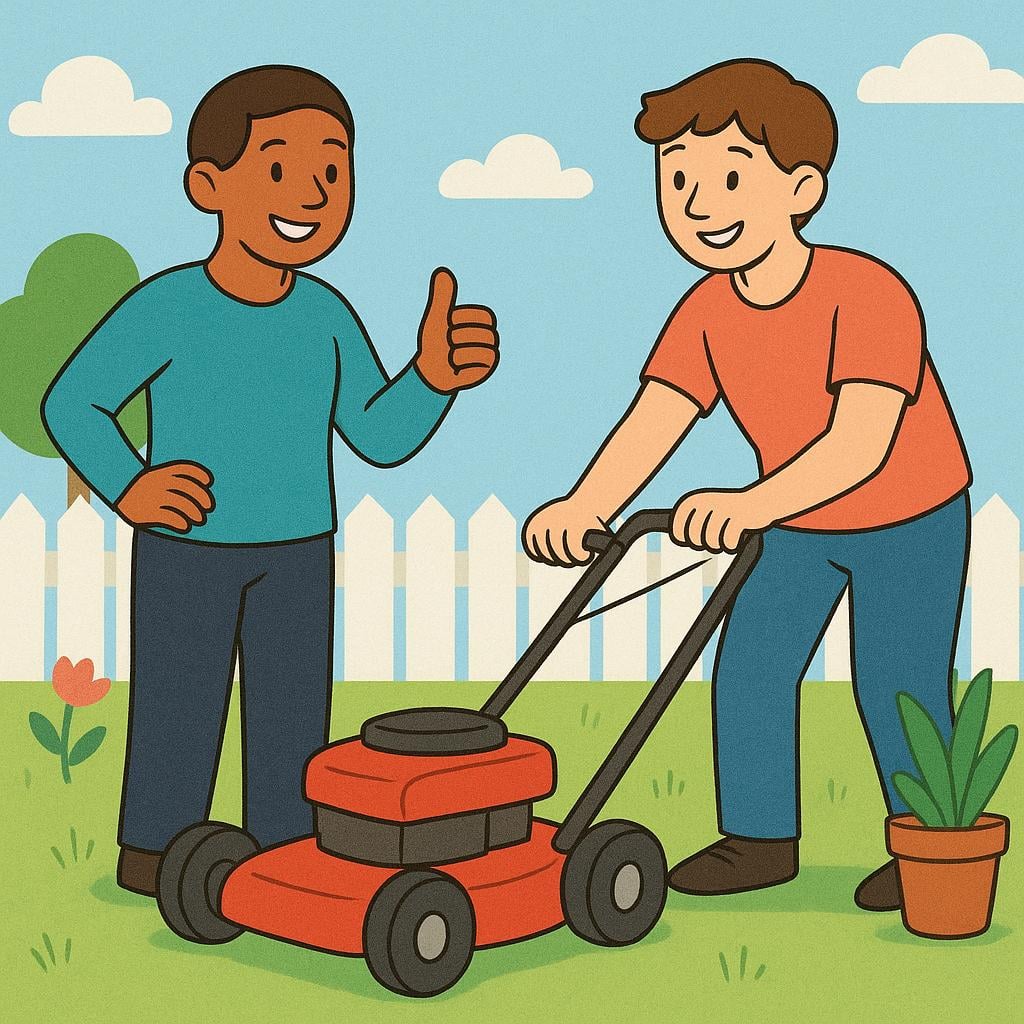
A friendly person standing next to a lawnmower, giving a decisive thumbs-up gesture towards their friend, signaling them to start the machine.

When commanding someone to start a machine, you say: ¡Arranca! (Start!)

arranca(verb)

A2regular ar

Start!

?

commanding a friend to start an engine or machine

,

Pull out!

?

commanding a friend to remove something

Also:

Get going!

?

commanding a friend to begin moving quickly

📝 In Action

¡Arranca, que vamos tarde!

A2

Start (the car), we are late!

Arranca esa pegatina que está fea.

A2

Pull off that sticker, it's ugly.

💡 Grammar Points

The 'Tú' Command

The friendly command form (tú imperative) for almost all '-ar' verbs is identical to the 'él/ella/usted' form in the present tense, which is why 'arranca' serves two purposes.

❌ Common Pitfalls

Using the wrong command form

Mistake: "Using 'arranque' when talking to a friend."

Correction: Use 'arranca' for friends and family (tú). Reserve 'arranque' for formal situations (usted).

🔄 Conjugations

subjunctive

imperfect

yoarrancara/arrancase
él/ella/ustedarrancara/arrancase
arrancaras/arrancases
vosotrosarrancarais/arrancaseis
nosotrosarrancáramos/arrancásemos
ellos/ellas/ustedesarrancaran/arrancasen

present

yoarranque
él/ella/ustedarranque
arranques
vosotrosarranquéis
nosotrosarranquemos
ellos/ellas/ustedesarranquen

indicative

imperfect

yoarrancaba
él/ella/ustedarrancaba
arrancabas
vosotrosarrancabais
nosotrosarrancábamos
ellos/ellas/ustedesarrancaban

present

yoarranco
él/ella/ustedarranca
arrancas
vosotrosarrancáis
nosotrosarrancamos
ellos/ellas/ustedesarrancan

preterite

yoarranqué
él/ella/ustedarrancó
arrancaste
vosotrosarrancasteis
nosotrosarrancamos
ellos/ellas/ustedesarrancaron

✏️ Quick Practice

💡 Quick Quiz: arranca

Question 1 of 2

Which meaning of 'arranca' is used in the sentence: 'Mi vecino arranca el coche a las siete en punto.'?

📚 More Resources

Word Family

Frequently Asked Questions

Why does 'arranca' have two different grammatical functions (present tense and command)?

This is very common in Spanish! For most regular verbs, the friendly command form (the 'tú' imperative) is exactly the same word as the 'he/she/it' form in the present tense. It saves you from learning extra forms.

Is 'arrancar' used only for physical starting, or can it be figurative?

It can be figurative. You can say 'arrancar una sonrisa' (to elicit a smile) or 'arrancar un compromiso' (to extract a promise), meaning to pull out something non-physical.