arrastrar
“arrastrar” means “to drag” in Spanish. It has 2 different meanings depending on context:
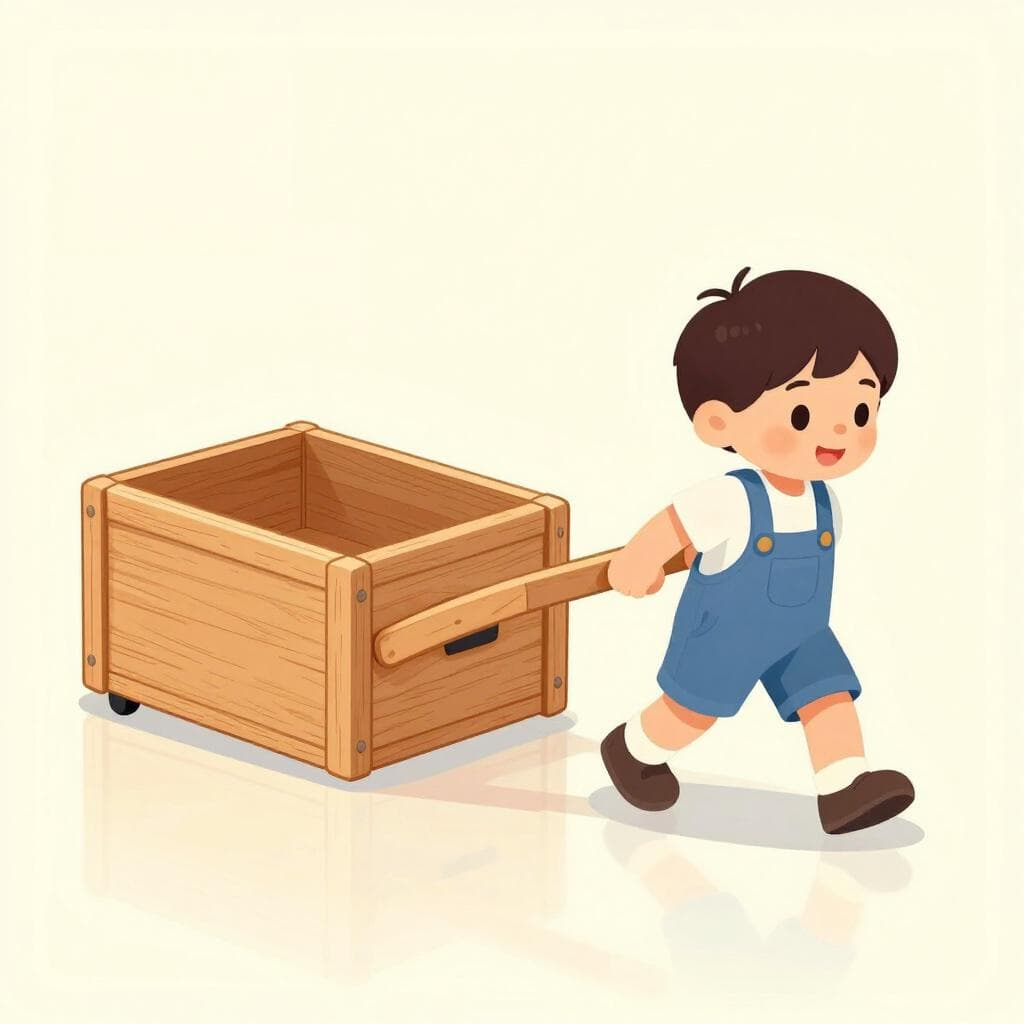

to drag
Also: to pull along, to trail
📝 In Action
El niño arrastra su juguete favorito por toda la casa.
A1The boy drags his favorite toy all over the house.
Por favor, no arrastres las sillas; levántalas para no rayar el suelo.
A2Please, don't drag the chairs; lift them up so you don't scratch the floor.
El barco arrastraba una red enorme en el mar.
B1The boat was dragging a huge net in the sea.
to sweep away
Also: to lead to / involve, to drag
📝 In Action
La corriente del río arrastró los troncos caídos.
B1The river current swept away the fallen logs.
Sus malas decisiones arrastraron a la empresa a la quiebra.
B2His bad decisions dragged the company into bankruptcy.
Solo tienes que arrastrar el archivo a la carpeta azul.
A2You just have to drag the file to the blue folder.
Subjunctive
Present Subjunctive
Imperfect Subjunctive
Indicative
Present
Preterite
Imperfect
✏️ Quick Practice
Quick Quiz: arrastrar
Question 1 of 3
What is the best way to say 'Drag and drop' in Spanish?
📚 More Resources
👥 Word Family▼
📚 Etymology▼
From the Spanish prefix 'a-' (towards) and the word 'rastro' (track/trail), which comes from Latin 'rastrum' (a rake).
First recorded: 13th century
Cognates (Related words)
💡 Master Spanish
Take your Spanish to the next level. Read 200+ illustrated and narrated Spanish stories tailored to your level with the Inklingo app!
Frequently Asked Questions
Is 'arrastrar' the same as 'jalar'?
Not exactly. 'Jalar' (common in LatAm) means to pull. 'Arrastrar' specifically means to pull something while it stays in contact with the ground or surface.
Can I use 'arrastrar' for people?
Yes! It can mean physically dragging someone or figuratively influencing someone to do something bad (dragging them into trouble).
Is it a regular verb?
Yes, 'arrastrar' follows all the normal rules for verbs ending in -ar.