Inklingo

debate

/deh-BAH-teh/

debate

Illustration of two stylized people sitting at a table, gesturing emphatically while engaged in a serious discussion.

The noun debate refers to a formal discussion or argument.

debate(noun)

mA1

debate

?

formal discussion

,

discussion

?

general context

Also:

argument

?

formal disagreement

📝 In Action

El debate presidencial duró dos horas sin interrupciones.

A2

The presidential debate lasted two hours without interruptions.

Abrimos un debate sobre la mejor forma de aprender español.

B1

We opened a discussion about the best way to learn Spanish.

Word Connections

Synonyms

  • discusión (discussion)
  • controversia (controversy)

Antonyms

Common Collocations

  • abrir un debateto open a discussion
  • debate intensointense debate

💡 Grammar Points

Gender Reminder

Even though 'debate' ends in -e, it is masculine: 'el debate'. Most words ending in -e can be masculine or feminine, so you must memorize the gender.

❌ Common Pitfalls

Using 'la debate'

Mistake: "La debate fue muy interesante."

Correction: El debate fue muy interesante. (Remember to use the masculine article 'el'.)

⭐ Usage Tips

Formal vs. Informal

Use 'debate' for formal, structured discussions (like in politics or school). Use 'discusión' for everyday conversations or arguments.

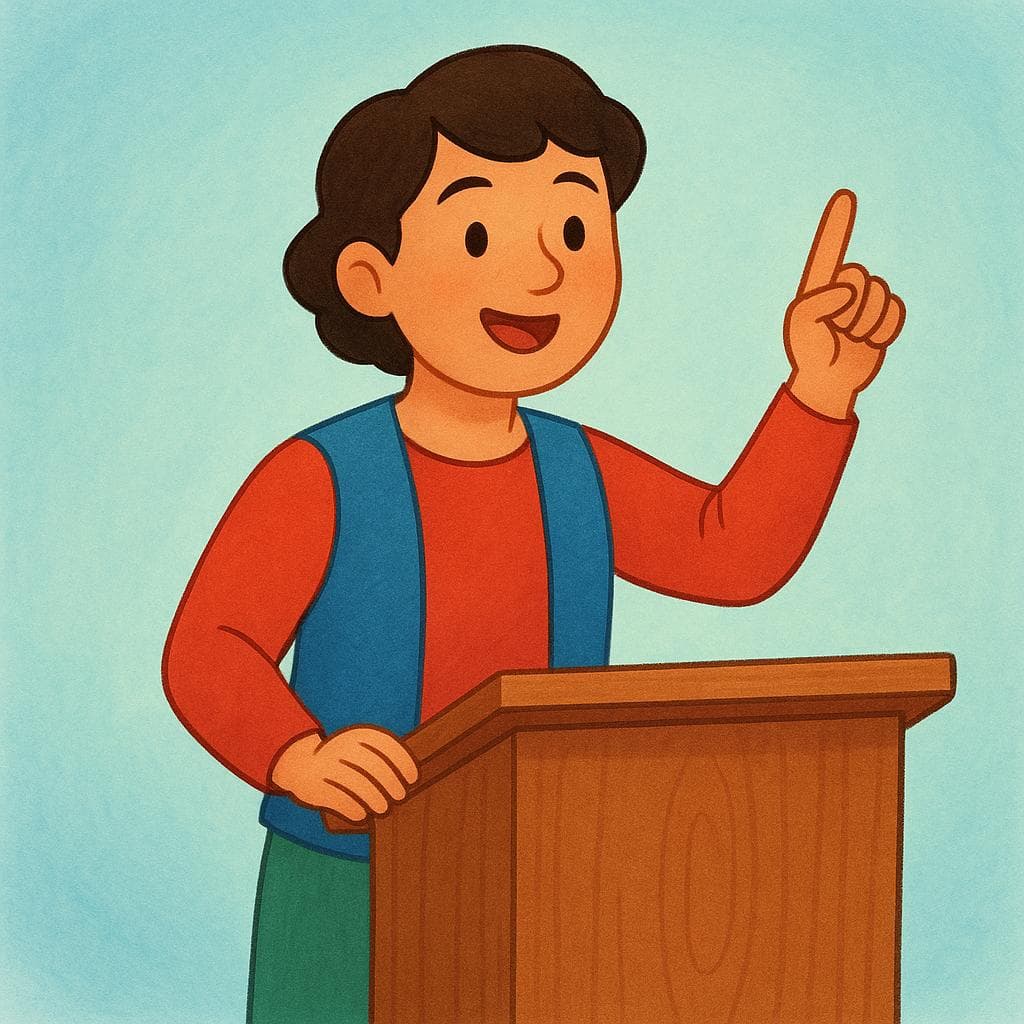
A storybook illustration of a single person standing behind a simple podium, actively making a point with an expressive hand gesture.

The verb form debate means 'he/she/it debates' or argues a point.

debate(verb)

A2regular ir

he/she/it debates

?

present tense action

Also:

you (formal) debate

?

present tense action

📝 In Action

El profesor siempre debate temas difíciles con la clase.

A2

The professor always debates difficult topics with the class.

El equipo debate si debemos cambiar la estrategia o no.

B1

The team debates whether we should change the strategy or not.

Word Connections

Synonyms

  • discutir (to discuss)
  • argumentar (to argue)

Antonyms

💡 Grammar Points

Verbs Ending in -ir

'Debatir' is a regular verb ending in -ir. This means it follows the standard pattern for verbs like 'vivir' (to live) and 'escribir' (to write). Once you learn one, you know many!

⭐ Usage Tips

The 'Tú' Command

The word 'debate' is also the informal command form for 'you' (tú): '¡Debate este punto con tu compañero!' (Debate this point with your partner!).

🔄 Conjugations

indicative

present

él/ella/usteddebate
yodebato
debates
ellos/ellas/ustedesdebaten
nosotrosdebatimos
vosotrosdebatís

imperfect

él/ella/usteddebatía
yodebatía
debatías
ellos/ellas/ustedesdebatían
nosotrosdebatíamos
vosotrosdebatíais

preterite

él/ella/usteddebatió
yodebatí
debastiste
ellos/ellas/ustedesdebatieron
nosotrosdebatimos
vosotrosdebastisteis

subjunctive

present

él/ella/usteddebata
yodebata
debatas
ellos/ellas/ustedesdebatan
nosotrosdebatamos
vosotrosdebatáis

imperfect

él/ella/usteddebatiera
yodebatiera
debatieras
ellos/ellas/ustedesdebatieran
nosotrosdebatiéramos
vosotrosdebatierais

✏️ Quick Practice

💡 Quick Quiz: debate

Question 1 of 1

Which sentence uses 'debate' as a noun?

📚 More Resources

Word Family

Frequently Asked Questions

Is 'debate' always formal, or can I use it for everyday disagreements?

'Debate' is generally reserved for formal, structured discussions (like a school project or a political forum). For a casual disagreement or chat, it's better to use 'discusión' or 'conversación'.

If I want to say 'to debate' in Spanish, what is the infinitive verb?

The infinitive verb is 'debatir.' 'Debate' is just one of its conjugated forms (like 'he debates' or 'you debate').