discúlpame
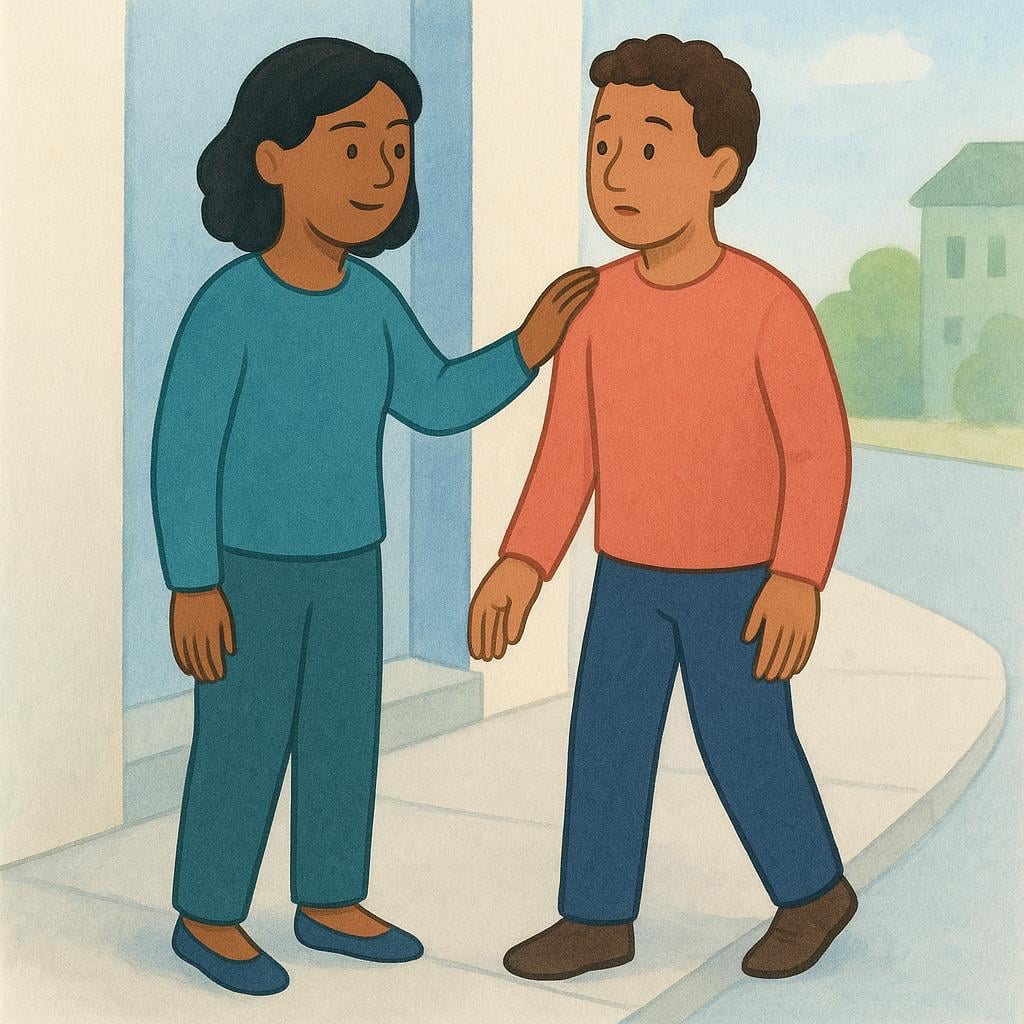
“discúlpame” means “Excuse me” in Spanish (When interrupting or asking to pass).
📝 In Action
Discúlpame, ¿puedes repetir eso?
A1Excuse me, can you repeat that?
Llegué tarde, discúlpame.
A1I arrived late, I'm sorry (forgive me).
Discúlpame, necesito pasar por ahí.
A2Excuse me, I need to pass through there.
Translate to Spanish
Words that translate to "discúlpame" in Spanish:
pardon me→✏️ Quick Practice
Quick Quiz: discúlpame
Question 1 of 1
If you accidentally bump into a stranger on the street, which phrase would be the most appropriate and polite choice?
📚 More Resources
👥 Word Family▼
🎵 Rhymes▼
📚 Etymology▼
The phrase is built from the verb 'disculpar,' which traces back to the Latin prefix 'dis-' (meaning 'apart' or 'undoing') and the root 'culpa' (meaning 'fault' or 'blame'). This literally means 'to take away the blame' from me.
First recorded: N/A (The base verb 'disculpar' is medieval; the compound imperative form is standard usage)
Cognates (Related words)
💡 Master Spanish
Take your Spanish to the next level. Read 200+ illustrated and narrated Spanish stories tailored to your level with the Inklingo app!
Frequently Asked Questions
What is the difference between 'discúlpame' and 'perdóname'?
'Discúlpame' (Excuse me) is generally used for minor apologies or interruptions. 'Perdóname' (Forgive me) is often reserved for more serious mistakes or deeper requests for forgiveness, though they are often interchangeable in casual speech.
Why does 'discúlpame' have an accent mark?
The accent mark is added to 'disculpa' when the pronoun 'me' is attached. It ensures that the stress stays on the third-to-last syllable (the 'u' in 'cúl'), which is where the stress falls in the original verb form 'disculpa'.