freír
“freír” means “to fry” in Spanish. It has 2 different meanings depending on context:
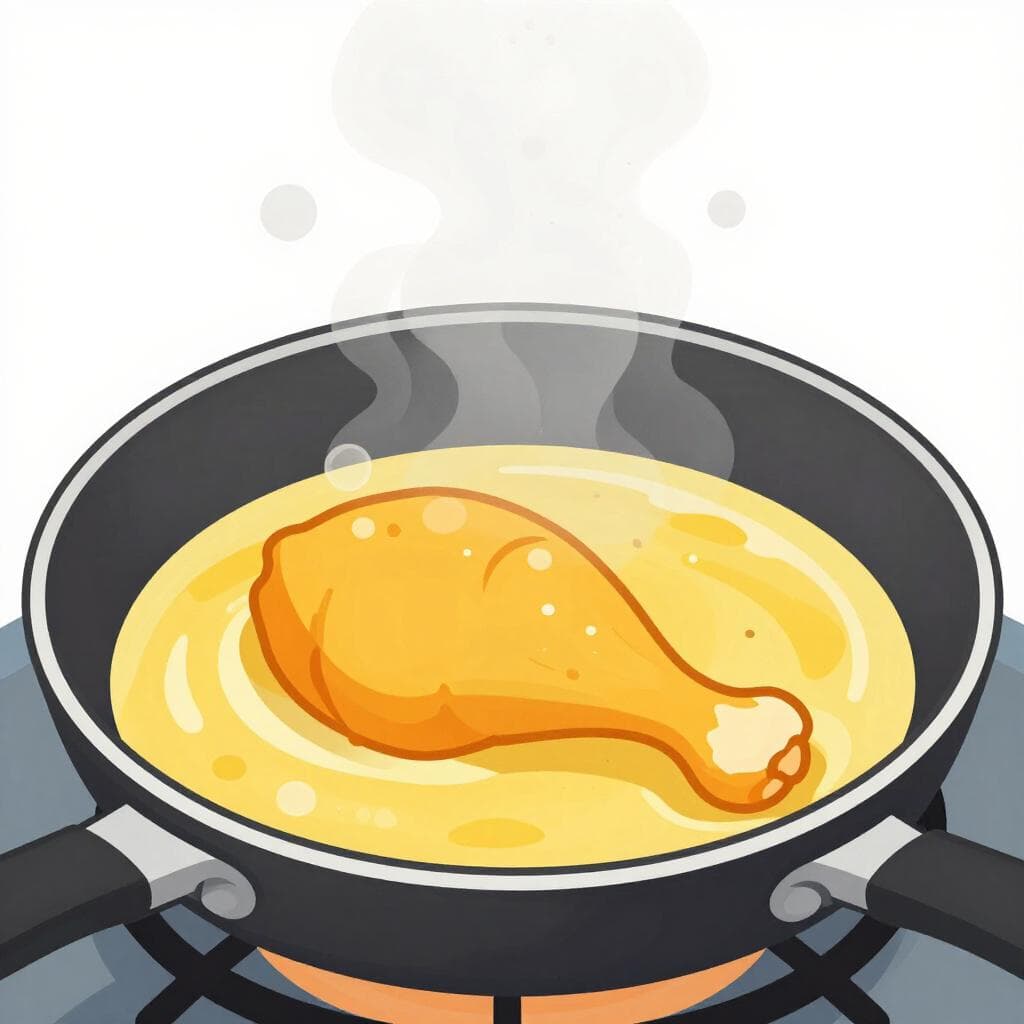

to fry
Also: to sauté
📝 In Action
Me gusta freír las patatas con aceite de oliva.
A1I like to fry the potatoes with olive oil.
Estamos friendo el pescado para la cena.
A2We are frying the fish for dinner.
Si quieres que queden crujientes, tienes que freírlas a fuego alto.
B1If you want them to be crunchy, you have to fry them on high heat.
to pester
Also: to bombard
📝 In Action
Mi jefe me está friendo a correos electrónicos.
B2My boss is bombarding me with emails.
Los niños me frieron a preguntas sobre el viaje.
B2The kids pestered me with questions about the trip.
Subjunctive
Imperfect Subjunctive
Present Subjunctive
Indicative
Preterite
Imperfect
Present
✏️ Quick Practice
Quick Quiz: freír
Question 1 of 3
How do you say 'I fry' in Spanish?
📚 More Resources
👥 Word Family▼
🎵 Rhymes▼
📚 Etymology▼
From the Latin word 'frigere', which also meant to fry or roast.
First recorded: 12th century
Cognates (Related words)
💡 Master Spanish
Take your Spanish to the next level. Read 200+ illustrated and narrated Spanish stories tailored to your level with the Inklingo app!
Frequently Asked Questions
Is 'freído' or 'frito' correct?
Both are technically correct as past participles, but 'frito' is much more common in both conversation and writing.
Does 'freír' have an accent mark?
Yes, it has a written accent on the 'í' in its infinitive form and many of its conjugated forms to show that the 'i' and 'e' are pronounced as separate syllables.
Is it used the same way in Latin America and Spain?
Yes, the basic meaning of cooking is the same, though some countries prefer the verb 'fritar' (which is regular) instead of 'freír'.