liza
“liza” means “fray” in Spanish (a competition or public argument).
fray, arenaAlso: lists, contest
📝 In Action
Dos nuevos candidatos han decidido entrar en la liza electoral.
C1Two new candidates have decided to enter the electoral fray.
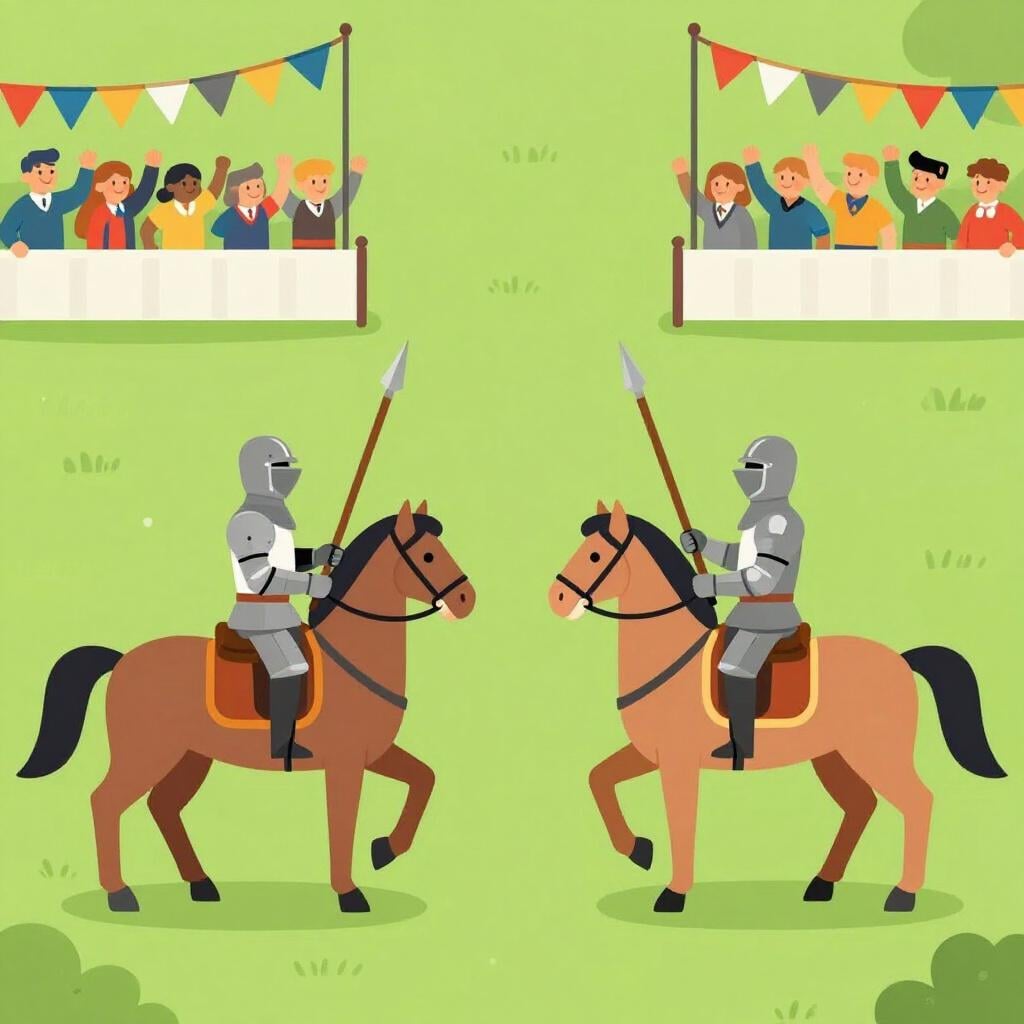
En los libros de historia, los caballeros luchaban con honor en la liza.
C1In history books, knights fought with honor in the lists.
El equipo local bajó a la liza con la intención de ganar el campeonato.
C2The local team entered the arena with the intention of winning the championship.
Word Connections
✏️ Quick Practice
Quick Quiz: liza
Question 1 of 3
What does the phrase 'entrar en liza' mean in a political context?
📚 More Resources
👥 Word Family
📚 Etymology
From the Latin word 'licia,' which was the plural of 'licium' (a thread or a barrier). It originally described the rope or fence that separated the spectators from the knights in a tournament.
First recorded: 13th century
Cognates (Related words)
💡 Master Spanish
Take your Spanish to the next level. Read 200+ illustrated and narrated Spanish stories tailored to your level with the Inklingo app!
Frequently Asked Questions
Is 'liza' the same as 'lisa'?
No. 'Lisa' (with an S) means 'smooth' (feminine). 'Liza' (with a Z) means an arena or a contest. They sound the same in Latin America but different in Spain.
Is it ever used for a physical fight in the street?
Hardly ever. It's too formal for that. For a street fight, you would use words like 'pelea' or 'bronca'.
Is there a verb version of this word?
Not directly. However, the word 'lidiar' (to deal with or to fight) comes from the same root family.