mágico
“mágico” means “magical” in Spanish. It has 2 different meanings depending on context:
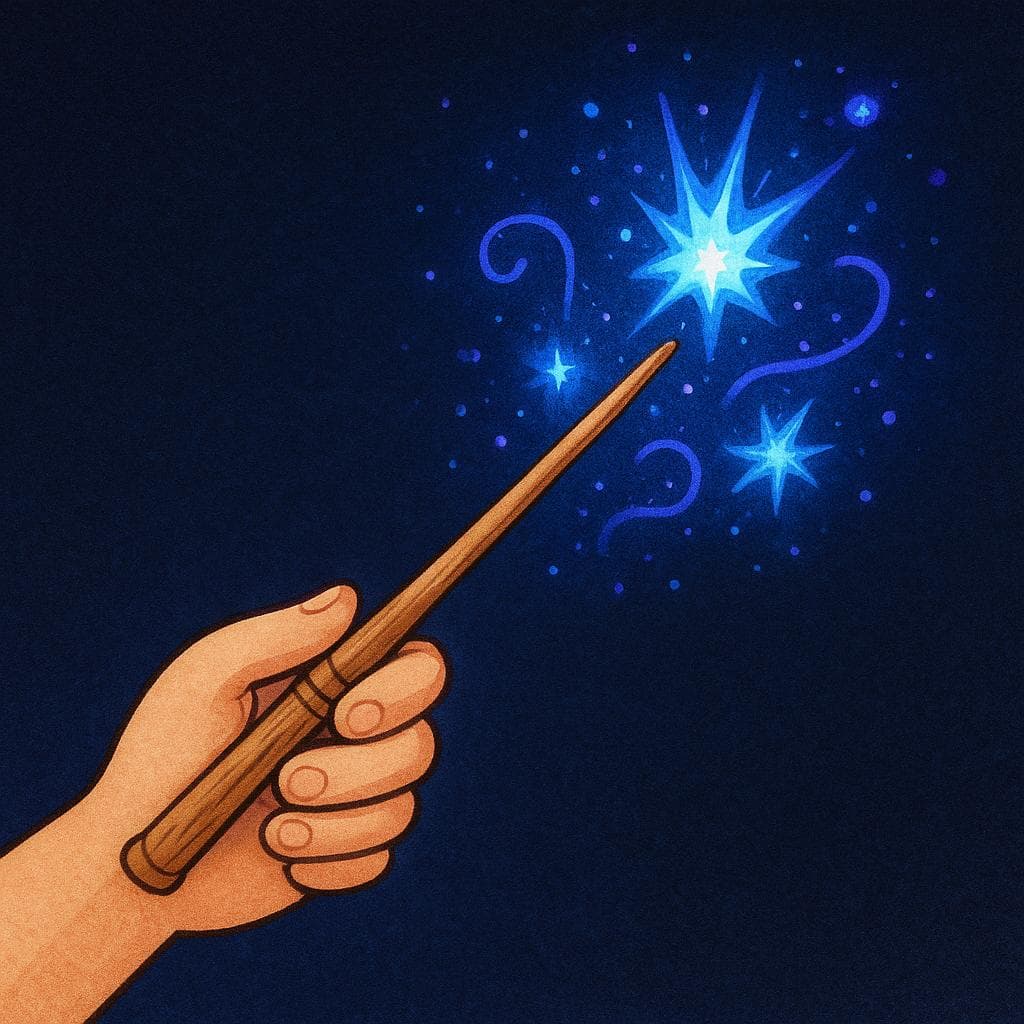

magical, magicAlso: enchanted

📝 In Action
El mago usó una varita mágica para hacer desaparecer el conejo.
A2The magician used a magic wand to make the rabbit disappear.
En el cuento, el anillo mágico concedía tres deseos.
B1In the story, the magical ring granted three wishes.
Word Connections
wonderful, charmingAlso: amazing

📝 In Action
Pasamos una noche mágica bajo las estrellas.
B1We spent a magical/wonderful night under the stars.
El pueblo tiene un ambiente mágico que atrae a muchos turistas.
B2The town has a magical/charming atmosphere that attracts many tourists.
Word Connections
✏️ Quick Practice
Quick Quiz: mágico
Question 1 of 2
Which sentence correctly uses the feminine form of 'mágico'?
📚 More Resources
👥 Word Family
📚 Etymology
Comes from the Latin word *magicus*, which itself derives from the Greek *magikós*. This ultimately relates to the ancient Persian word *magu* (magi or priest), referring to those who practiced ancient religious rites and sorcery.
First recorded: Medieval Spanish (around the 13th century)
Cognates (Related words)
💡 Master Spanish
Take your Spanish to the next level. Read 200+ illustrated and narrated Spanish stories tailored to your level with the Inklingo app!
Frequently Asked Questions
How do I make 'mágico' plural?
To make 'mágico' plural, you just add '-s'. The masculine plural is 'mágicos' (e.g., 'libros mágicos') and the feminine plural is 'mágicas' (e.g., 'noches mágicas').
Is 'mágico' used only for fantasy stories?
No! While it certainly describes things from fantasy (like spells or dragons), it's very often used in everyday conversation to mean 'wonderful,' 'amazing,' or 'charming' when describing a great experience or place.