pagamos
“pagamos” means “we pay” in Spanish (present action/habit).
we pay, we paid
Also: we are paying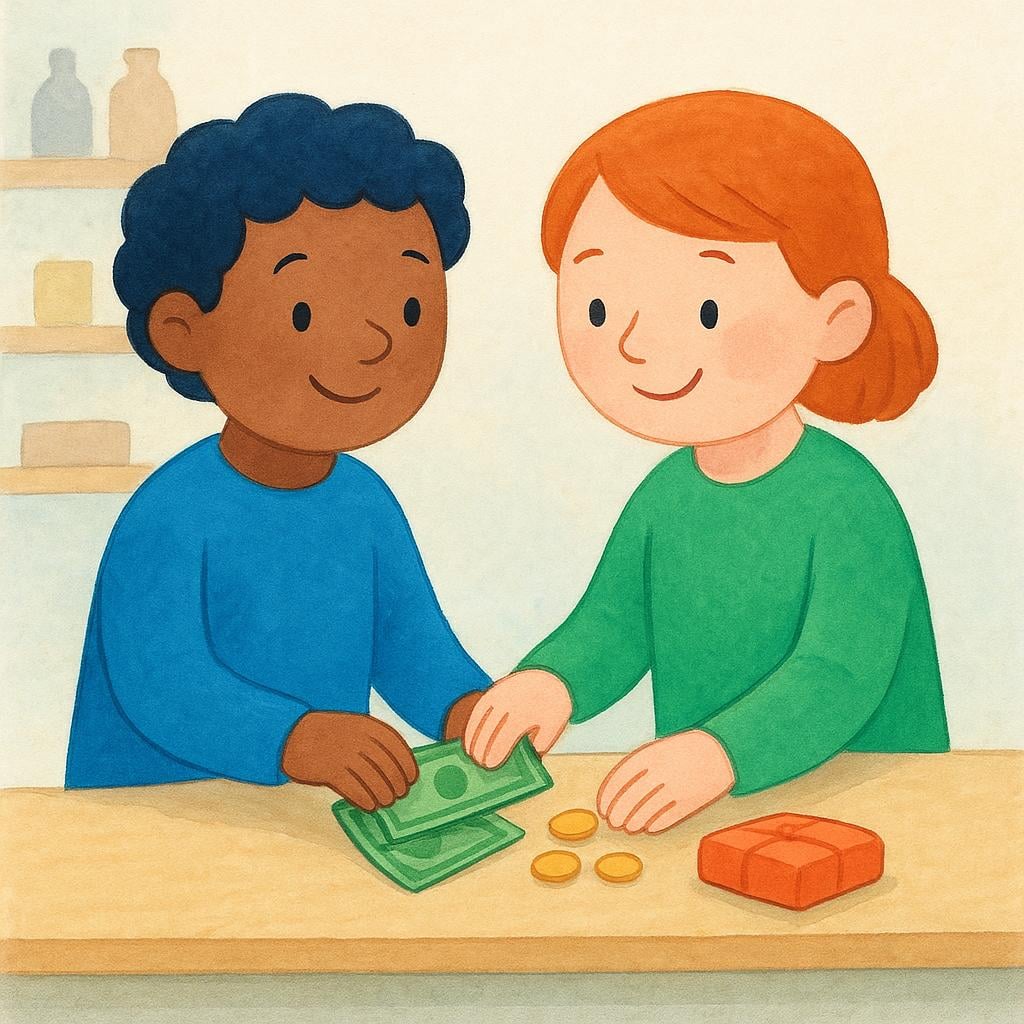
📝 In Action
Todos los meses pagamos la hipoteca sin falta.
A1Every month we pay the mortgage without fail.
Ayer pagamos la cuenta del restaurante con tarjeta.
A2Yesterday we paid the restaurant bill with a card.
¿Cuánto pagamos por el coche nuevo?
A2How much do we pay for the new car? (or How much did we pay?)
Indicative
Preterite
Present
Imperfect
Subjunctive
Present Subjunctive
Imperfect Subjunctive
✏️ Quick Practice
Quick Quiz: pagamos
Question 1 of 2
Which sentence uses 'pagamos' to refer to a completed action in the past?
📚 More Resources
👥 Word Family▼
📚 Etymology▼
Comes from the Latin verb *pacare*, which originally meant 'to appease' or 'to satisfy,' often by settling a debt. This evolved directly into the Spanish verb *pagar* (to pay).
First recorded: Appeared in Spanish as early as the 10th century.
Cognates (Related words)
💡 Master Spanish
Take your Spanish to the next level. Read 200+ illustrated and narrated Spanish stories tailored to your level with the Inklingo app!
Frequently Asked Questions
How do I know if 'pagamos' means 'we pay' or 'we paid'?
You rely entirely on the context! Look for time markers: if the sentence includes words like 'ayer' (yesterday), 'la semana pasada' (last week), or 'hace un mes' (a month ago), it means 'we paid.' If it includes 'siempre' (always), 'todos los días' (every day), or 'ahora' (now), it means 'we pay.'