pasaje
“pasaje” means “ticket” in Spanish. It has 3 different meanings depending on context:
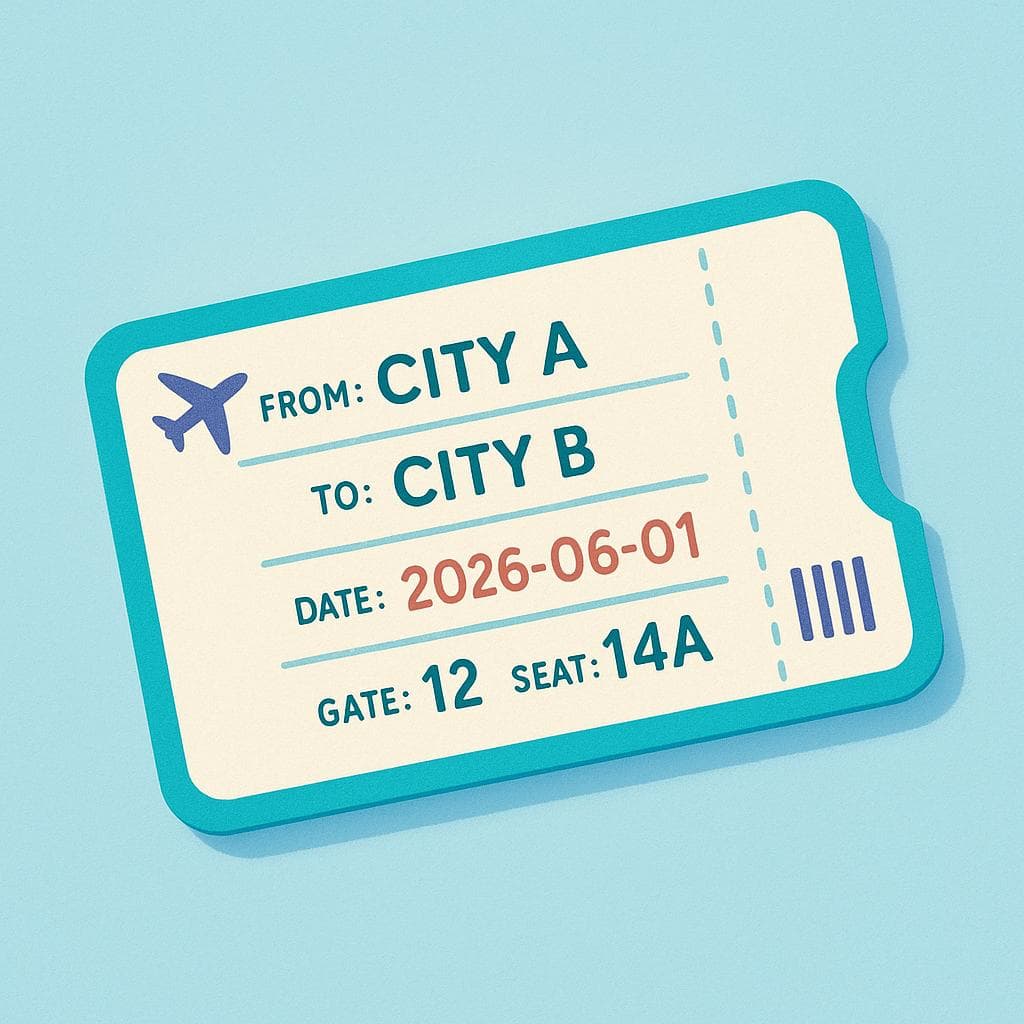


ticket, fareAlso: passage

📝 In Action
Necesito comprar un pasaje de ida y vuelta a la costa.
A2I need to buy a round-trip ticket to the coast.
El pasaje de metro es más caro ahora.
A2The subway fare is more expensive now.
Word Connections
passageway, alleywayAlso: arcade, hallway

📝 In Action
El pasaje detrás del edificio es muy oscuro.
B1The alleyway behind the building is very dark.
Para ir al baño, tienes que cruzar este pasaje.
B1To go to the bathroom, you have to cross this passageway.
Word Connections
passage, excerpt

📝 In Action
El profesor nos pidió analizar este pasaje del libro.
B2The professor asked us to analyze this passage from the book.
Ese pasaje musical es mi parte favorita de la sinfonía.
C1That musical passage is my favorite part of the symphony.
Word Connections
Translate to Spanish
✏️ Quick Practice
Quick Quiz: pasaje
Question 1 of 1
Which sentence uses 'pasaje' to mean a physical location?
📚 More Resources
👥 Word Family
📚 Etymology
The word comes from the Spanish verb 'pasar' (to pass, to go through). It was formed to mean the action or result of passing, whether that is a physical route, a segment of text, or the fee paid to be allowed to pass.
First recorded: 13th century
Cognates (Related words)
💡 Master Spanish
Take your Spanish to the next level. Read 200+ illustrated and narrated Spanish stories tailored to your level with the Inklingo app!
Frequently Asked Questions
What is the difference between 'pasaje' and 'boleto' or 'billete'?
All three mean 'ticket.' 'Pasaje' specifically emphasizes the right to travel or the fare itself, and is very common for bus/plane/train tickets. 'Boleto' (common in Latin America) and 'billete' (common in Spain) are more general and can be used for any type of ticket, like movies, lotteries, or transport.
Why is 'pasaje' masculine even though it ends in -e?
'Pasaje' is masculine (el pasaje). While many Spanish nouns ending in -e can be either gender, 'pasaje' follows the rule for most nouns ending in -aje, which are consistently masculine (e.g., el garaje, el viaje, el mensaje).