pera
“pera” means “pear” in Spanish. It has 3 different meanings depending on context:
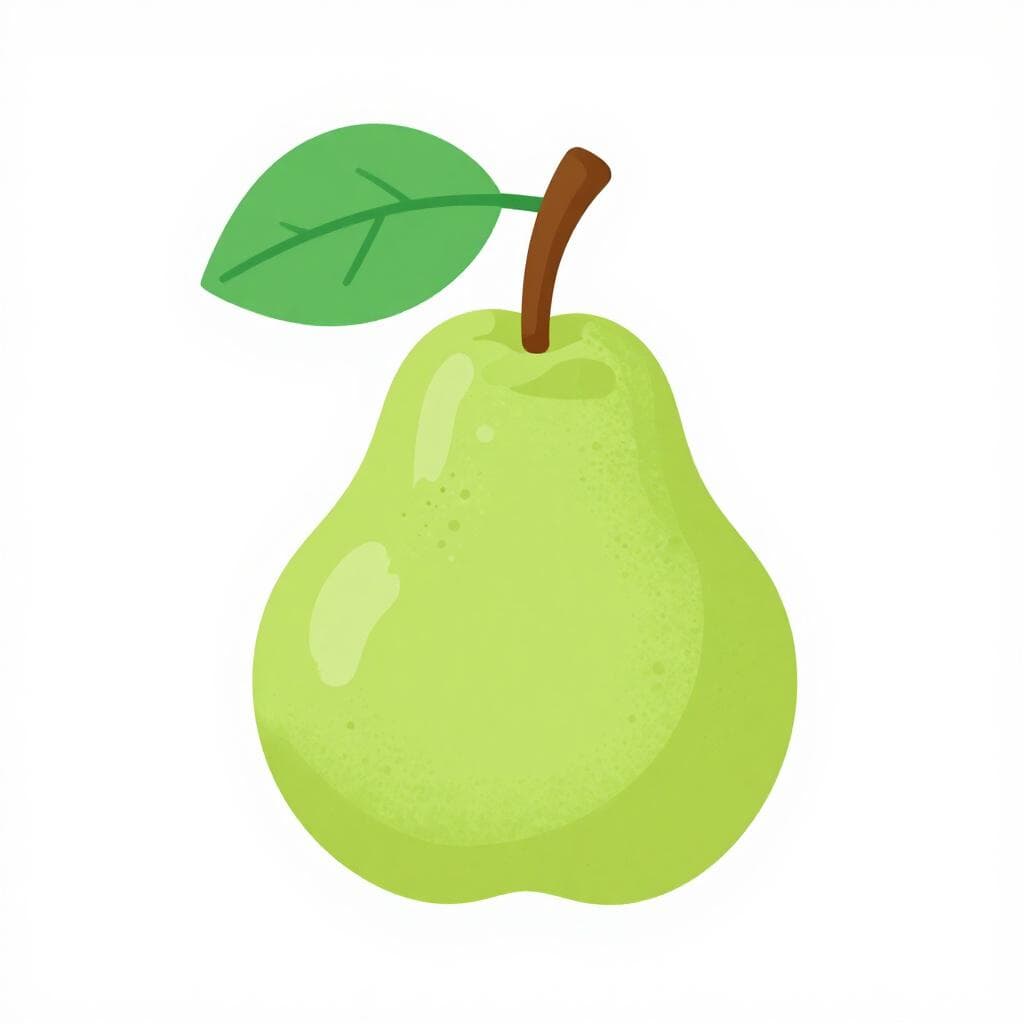


pear
Also: pear tree
📝 In Action
Me gusta comer una pera de postre.
A1I like to eat a pear for dessert.
Las peras están maduras y muy dulces.
A1The pears are ripe and very sweet.
Hay que lavar bien la pera antes de comerla.
A2The pear must be washed well before eating it.
speed bag, light switch
Also: bulb
📝 In Action
El boxeador entrena cada mañana con la pera.
B1The boxer trains every morning with the speed bag.
La pera de la lámpara se ha roto.
B1The lamp's pull-switch is broken.
Usa la pera de goma para limpiar el polvo de la cámara.
B2Use the rubber bulb to clean the dust off the camera.
the best / the limit
Also: incredible
📝 In Action
¡Este nuevo videojuego es la pera!
B2This new video game is amazing!
Mi hermano es la pera, siempre se olvida de las llaves.
B2My brother is too much, he always forgets his keys.
Que me digas eso ahora es la pera, de verdad.
C1You telling me that now is just the limit, honestly.
Vocabulary Collections
Translate to Spanish
✏️ Quick Practice
Quick Quiz: pera
Question 1 of 3
What does the phrase 'pedir peras al olmo' mean?
📚 More Resources
👥 Word Family▼
📚 Etymology▼
From the Latin 'pira', which was the plural form of 'pirum' (pear). Over time, people started using this plural word as a feminine singular word in Spanish.
First recorded: 13th century
Cognates (Related words)
💡 Master Spanish
Take your Spanish to the next level. Read 200+ illustrated and narrated Spanish stories tailored to your level with the Inklingo app!
Frequently Asked Questions
Is 'pera' always feminine?
Yes, whether you are talking about the fruit, the boxing bag, or the slang expression, 'pera' is always a feminine noun (la pera).
What is the difference between 'pera' and 'perilla'?
'Pera' is the fruit or a pear-shaped object. 'Perilla' is a 'little pear' but is most commonly used to mean a goatee (beard) or a door knob.
Can I use 'ser la pera' in a job interview?
No, it's very informal. It's better to use words like 'excelente' or 'increíble' in formal settings.