pianista
“pianista” means “pianist” in Spanish (a person who plays the piano).
pianist
Also: piano player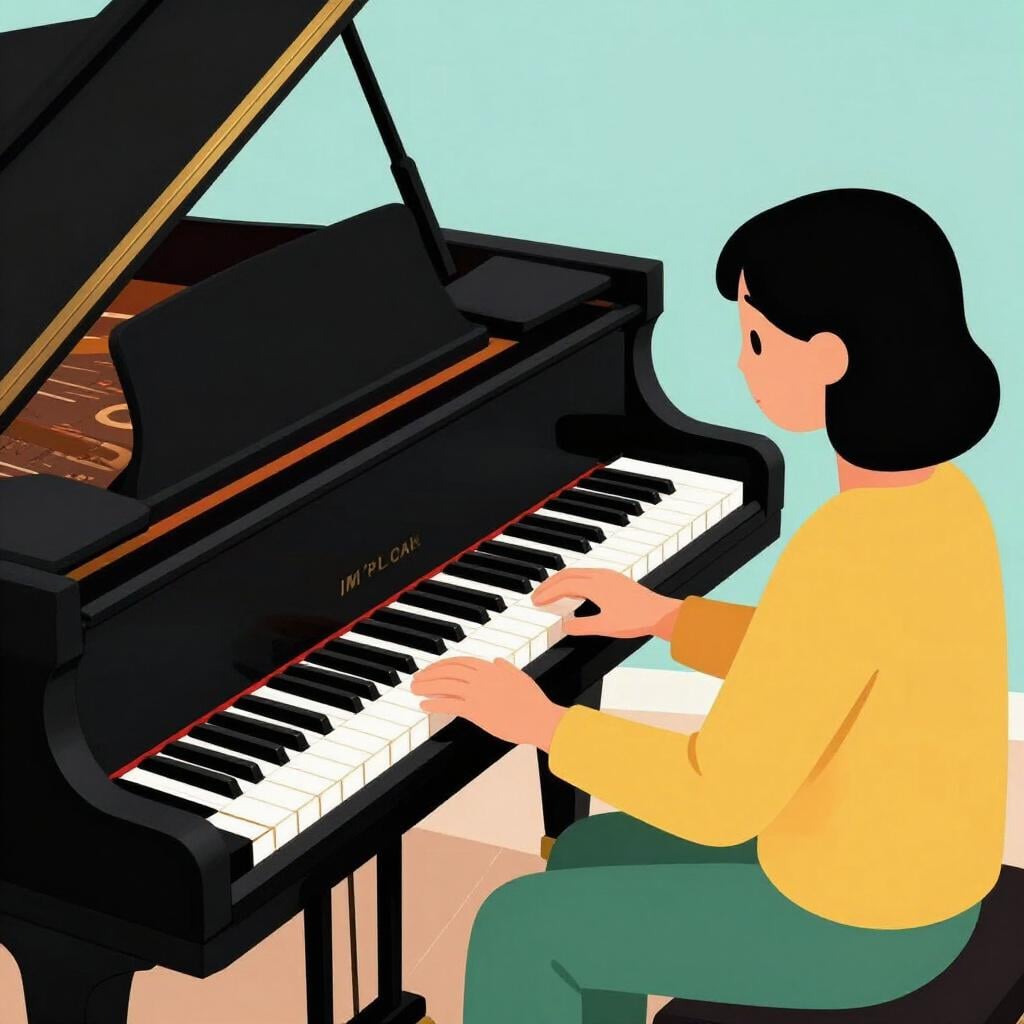
📝 In Action
Mi hermana es una pianista muy talentosa.
A1My sister is a very talented pianist.
El pianista de jazz tocó toda la noche en el club.
A2The jazz pianist played all night at the club.
Para ser un pianista profesional, se requieren años de estudio.
B1To be a professional pianist, years of study are required.
Translate to Spanish
✏️ Quick Practice
Quick Quiz: pianista
Question 1 of 3
How do you say 'the female pianist'?
📚 More Resources
👥 Word Family▼
📚 Etymology▼
From the Spanish word 'piano' combined with the suffix '-ista', which is used to describe a person's profession or interest. The word 'piano' itself comes from the Italian 'pianoforte', meaning 'soft-loud'.
First recorded: 19th century
Cognates (Related words)
💡 Master Spanish
Take your Spanish to the next level. Read 200+ illustrated and narrated Spanish stories tailored to your level with the Inklingo app!
Frequently Asked Questions
Does 'pianista' change in the plural?
Yes! Just like other nouns, add an 's': 'los pianistas' or 'las pianistas'.
Can I use 'pianista' for someone who just plays for fun?
Yes, it applies to both professionals and hobbyists, though 'aficionado al piano' might be used for a casual hobbyist.
Why does it end in 'a' if I am a man?
Spanish has a group of nouns ending in '-ista' (like 'taxista' or 'artista') that are neutral. They don't follow the 'o' for men and 'a' for women rule.