piedras
“piedras” means “stones” in Spanish (natural material, geological).
stones, rocks
Also: gems, pebbles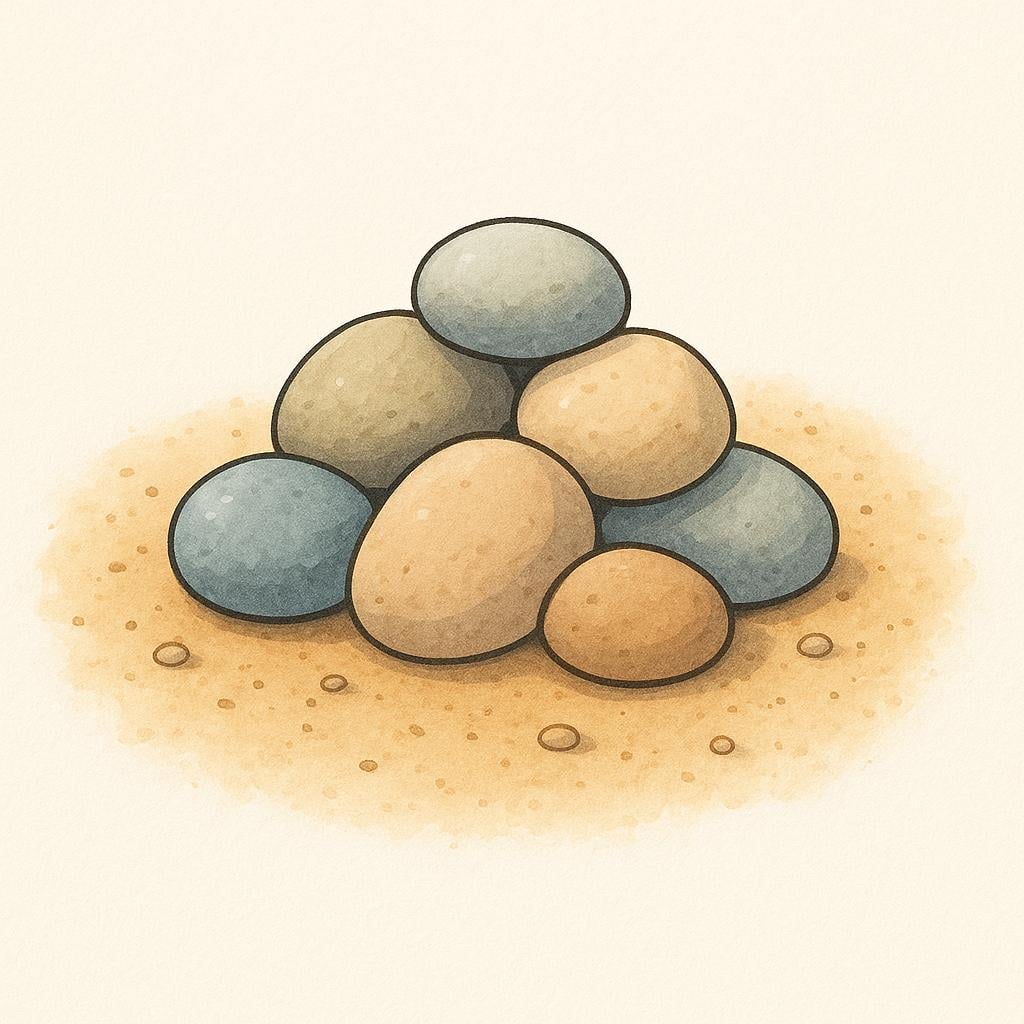
📝 In Action
Los niños recogieron muchas piedras en la playa.
A1The children collected many stones on the beach.
Hay que tener cuidado con las piedras en el camino.
A2You have to be careful with the rocks on the road.
Ella lleva un collar con piedras preciosas.
B1She is wearing a necklace with precious gems.
✏️ Quick Practice
Quick Quiz: piedras
Question 1 of 1
Which sentence uses 'piedras' to mean something valuable, rather than ordinary rocks?
📚 More Resources
👥 Word Family▼
🎵 Rhymes▼
📚 Etymology▼
Comes directly from the Latin word *petra*, which meant 'rock' or 'stone.' This root is also the source of the English name Peter, which means 'rock.'
First recorded: Old Spanish (around the 13th century)
Cognates (Related words)
💡 Master Spanish
Take your Spanish to the next level. Read 200+ illustrated and narrated Spanish stories tailored to your level with the Inklingo app!
Frequently Asked Questions
Is 'piedras' masculine or feminine?
'Piedras' is a feminine plural noun. Its singular form is 'la piedra' (the stone), so you must always use feminine articles and words that describe it (e.g., 'las piedras grandes').
Can 'piedras' mean 'hail'?
Yes, in some regions, especially when referring to a severe storm, 'piedras' can be short for 'piedras de granizo' (hailstones). However, the most common word for hail is 'granizo'.