podrían
“podrían” means “they could” in Spanish. It has 2 different meanings depending on context:
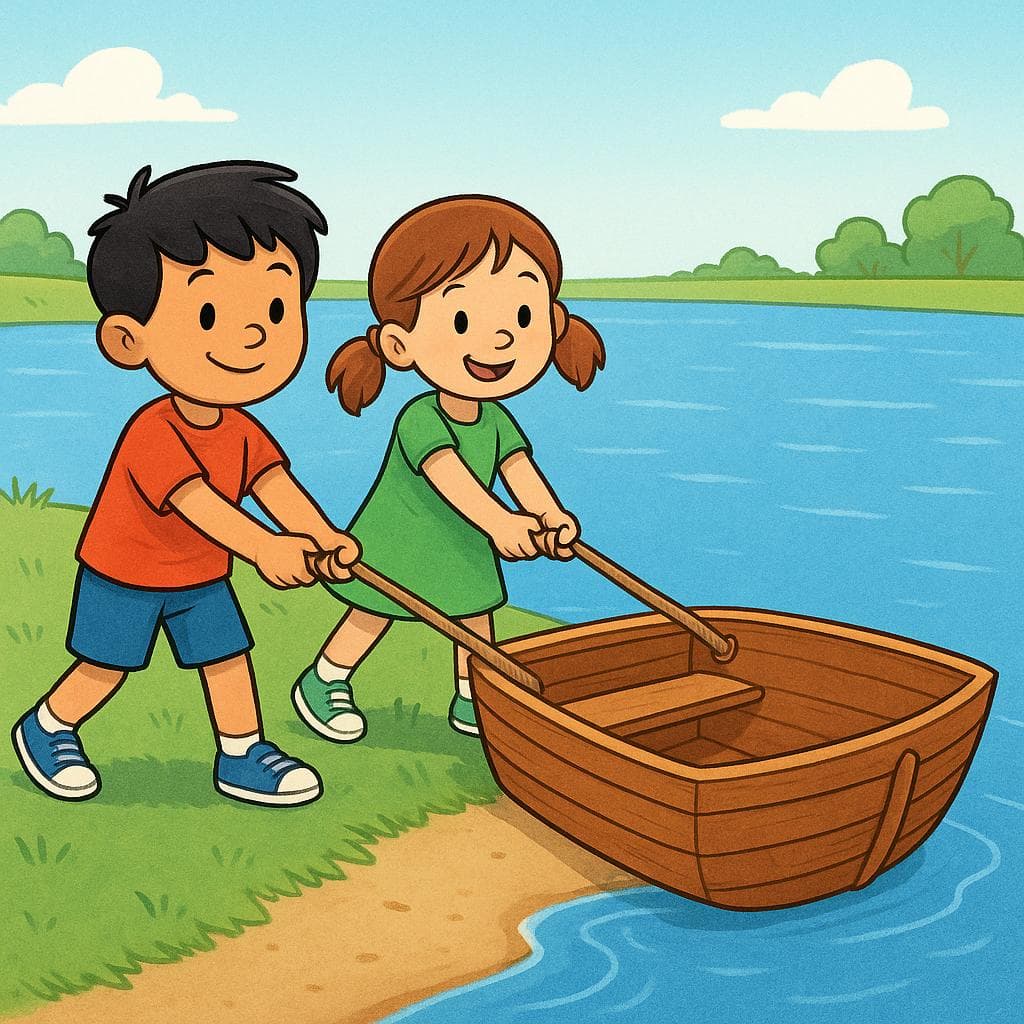

they could
Also: you could, they would be able to
📝 In Action
Si tuvieran más tiempo, podrían visitar el museo.
B1If they had more time, they could visit the museum.
Con un buen mapa, podrían encontrar el camino fácilmente.
B1With a good map, they could find the way easily.
Creo que ellos podrían ganar el partido.
A2I think that they could win the game.
could you
Also: could they
📝 In Action
¿Podrían ayudarme con estas cajas, por favor?
A2Could you help me with these boxes, please?
Disculpen, ¿podrían decirme dónde está la estación?
A2Excuse me, could you tell me where the station is?
Ustedes podrían esperar en la sala de juntas.
B1You all could wait in the conference room.
🔄 Conjugations
indicative
present
imperfect
preterite
subjunctive
present
imperfect
Translate to Spanish
Words that translate to "podrían" in Spanish:
could they→✏️ Quick Practice
Quick Quiz: podrían
Question 1 of 1
Which sentence uses 'podrían' to talk about a hypothetical situation?
📚 More Resources
👥 Word Family▼
🎵 Rhymes▼
📚 Etymology▼
'Podrían' comes from the base verb 'poder'. This verb grew out of the Latin word 'posse', which meant 'to be able'. The ending '-ían' is a clue that it's a conditional form, which in older Spanish was formed by attaching the entire verb 'haber' to the end of another verb.
First recorded: The conditional tense developed during the transition from Latin to Spanish, solidifying around the 12th-13th centuries.
Cognates (Related words)
💡 Master Spanish
Take your Spanish to the next level. Read 200+ illustrated and narrated Spanish stories tailored to your level with the Inklingo app!
Frequently Asked Questions
What's the difference between 'podían' and 'podrían'?
The little 'r' makes a big difference! 'Podían' (with no 'r') is for the past; it means 'they were able to' or 'they could' do something repeatedly or over a period of time. 'Podrían' (with the 'r') is for hypothetical situations; it means 'they would be able to' or 'they could' do something if conditions were right. One is about the real past, the other is about a possible future or present.
Is 'podrían' only for 'they'?
No, it's also the form for 'ustedes', which means 'you all' (formal or informal depending on the region). So, '¿Podrían ayudarme?' means 'Could you all help me?'.