Inklingo

saludo

/sah-LOO-doh/

greeting

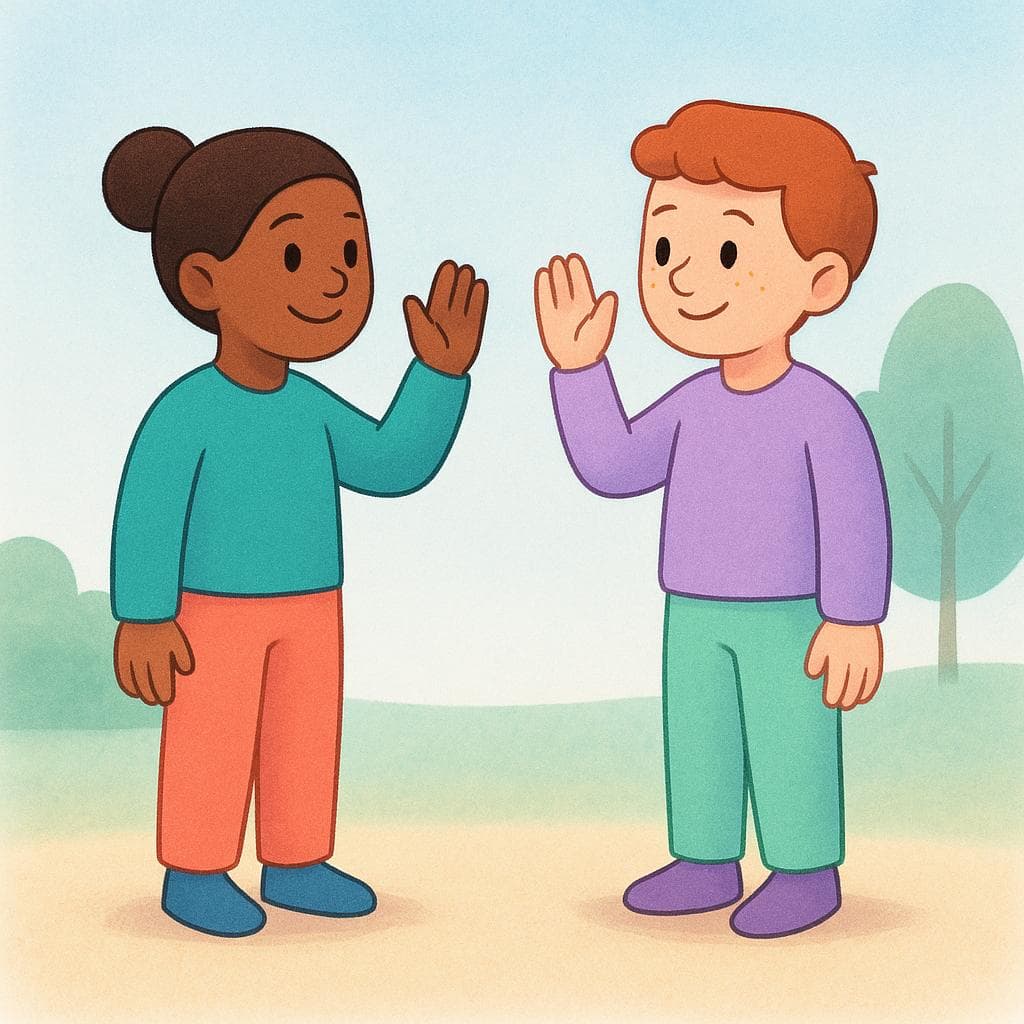
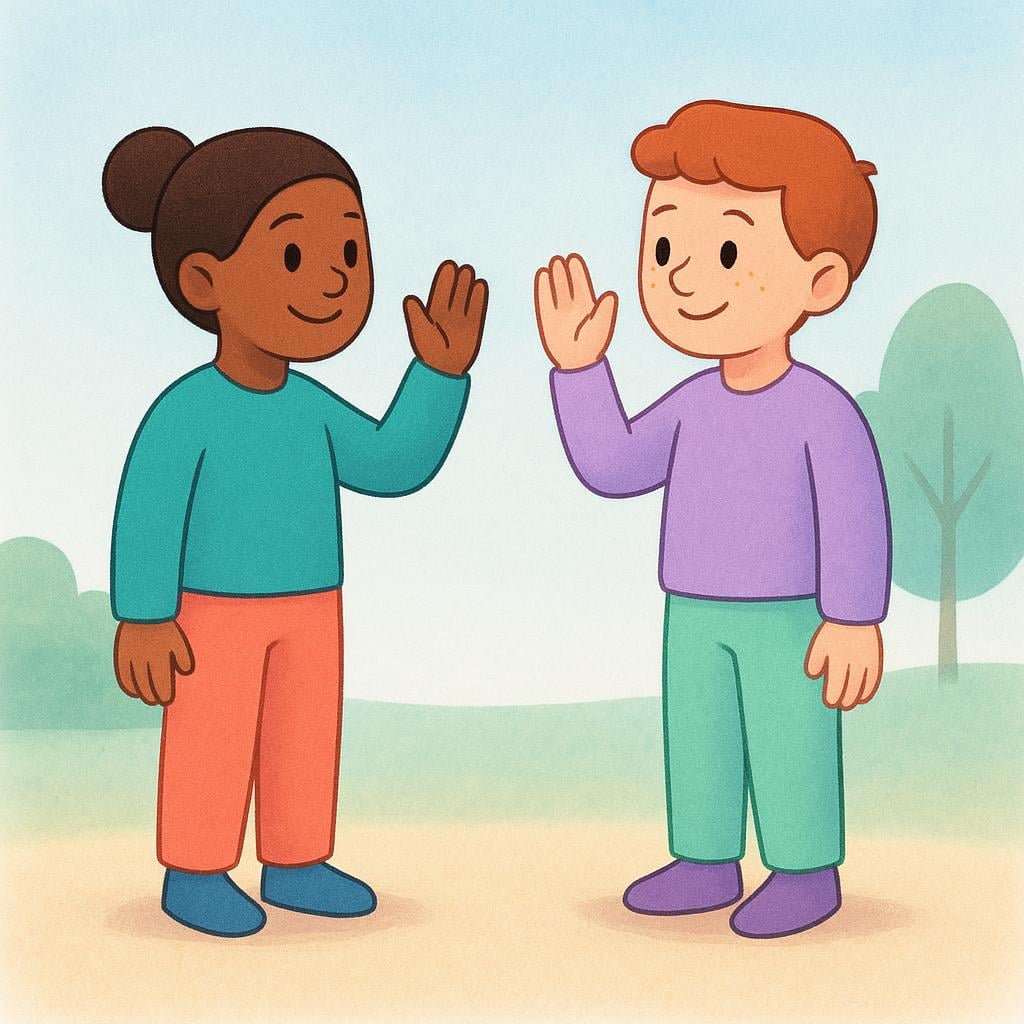
Two stylized, friendly figures facing each other, both raising a hand in a simple wave gesture, symbolizing a greeting.

Saludo (noun) means 'greeting,' or the act of acknowledging someone.

saludo(noun)

mA1

greeting

?

An act of saying hello or acknowledging someone.

,

salutation

?

Formal written or spoken acknowledgment.

Also:

regards

?

Used in the plural, 'saludos', often in letters or messages.

,

wave

?

A physical gesture of greeting.

📝 In Action

Su saludo fue muy cordial y amable.

A2

His greeting was very warm and friendly.

Al final del correo, puse un saludo afectuoso.

B1

At the end of the email, I put an affectionate salutation.

Recibimos muchos saludos de cumpleaños por mensaje.

A1

We received many birthday greetings via message.

Word Connections

Synonyms

  • bienvenida (welcome)
  • felicitación (congratulation)

Common Collocations

  • mandar saludosto send regards
  • recibir un saludoto receive a greeting

💡 Grammar Points

Masculine Noun Rule

Since 'saludo' ends in '-o', it is a masculine noun and uses masculine articles (el saludo, un saludo).

❌ Common Pitfalls

Confusing Noun and Verb

Mistake: "Using 'saludo' (the noun) when you mean the verb 'saludar'."

Correction: Remember 'saludo' (noun) is the act itself, while 'saludar' is the action (to greet).

⭐ Usage Tips

Formal Closings

When closing a letter or email, using 'Saludos' (plural) is a very common, neutral way to sign off, similar to 'Regards' or 'Best'.

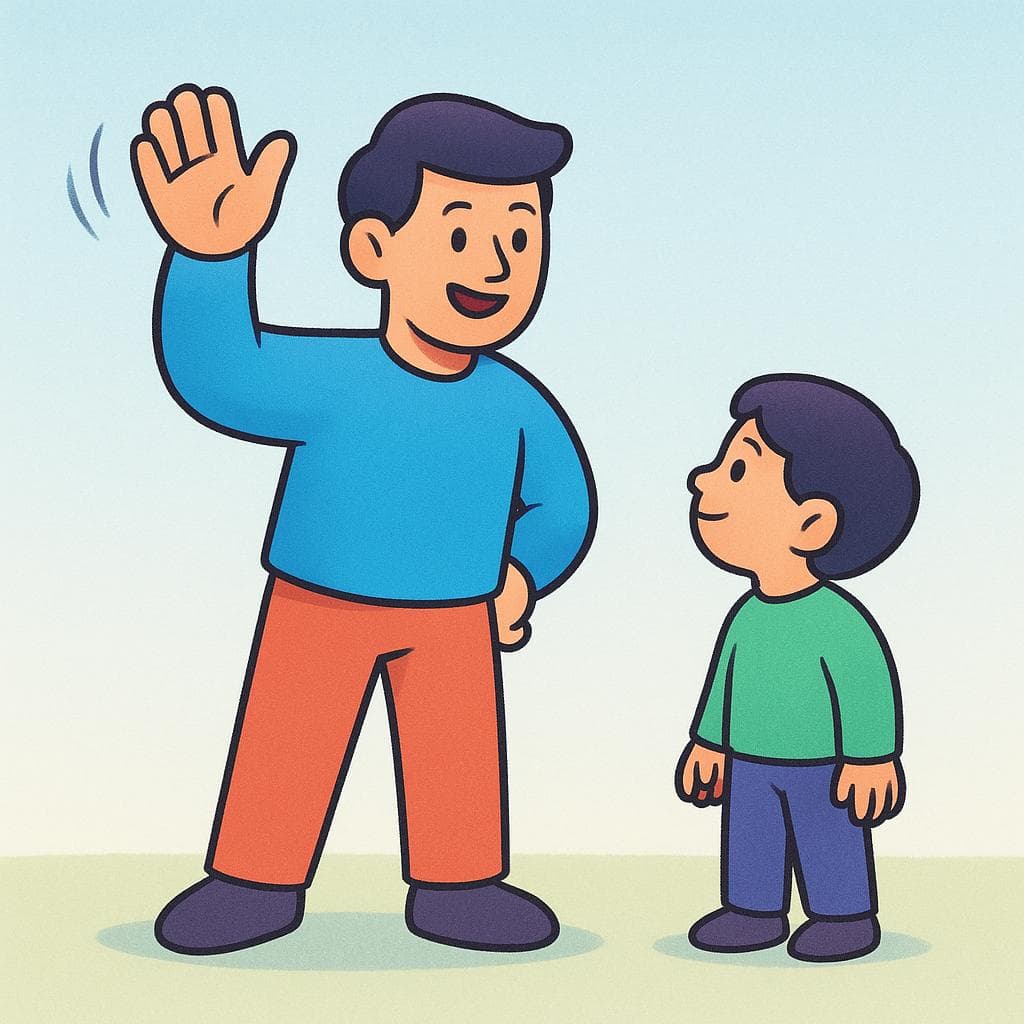
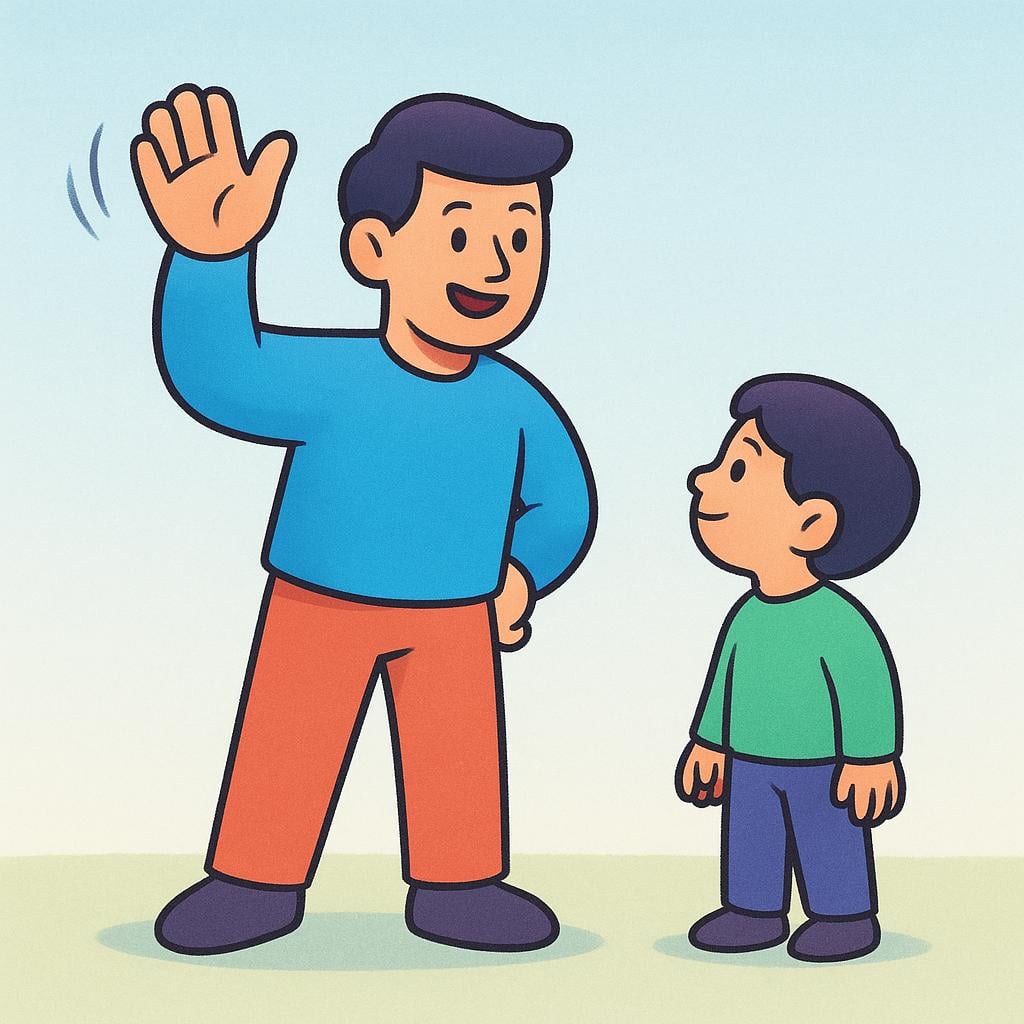
A single stylized figure actively raising one hand in an enthusiastic wave gesture toward a second, passive figure.

Saludo (verb) means 'I greet.' The image depicts the action of the speaker performing the greeting.

saludo(verb)

A1regular ar

I greet

?

The action of saying hello, done by the speaker.

,

I salute

?

Formal or military acknowledgment.

Also:

I say hello

?

A simple way to express the action.

📝 In Action

Yo siempre saludo a mis vecinos cuando los veo.

A1

I always greet my neighbors when I see them.

Si lo encuentro, le saludo y le doy tu mensaje.

A2

If I find him, I greet him and give him your message.

Word Connections

Synonyms

  • dar la bienvenida (to welcome)
  • decir hola (to say hello)

Antonyms

  • despedirse (to say goodbye)

💡 Grammar Points

Regular AR Verb

'Saludar' is a regular verb ending in -AR, meaning its conjugations follow the standard, predictable patterns. Once you learn one regular -AR verb, you know them all!

❌ Common Pitfalls

Using 'Yo' too much

Mistake: "Saying 'Yo saludo' unnecessarily."

Correction: Since the verb form 'saludo' already tells you the speaker is 'yo' (I), you usually omit 'yo' unless you need to emphasize who is doing the action. Just say 'Saludo a mi jefe'.

🔄 Conjugations

subjunctive

imperfect

yosaludara / saludase
él/ella/ustedsaludara / saludase
saludaras / saludases
vosotrossaludarais / saludaseis
nosotrossaludáramos / saludásemos
ellos/ellas/ustedessaludaran / saludasen

present

yosalude
él/ella/ustedsalude
saludes
vosotrossaludéis
nosotrossaludemos
ellos/ellas/ustedessaluden

indicative

imperfect

yosaludaba
él/ella/ustedsaludaba
saludabas
vosotrossaludabais
nosotrossaludábamos
ellos/ellas/ustedessaludaban

present

yosaludo
él/ella/ustedsaluda
saludas
vosotrossaludáis
nosotrossaludamos
ellos/ellas/ustedessaludan

preterite

yosaludé
él/ella/ustedsaludó
saludaste
vosotrossaludasteis
nosotrossaludamos
ellos/ellas/ustedessaludaron

✏️ Quick Practice

💡 Quick Quiz: saludo

Question 1 of 2

Which sentence uses 'saludo' as the noun (the thing) and not the verb (the action)?

📚 More Resources

Frequently Asked Questions

What is the difference between 'saludo' and 'hola'?

'Hola' is the word 'hello' itself. 'Saludo' is the noun meaning 'a greeting' (the act or the gesture). You can give a 'saludo' by saying 'hola'.

Why is 'saludo' related to 'salud' (health)?

Historically, when people greeted each other, they were wishing the other person well. The root word *salus* meant health or well-being, so the noun 'saludo' and the verb 'saludar' literally mean 'to wish health upon someone.'