How to Say "wave" in Spanish
The most common Spanish word for “wave” is “ola” — use 'ola' for the literal movement of water in the sea or ocean, or for a general surge or spell of a phenomenon like heat or crime.

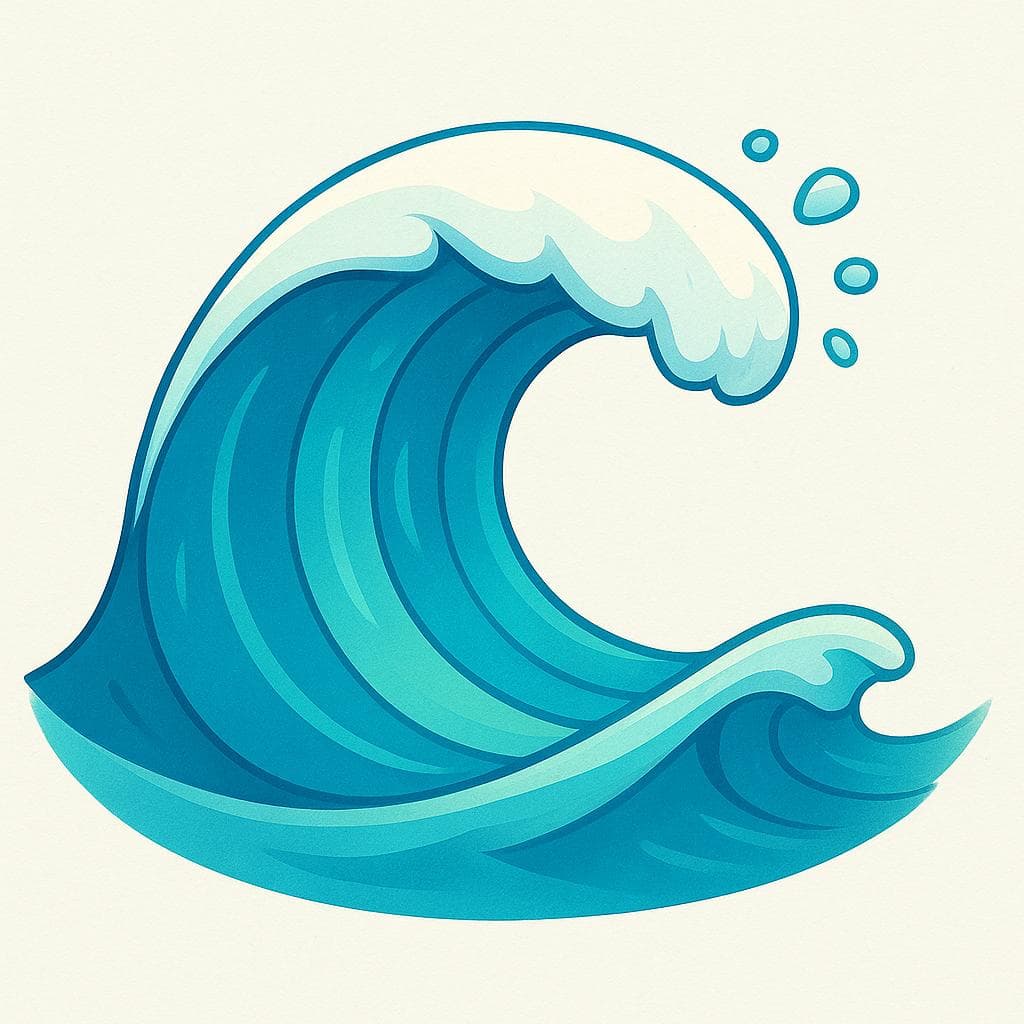



ola
OH-lahˈo.la

Examples
Me gusta surfear las olas grandes.
I like to surf the big waves.
Me encanta ver cómo rompen las olas en la playa.
I love watching how the waves break on the beach.
Ten cuidado, hoy hay olas muy grandes.
Be careful, there are very big waves today.
El surfista esperó la ola perfecta durante horas.
The surfer waited for the perfect wave for hours.
Feminine Noun
Remember that 'ola' is a feminine word, so you must use 'la' or 'una' before it: 'la ola' (the wave), 'unas olas' (some waves).
Figurative Use
In this context, 'ola' describes a large, powerful, and often sudden increase or movement, just like a water wave, but applied to non-physical things.
Technical Usage
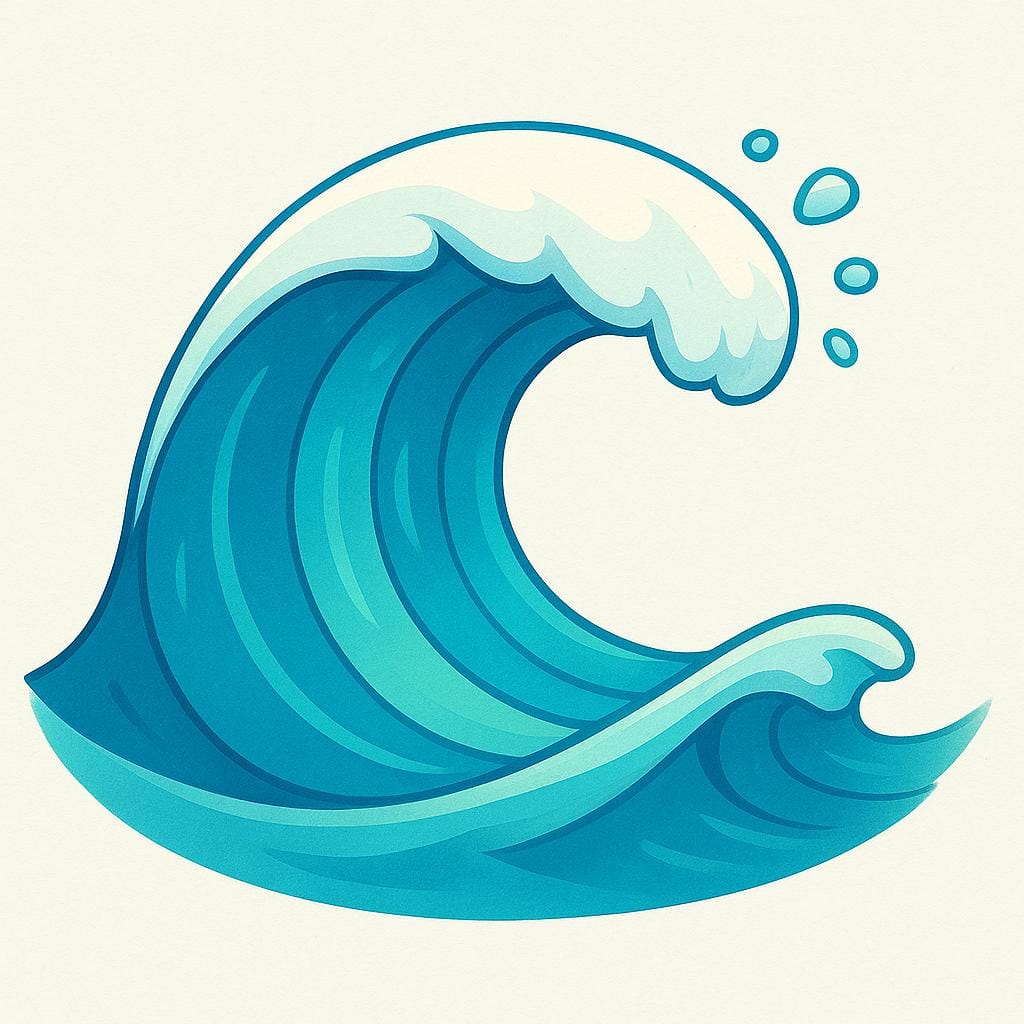
While 'ola' is used for large, physical waves (like seismic or tidal), the word 'onda' is far more common for abstract or technical waves like sound waves ('ondas sonoras') or radio waves ('ondas de radio').
onda
OHN-dahˈon.da
Examples
La piedra creó una onda circular en el estanque.
The stone created a circular wave in the pond.
El barco creó una onda en el agua al pasar.
The boat created a wave in the water as it passed.
Las ondas sonoras viajan más rápido en el agua que en el aire.
Sound waves travel faster in water than in air.
Gender Check
Even though 'onda' ends in '-a,' it always uses the feminine article 'la' and feminine adjectives: 'la onda grande' (the big wave).
oleada
oh-leh-AH-daho.leˈa.ða

Examples
Se produjo una oleada de protestas tras la decisión.
A wave of protests occurred after the decision.
Hubo una oleada de calor el verano pasado.
There was a heatwave last summer.
Una oleada de turistas llegó al pequeño pueblo.
A wave of tourists arrived at the small town.
Sintió una fuerte oleada de nostalgia al ver las fotos.
He felt a strong surge of nostalgia when seeing the photos.
Always Feminine
Even though it refers to a 'rush' or 'surge,' this word is always feminine. You must always use 'la' or 'una' with it.
Using 'de' for description
To describe what kind of wave it is, just add 'de' followed by the noun (e.g., 'oleada de frío' for a cold snap).
Oleada vs. Ola
Mistake: “Using 'oleada' for the waves you surf on.”
Correction: Use 'ola' for physical waves in the ocean; use 'oleada' for a figurative rush of people, feelings, or weather.
saludo
sah-LOO-dohsaˈluðo

Examples
Me hizo un saludo rápido desde el coche.
He gave me a quick wave from the car.
Su saludo fue muy cordial y amable.
His greeting was very warm and friendly.
Al final del correo, puse un saludo afectuoso.
At the end of the email, I put an affectionate salutation.
Recibimos muchos saludos de cumpleaños por mensaje.
We received many birthday greetings via message.
Masculine Noun Rule
Since 'saludo' ends in '-o', it is a masculine noun and uses masculine articles (el saludo, un saludo).
Confusing Noun and Verb
Mistake: “Using 'saludo' (the noun) when you mean the verb 'saludar'.”
Correction: Remember 'saludo' (noun) is the act itself, while 'saludar' is the action (to greet).
marea
mah-REH-ahmaˈɾea

Examples
Una marea de turistas inundó la ciudad.
A wave of tourists flooded the city.
Una marea de aficionados se dirigió al estadio después de la victoria.
A wave/flood of fans headed to the stadium after the victory.
Sintió una marea de tristeza al recordar su infancia.
She felt a surge of sadness remembering her childhood.
Figurative Use
When used figuratively, 'marea' emphasizes the overwhelming, often unstoppable nature of the group or emotion, much like a real tide.
Distinguishing 'Ola', 'Onda', and 'Oleada'
Learn Spanish with Inklingo
Interactive stories, personalized learning, and more.