senos
“senos” means “breasts” in Spanish. It has 2 different meanings depending on context:
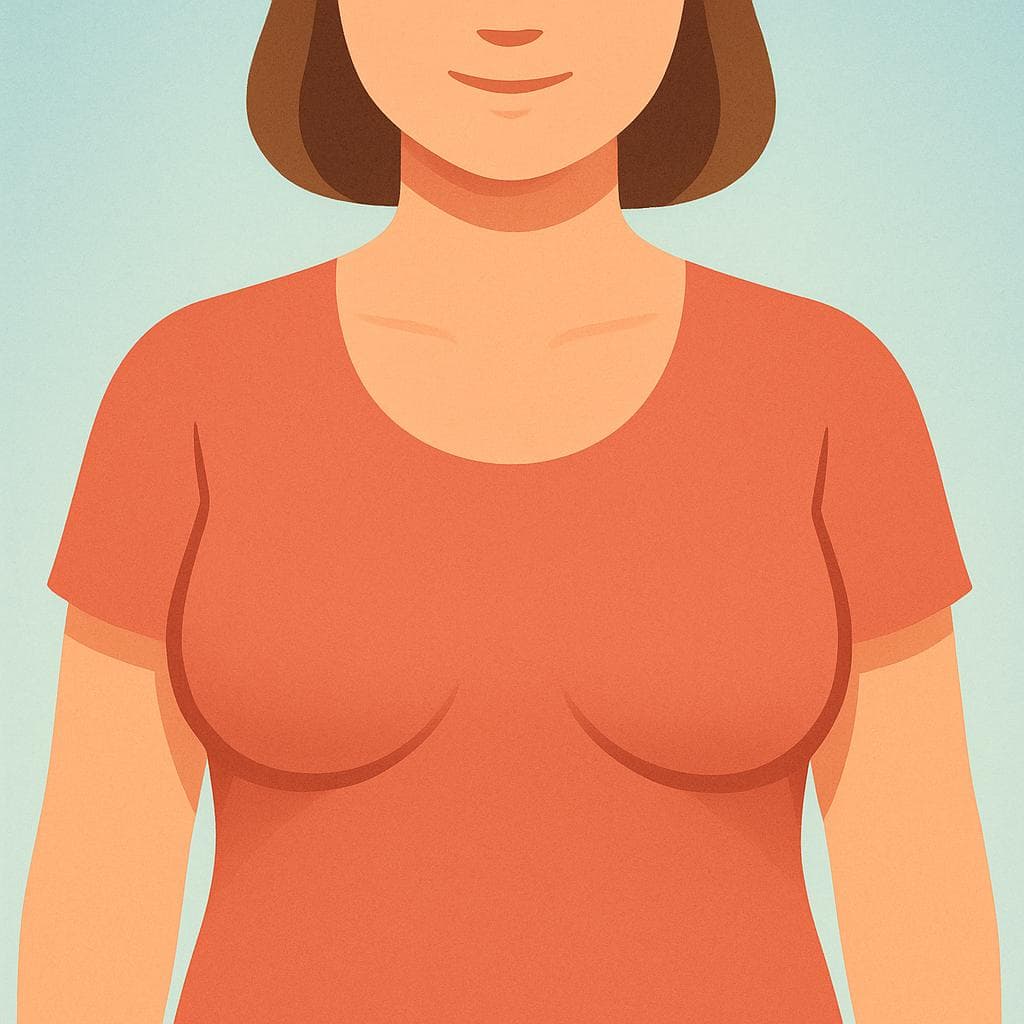

breasts
Also: bosom
📝 In Action
Ella se hizo un examen de senos anual.
B1She had an annual breast exam.
Los senos son glándulas mamarias y pueden producir leche.
B2Breasts are mammary glands and can produce milk.
sines
Also: bays
📝 In Action
En este gráfico, los senos de los ángulos están representados por la onda azul.
C1In this graph, the sines of the angles are represented by the blue wave.
Estudiamos los senos y cosenos en la clase de trigonometría avanzada.
C1We studied sines and cosines in advanced trigonometry class.
✏️ Quick Practice
Quick Quiz: senos
Question 1 of 1
Which sentence uses 'senos' in a technical, mathematical way?
📚 More Resources
👥 Word Family▼
🎵 Rhymes▼
📚 Etymology▼
From the Latin word *sinus*, which meant 'curve,' 'fold,' 'hollow,' 'bosom,' or 'bay/gulf.' This original meaning of 'hollow' or 'curve' explains both the anatomical use (a curved part of the body) and the mathematical use (derived from the curve of a circle).
First recorded: Medieval Latin (for the anatomical and mathematical senses)
Cognates (Related words)
💡 Master Spanish
Take your Spanish to the next level. Read 200+ illustrated and narrated Spanish stories tailored to your level with the Inklingo app!
Frequently Asked Questions
Is 'senos' always masculine, even though it refers to a female body part?
Yes, 'senos' is the plural of the masculine noun 'el seno.' The gender of the noun in Spanish does not always match the biological gender of the person or thing it describes. Always use masculine articles and adjectives (e.g., 'los senos grandes').
What is the difference between 'senos' and 'pechos'?
'Senos' is often preferred in formal, medical, or clinical language. 'Pechos' is more general and can refer to the whole chest area for both men and women, but it is also commonly used to mean 'breasts' in everyday conversation.