Inklingo

soltar

/sohl-TAHR/

to let go

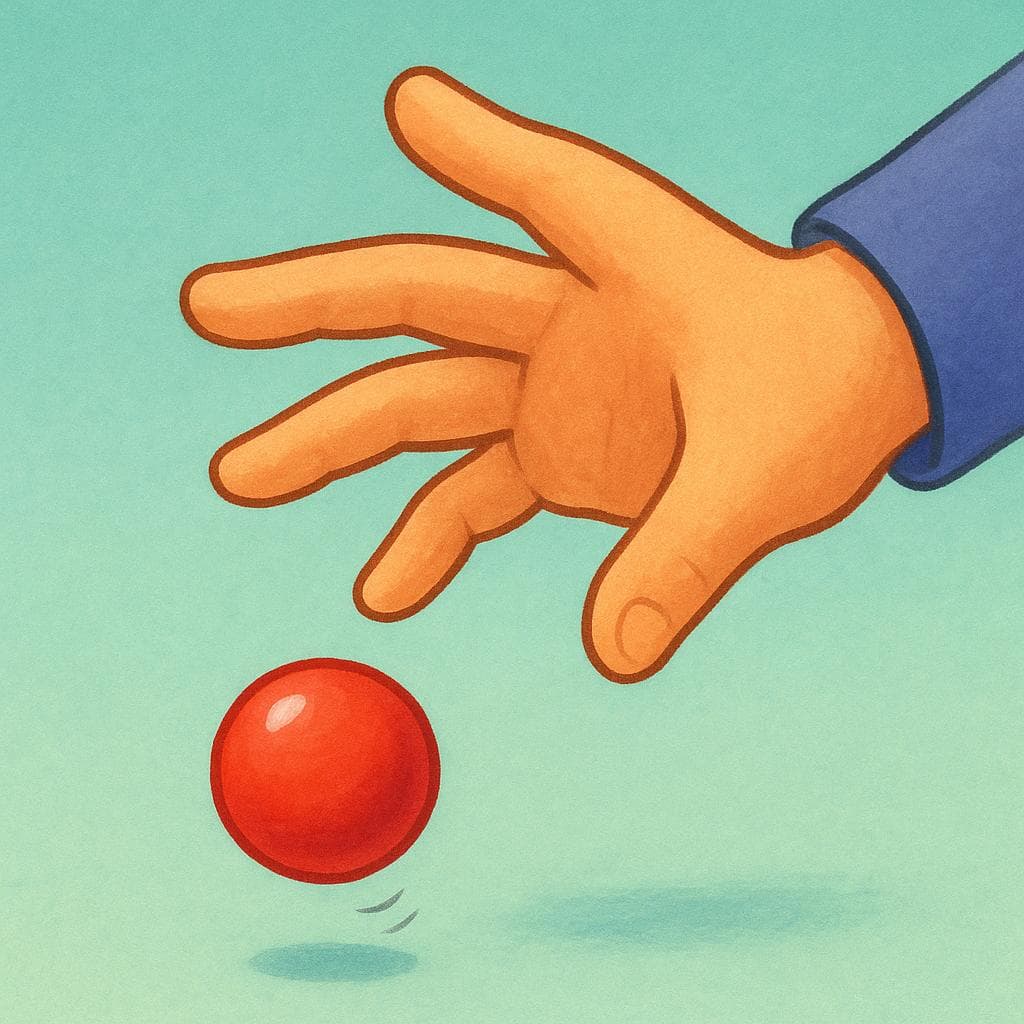
A close-up view of a person's hand opening its grip, allowing a small, colorful ball to fall downwards.

Soltar: to let go (releasing grip).

soltar(verb)

A2stem-changing (o>ue in present tenses) ar

to let go

?

releasing grip

,

to drop

?

accidental release

,

to release

?

setting free

Also:

to unfasten

?

a seatbelt, knot

📝 In Action

Solté el globo por accidente y voló muy alto.

A2

I accidentally let go of the balloon and it flew very high.

El policía soltó al detenido porque no había pruebas.

B1

The police officer released the detainee because there was no evidence.

Word Connections

Synonyms

  • dejar ir (to let go)
  • liberar (to free)

Antonyms

  • agarrar (to grab)
  • retener (to hold back)

Common Collocations

  • soltar la manoto let go of someone's hand
  • soltar la correato unleash (a dog)

💡 Grammar Points

Stem-Change Alert

In the present tense, the 'o' in the root changes to 'ue' (soltar -> suelto), except for the 'nosotros' and 'vosotros' forms.

❌ Common Pitfalls

Confusing Physical vs. Emotional Release

Mistake: "Using 'dejar' when you mean 'soltar' (physical grip)."

Correction: 'Dejar' means 'to leave' or 'to allow.' Use 'soltar' for dropping or releasing a physical object.

⭐ Usage Tips

Quick Release

Use '¡Suelta!' (Let go!) as a quick, informal command when someone needs to drop something immediately.

A cartoonishly surprised person with wide eyes suddenly emitting a visible burst of sound from their mouth, indicating they blurted something out unexpectedly.

Soltar: to blurt out (saying something suddenly).

soltar(verb)

B1stem-changing (o>ue in present tenses) ar

to blurt out

?

saying something suddenly

,

to let out

?

a sound or emotion

Also:

to utter

?

formal speech

📝 In Action

No pude evitarlo, solté una risa en medio de la reunión.

B1

I couldn't help it, I let out a laugh in the middle of the meeting.

Antes de irse, soltó un comentario muy hiriente.

B2

Before leaving, he blurted out a very hurtful comment.

Word Connections

Synonyms

  • decir (to say)
  • exclamar (to exclaim)

Antonyms

Common Collocations

  • soltar una carcajadato burst out laughing
  • soltar una lágrimato shed a tear

💡 Grammar Points

Figurative Use

When used with words like 'risa' (laugh) or 'lágrima' (tear), 'soltar' means the sound or feeling 'escaped' or was expressed suddenly.

A close-up of a hand gently pulling apart the strands of a thick rope, causing a previously tight knot to become loose and slack.

Soltar: to loosen (making something less tight).

soltar(verb)

B2stem-changing (o>ue in present tenses) ar

to loosen

?

making something less tight

,

to untie

?

knots or bindings

Also:

to discharge

?

water/liquid

📝 In Action

Necesitas soltar la tuerca un poco para que encaje.

B2

You need to loosen the nut a bit so it fits.

Cuando llueve mucho, la presa suelta el exceso de agua.

C1

When it rains a lot, the dam discharges the excess water.

Word Connections

Synonyms

  • aflojar (to slacken)
  • desatar (to untie)

Antonyms

  • apretar (to tighten)
A person peacefully lying in a brightly colored hammock strung between two trees, completely relaxed and letting their body go slack.

Soltar: to let oneself go (relaxing).

soltar(verb)

B2reflexive (soltarse) ar

to let oneself go

?

relaxing

,

to loosen up

?

become less inhibited

Also:

to get the hang of it

?

becoming fluent or skilled

📝 In Action

Al principio era tímida, pero después de un rato se soltó y empezó a bailar.

B2

At first she was shy, but after a while she loosened up and started dancing.

Necesito practicar más para soltarme hablando inglés.

C1

I need to practice more to get comfortable/fluent speaking English.

Word Connections

Synonyms

  • desinhibirse (to become uninhibited)
  • relajarse (to relax)

Antonyms

  • cohibirse (to hold back)

Common Collocations

  • soltarse a reírto burst out laughing

💡 Grammar Points

The Reflexive Use

When you add '-se' (soltarse), the action is directed back at the subject. It means you are releasing yourself from tension, shyness, or awkwardness.

❌ Common Pitfalls

Forgetting the Reflexive Pronoun

Mistake: "Saying 'Yo solté en la fiesta' (I released at the party)."

Correction: You must include 'me': 'Yo me solté en la fiesta' (I let loose at the party). The pronoun is necessary to show the action is about relaxing yourself.

⭐ Usage Tips

Language Fluency

Use 'soltarse' when talking about achieving comfort in a new skill, especially speaking a language: 'Ya me solté con el español' (I'm now comfortable with Spanish).

🔄 Conjugations

indicative

present

vosotrossoltáis
él/ella/ustedsuelta
sueltas
yosuelto
nosotrossoltamos
ellos/ellas/ustedessueltan

preterite

vosotrossoltasteis
él/ella/ustedsoltó
soltaste
yosolté
nosotrossoltamos
ellos/ellas/ustedessoltaron

imperfect

vosotrossoltabais
él/ella/ustedsoltaba
soltabas
yosoltaba
nosotrossoltábamos
ellos/ellas/ustedessoltaban

subjunctive

present

vosotrossoltéis
él/ella/ustedsuelte
sueltes
yosuelte
nosotrossoltemos
ellos/ellas/ustedessuelten

imperfect

vosotrossoltarais
él/ella/ustedsoltara
soltaras
yosoltara
nosotrossoltáramos
ellos/ellas/ustedessoltaran

✏️ Quick Practice

💡 Quick Quiz: soltar

Question 1 of 2

Which sentence uses 'soltar' in the reflexive sense (soltarse)?

📚 More Resources

Word Family

Frequently Asked Questions

How is 'soltar' different from 'dejar'?

'Soltar' specifically means to release something you are holding, or to drop it (like letting go of a rope). 'Dejar' is broader; it means 'to leave,' 'to allow,' or 'to abandon' (like leaving your keys on the table).

Can 'soltar' be used for emotional release?

Yes! While it often describes physical release, it's very common for sudden emotional expressions, like 'soltar una lágrima' (to shed a tear) or 'soltar un grito' (to let out a scream).