sonidos
“sonidos” means “sounds” in Spanish (audible phenomena (plural)).
sounds
Also: noises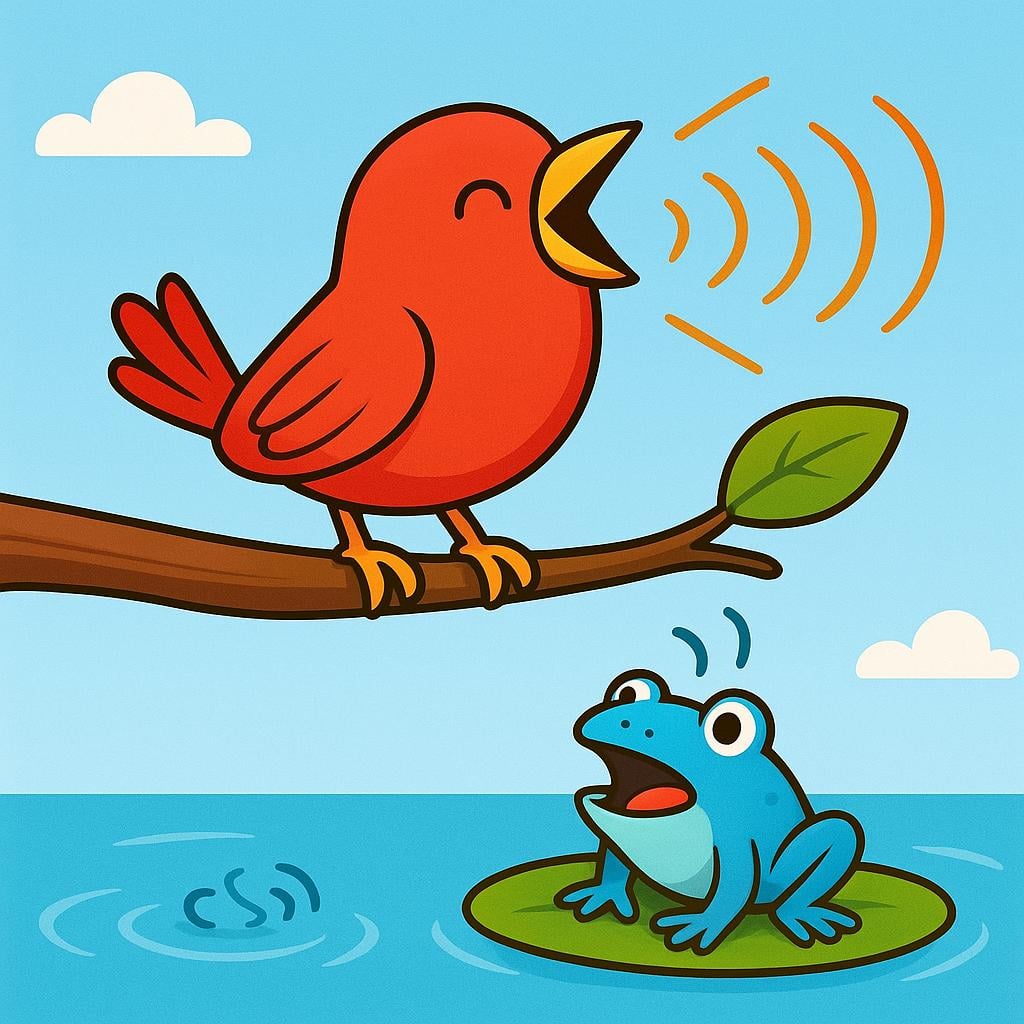
📝 In Action
Me encantan los sonidos de la naturaleza, como el viento y el agua.
A1I love the sounds of nature, like the wind and the water.
El bebé empezó a hacer sonidos extraños después de comer.
A2The baby started making strange sounds after eating.
Los sonidos fuertes del concierto me dolieron los oídos.
B1The loud sounds of the concert hurt my ears.
✏️ Quick Practice
Quick Quiz: sonidos
Question 1 of 2
If you want to talk about a single audible phenomenon, which word should you use?
📚 More Resources
👥 Word Family▼
📚 Etymology▼
Comes from the Latin word *sonitus*, meaning 'a sound, noise, or ringing.' It is related to the verb *sonare* (to sound).
First recorded: Medieval Spanish
Cognates (Related words)
💡 Master Spanish
Take your Spanish to the next level. Read 200+ illustrated and narrated Spanish stories tailored to your level with the Inklingo app!
Frequently Asked Questions
Is 'sonidos' masculine or feminine?
'Sonidos' is masculine. The singular form is 'el sonido,' and the plural is 'los sonidos'.
How do I say 'to make a sound' in Spanish?
You can use the phrase 'hacer sonidos' (to make sounds) or use the verb 'sonar' (to sound or to ring). For example, 'El despertador sonó' (The alarm clock rang).