volcán
“volcán” means “volcano” in Spanish. It has 2 different meanings depending on context:


volcanoAlso: vent
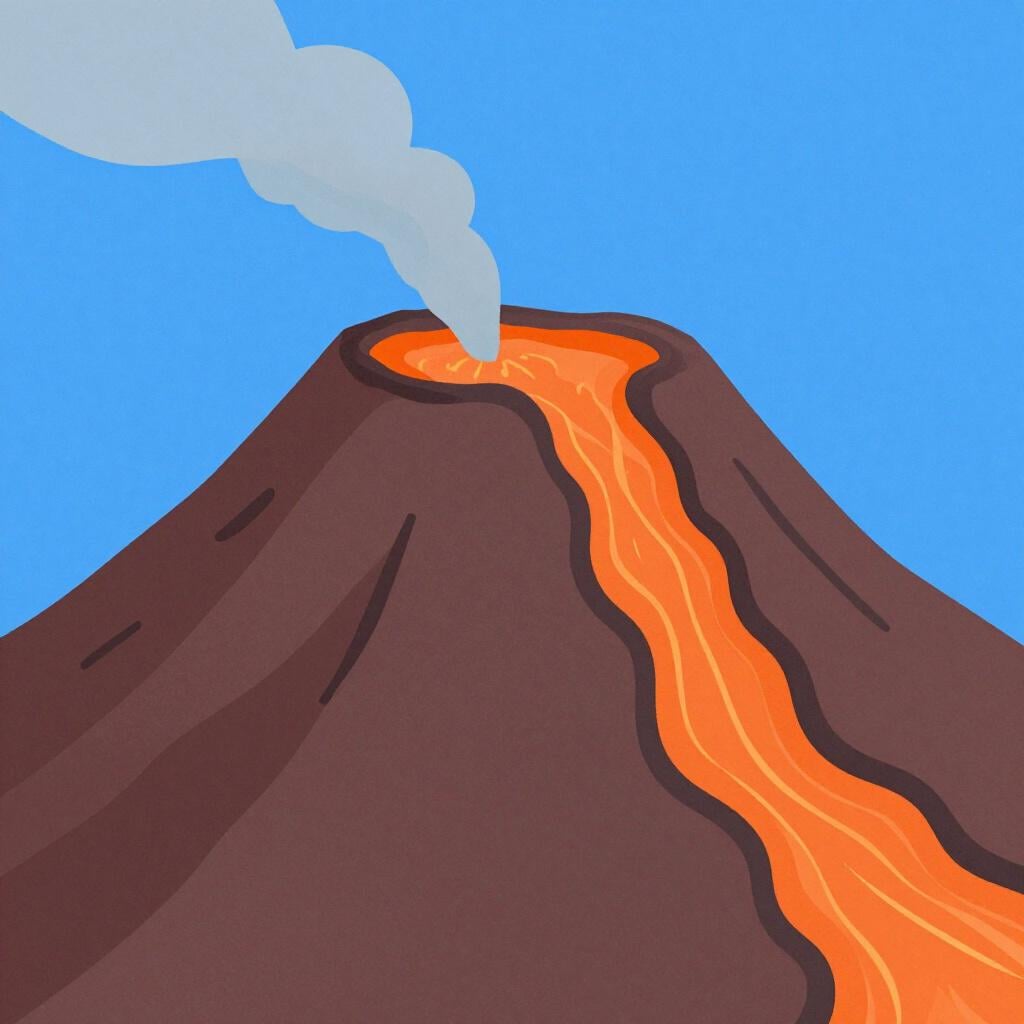
📝 In Action
El volcán está activo y echa humo.
A1The volcano is active and is emitting smoke.
Mucha gente vive cerca de la base del volcán.
A2Many people live near the base of the volcano.
La lava del volcán destruyó el bosque.
B1The lava from the volcano destroyed the forest.
Word Connections
volcano / firebrand

📝 In Action
Ten cuidado con lo que dices, ella es un volcán.
B2Be careful what you say, she is a volcano (very temperamental).
Su pasión es un volcán que nunca se apaga.
C1His passion is a volcano that never goes out.
Word Connections
Vocabulary Collections
Translate to Spanish
Words that translate to "volcán" in Spanish:
✏️ Quick Practice
Quick Quiz: volcán
Question 1 of 2
Which of these is the correct plural form of 'volcán'?
📚 More Resources
👥 Word Family
🎵 Rhymes
📚 Etymology
From the name of 'Vulcan', the Roman god of fire. In mythology, volcanoes were thought to be the chimneys of Vulcan's forge.
First recorded: 13th century
Cognates (Related words)
💡 Master Spanish
Take your Spanish to the next level. Read 200+ illustrated and narrated Spanish stories tailored to your level with the Inklingo app!
Frequently Asked Questions
Is 'volcán' masculine or feminine?
It is masculine: 'el volcán'.
Why does 'volcán' have an accent mark?
Because the emphasis is on the last syllable, and it ends in 'n'. In Spanish, words ending in 'n', 's', or a vowel need an accent if the last syllable is the strongest.