
Inklingo

Hacer la pata ancha

/ah-SEHR la PA-ta AN-cha/

To stand one's ground, be firm, or impose one's will, often in a stubborn or assertive way.

Level:B2Register:InformalCommon:★★★☆☆

💡 Understanding the Idiom

Literal Translation:
"To make the paw/leg wide."
What It Really Means:
To stand one's ground, be firm, or impose one's will, often in a stubborn or assertive way.
English Equivalents:
To put one's foot downTo stand one's groundTo throw one's weight around

🎨 Literal vs. Figurative

💭 Literal
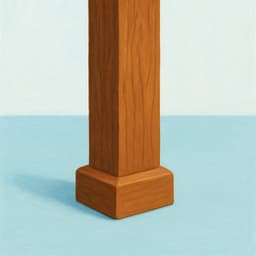
A literal depiction of 'hacer la pata ancha', showing a person with one comically wide leg taking up a whole sidewalk.

Literally, this means 'to make the leg wide'.

✨ Figurative
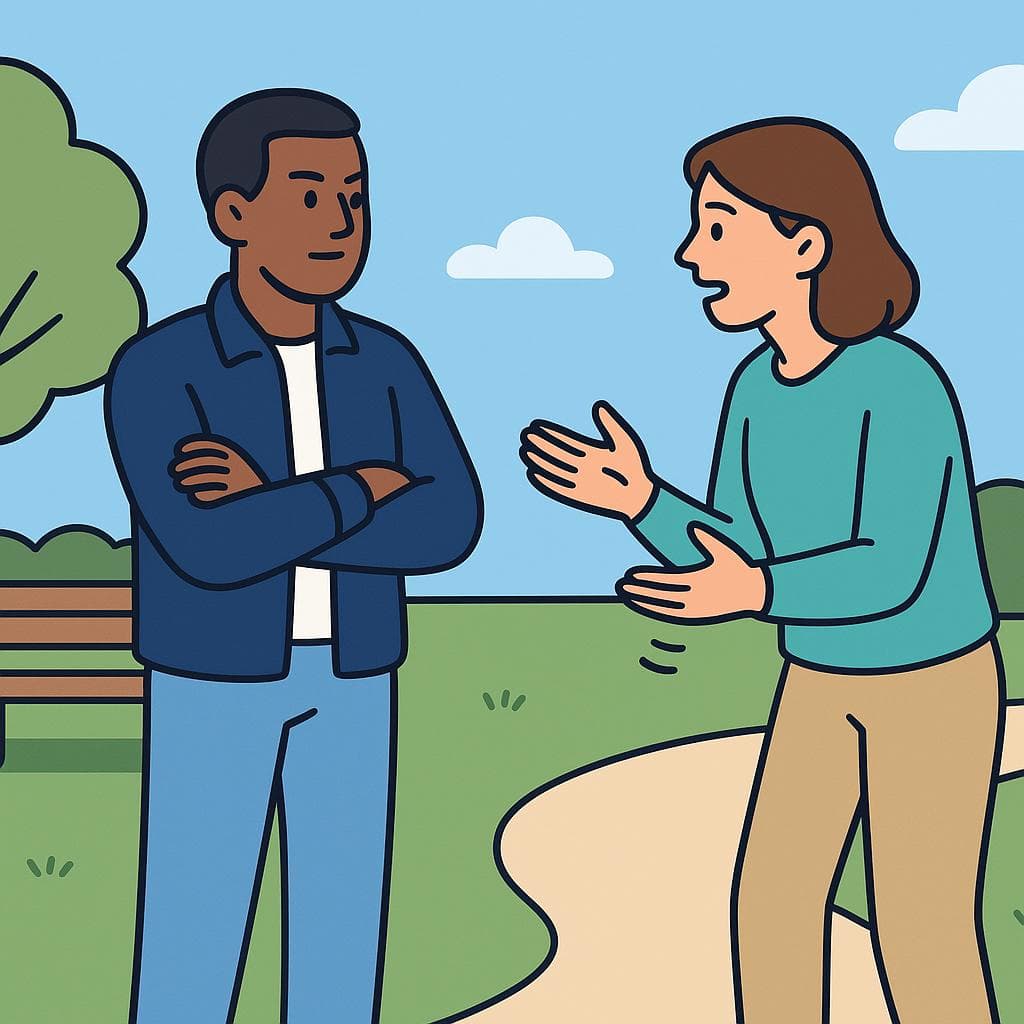
The figurative meaning of 'hacer la pata ancha', showing a person confidently refusing to be pushed around in a discussion.

In reality, it means to stand your ground and be firm.

Key Words in This Idiom:

📝 In Action

Querían que me fuera, pero hice la pata ancha y me quedé hasta que me atendieron.

B2

They wanted me to leave, but I stood my ground and stayed until they helped me.

No dejes que tu compañero de piso haga la pata ancha y ocupe todo el espacio en la nevera.

C1

Don't let your roommate throw his weight around and take up all the space in the fridge.

📜 Origin Story

This expression paints a picture of an animal, like a horse or a bull. When these animals want to be impossible to move, they plant their legs ('patas') far apart, creating a wide, stable base. Think of a stubborn mule refusing to budge! We use this image to talk about a person who is being equally firm and unmovable in their position.

⭐ Usage Tips

Assertive or Stubborn?

Use this idiom to describe someone being firm. The tone can be positive (defending your rights) or negative (being pushy and unreasonable). The context tells you which it is.

It's About Willpower, Not Body Size

Remember, 'making the leg wide' is a metaphor for a strong stance or a firm will. It has nothing to do with a person's physical size.

❌ Common Pitfalls

Using 'Pierna' Instead of 'Pata'

Mistake: "'Hacer la pierna ancha.'"

Correction: The idiom always uses 'pata'. While 'pierna' is the correct word for a human leg, 'pata' (animal leg/paw) gives the phrase its rustic, informal, and stubborn flavor. Stick with 'pata'.

🌎 Where It's Used

🇦🇷

Argentina

Very common and widely used in everyday conversation.

🌍

Uruguay & Chile

Also common and well-understood.

🇪🇸

Spain

It is understood, but less common. Spanish speakers might prefer expressions like 'plantarse' or 'ponerse firme'.

🔗 Related Idioms

↔️ Similar Meanings

plantarse

To plant oneself, to stand firm.

no dar el brazo a torcer

To not let one's arm be twisted; to not give in.

Opposite Meanings

dar el brazo a torcer

To give in, to yield.

ceder terreno

To give ground, to retreat.

✏️ Quick Practice

💡 Quick Quiz: Hacer la pata ancha

Question 1 of 1

If your friend 'hace la pata ancha' during an argument, what is she doing?

🏷️ Tags

Body PartsPersistenceSocial Interactions

Frequently Asked Questions

Is 'hacer la pata ancha' a rude expression?

It can be, depending on the situation. If you use it to describe someone defending their rights, it's neutral or even positive. If you use it to describe someone being a bully or unreasonably stubborn, it's negative. Tone and context are everything!