
Gender Agreement
Mistake: “Saying 'se hizo el sota' when talking about a woman.”
Correction: Remember to change the article and noun to match the gender of the person you're talking about. For a woman, you would say 'se hizo la sota'.
ah-SEHR-seh el SOH-tah
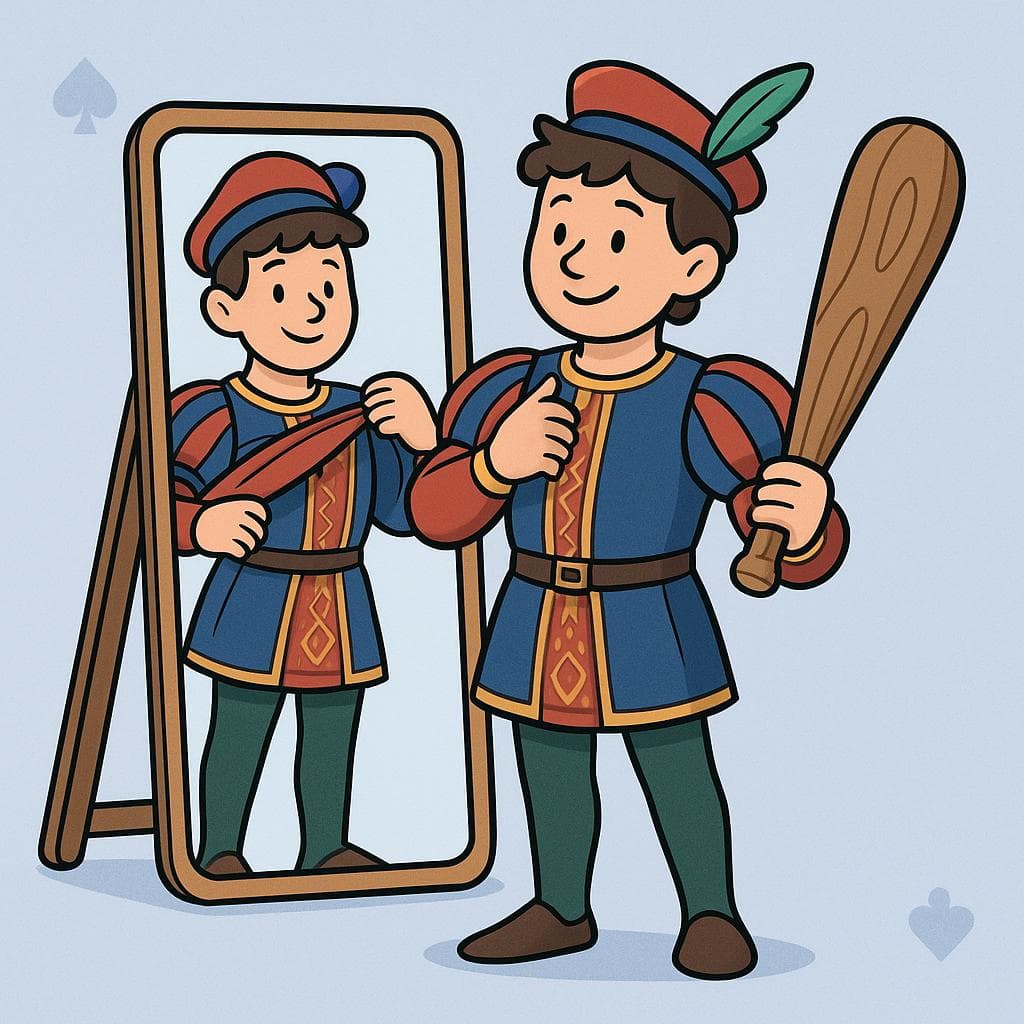
Literally, this means 'to make oneself the jack'.
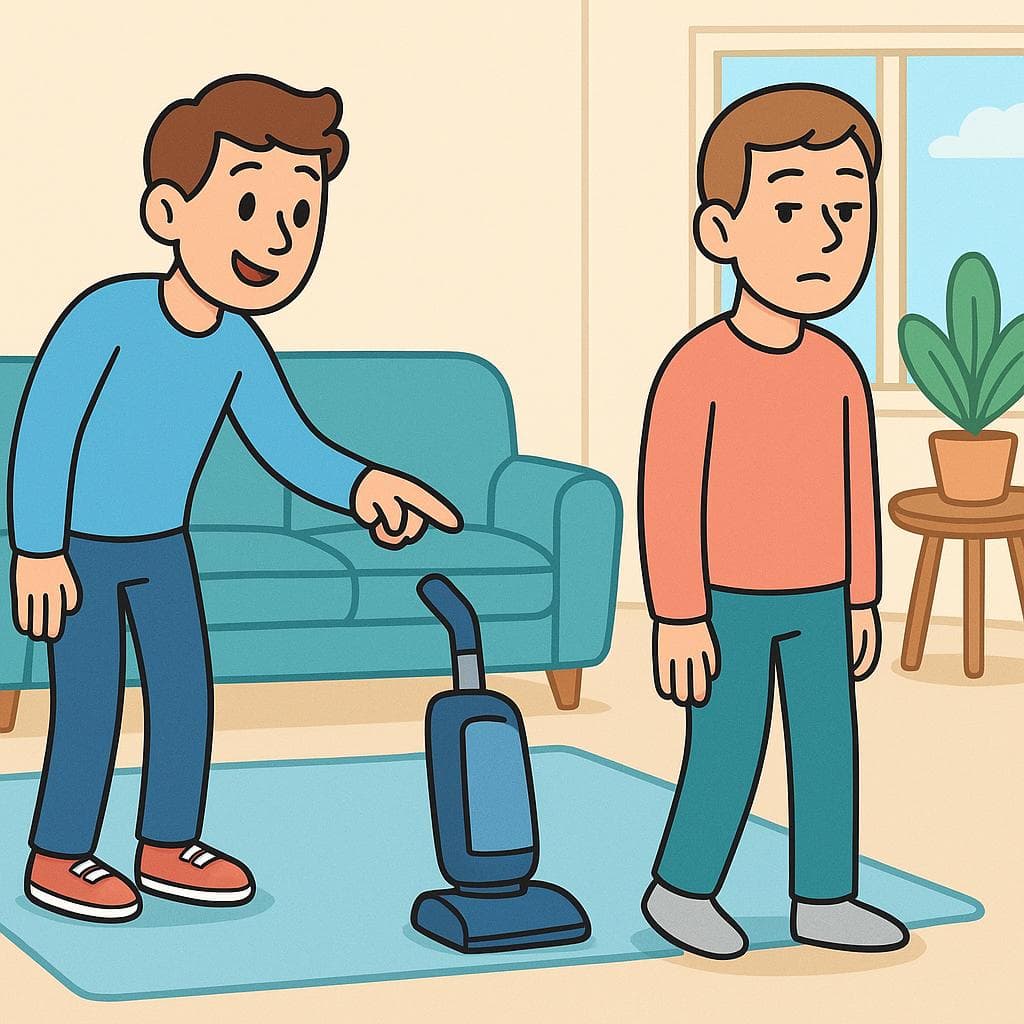
In reality, it means to play dumb to avoid doing something.
Le pedí que limpiara su cuarto, pero se hizo el sota y se puso a mirar el móvil.
B2I asked him to clean his room, but he played dumb and started looking at his phone.
No te hagas la sota, sabes perfectamente que hoy te tocaba a ti sacar la basura.
B2Don't play dumb, you know perfectly well it was your turn to take out the trash today.
Cuando el profesor preguntó por los deberes, varios alumnos se hicieron los sota mirando por la ventana.
C1When the teacher asked for the homework, several students played dumb by looking out the window.
This expression comes from the Spanish deck of cards ('baraja española'). The 'sota' (jack) is a figure that is always depicted with the same static, impassive, and unchanging expression, regardless of the suit. Someone who 'hace el sota' is adopting this same blank, unresponsive pose, pretending to be unaware or uninvolved in what is happening around them, just like the figure on the card.
Use this idiom when you want to accuse someone of deliberately pretending not to understand. It has a slightly confrontational tone, as you're pointing out their act. For example: '¡Deja de hacerte el sota!'
This is the classic scenario for 'hacerse el sota'. It's perfect for describing someone who feigns ignorance to get out of work, chores, or answering a difficult question.
Mistake: “Saying 'se hizo el sota' when talking about a woman.”
Correction: Remember to change the article and noun to match the gender of the person you're talking about. For a woman, you would say 'se hizo la sota'.
Extremely common and instantly recognizable throughout the country.
Less common. In most countries, it's more typical to hear 'hacerse el tonto' or 'hacerse el loco' to convey the same idea.
Question 1 of 1
If you say someone 'se está haciendo el sota', what do you mean?
Want to sound more natural when using this idiom? Practice your Spanish pronunciation with our collection of tongue twisters.
Browse Spanish Tongue Twisters →Idioms make sense in context. Read 200+ illustrated and narrated Spanish stories to see idioms used naturally by characters — and build the ear native speakers have.
It can be, yes. It's an accusation that someone is being deliberately unhelpful and pretending. You would typically use it with people you know well or when you are frustrated with someone's lack of cooperation. It's not something you'd say in a formal or polite setting.
Absolutely! You can use it to admit that you played dumb. For example, 'Cuando mi jefe preguntó por voluntarios, me hice el sota y miré mis papeles' (When my boss asked for volunteers, I played dumb and looked at my papers).