


Inklingo

La gota que rebalsó el vaso

/la GOH-tah keh reh-bahl-SOH el BAH-soh/

The final, small event in a series of negative ones that makes a situation unbearable.

Level:B1Register:NeutralCommon:★★★★★

💡 Understanding the Idiom

Literal Translation:
"The drop that overflowed the glass."
What It Really Means:
The final, small event in a series of negative ones that makes a situation unbearable.
English Equivalents:
The last strawThe straw that broke the camel's backThe final nail in the coffin

🎨 Literal vs. Figurative

💭 Literal
A literal depiction of the idiom, showing a glass of water filled to the very brim with a single drop falling into it, causing water to spill over the sides.

Literally, this means 'the drop that overflowed the glass'.

✨ Figurative
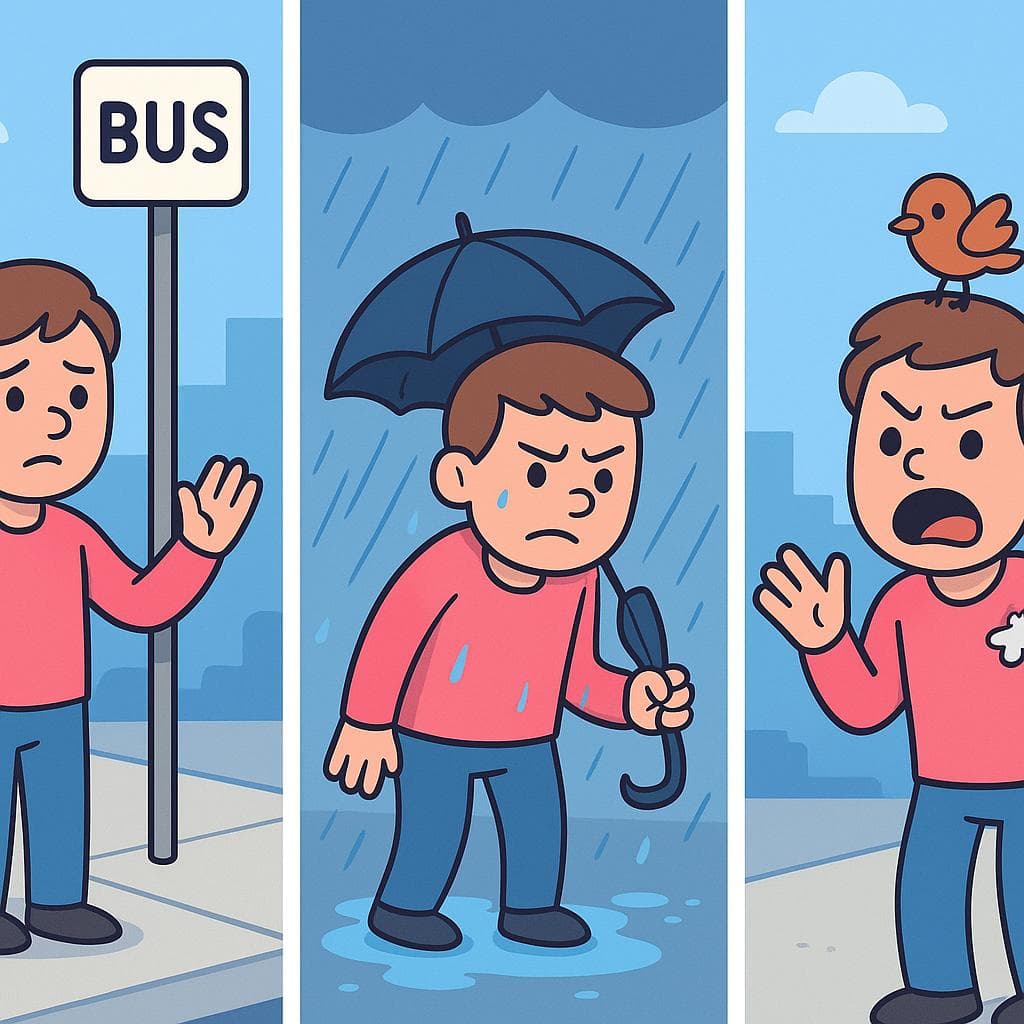
The figurative meaning of the idiom, showing a person looking extremely frustrated after a series of minor annoyances, culminating in one final small problem.

It means 'the last straw'—the final small problem that makes you lose your patience.

Key Words in This Idiom:

📝 In Action

He aguantado sus críticas y su mala actitud, pero que le gritara al camarero fue la gota que rebalsó el vaso.

B1

I put up with his criticism and his bad attitude, but him yelling at the waiter was the last straw.

El equipo jugó mal todo el partido, y el gol en el último minuto fue la gota que rebalsó el vaso para los aficionados.

B2

The team played poorly the whole game, and the goal in the last minute was the final straw for the fans.

📜 Origin Story

This idiom doesn't come from a single historical story, but from a powerful and universal physical metaphor. Imagine filling a glass with water, drop by drop. The glass can handle many drops, but eventually, there's one single, tiny drop that makes all the water spill over. That final drop isn't any bigger or more important than the others, but it's the one that triggers the disaster. The phrase perfectly captures how a series of small annoyances can build up until one last, minor incident causes a person to finally lose their patience.

⭐ Usage Tips

Use for a Breaking Point

This phrase is perfect for describing the final event that triggers a big reaction (like anger, quitting a job, or ending a relationship) after a series of negative things have already happened. It emphasizes that it was the accumulation of problems, not just the last one.

Common Variations

You will very often hear this idiom with different verbs that mean similar things. The most common version is 'La gota que colmó el vaso' (the drop that filled the glass to the brim). You might also hear 'La gota que derramó el vaso' (the drop that spilled the glass). They all mean the exact same thing.

❌ Common Pitfalls

It's Not for a Single Big Problem

Mistake: "Using this phrase to describe one large, isolated disaster."

Correction: This idiom is specifically for the *last* in a *series* of problems. If your car is stolen, that's a big problem on its own. If your car gets a flat tire *after* you were late for work and lost your keys, the flat tire is 'la gota que rebalsó el vaso'.

🌎 Where It's Used

🇪🇸

Spain

Extremely common. The variation 'La gota que colmó el vaso' is arguably the most frequent version here.

🌎

Latin America

Universally understood and widely used across all countries. It's a core idiom in the Spanish language.

🔗 Related Idioms

↔️ Similar Meanings

ser el colmo

To be the limit or the absolute worst; the last straw.

para remate

To top it all off (used to introduce the final negative event).

Opposite Meanings

una luz al final del túnel

A sign of hope after a long period of difficulty.

✏️ Quick Practice

💡 Quick Quiz: La gota que rebalsó el vaso

Question 1 of 1

If someone says an event was 'la gota que rebalsó el vaso', what do they mean?

🏷️ Tags

DifficultyAngerProblemsCommonly Used

Frequently Asked Questions

Is 'La gota que colmó el vaso' more common?

Yes, 'La gota que colmó el vaso' is generally considered the most classic and frequent version of this idiom. However, 'rebalsó' and 'derramó' are also completely correct, very common, and understood by all Spanish speakers to mean the exact same thing.