Parar la olla
/pah-RAR lah OY-yah/
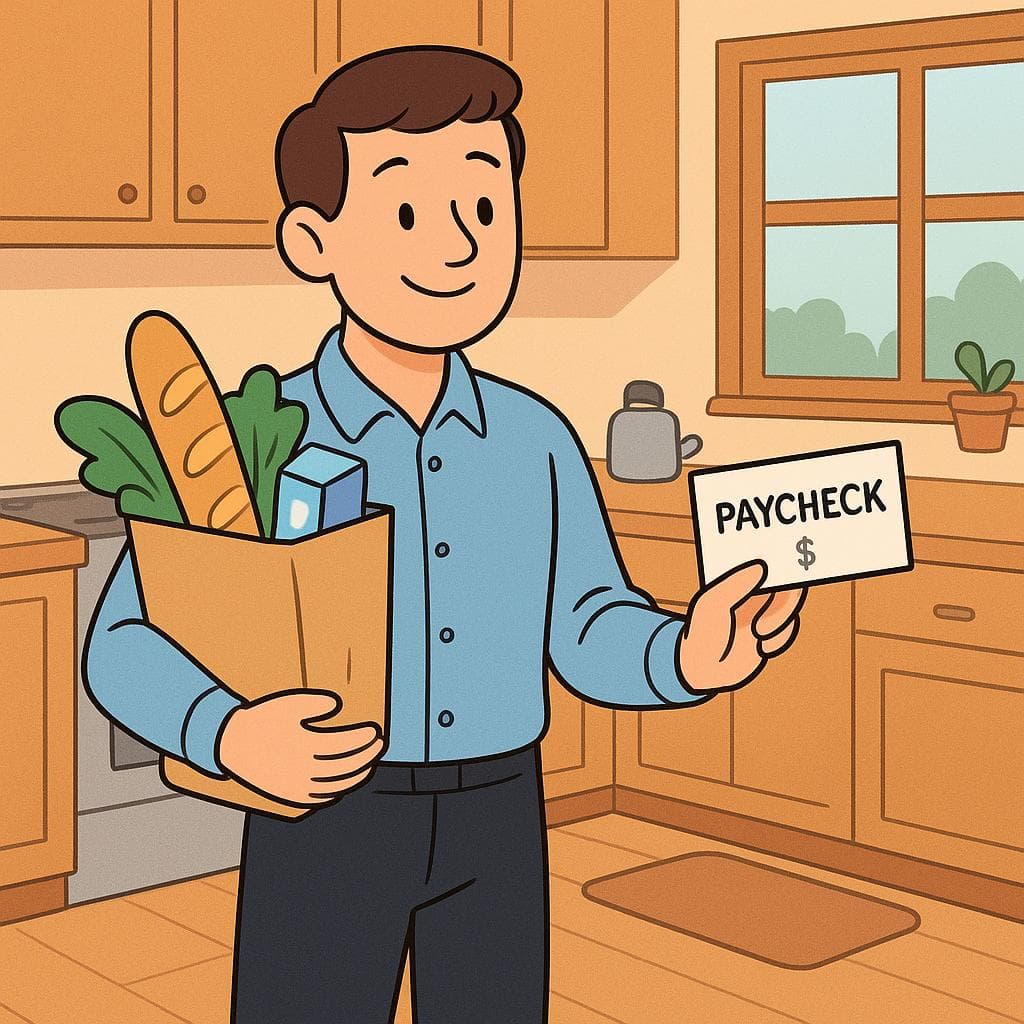
To earn enough money to live; to provide for oneself or one's family; to make ends meet.
💡 Understanding the Idiom
🎨 Literal vs. Figurative

Literally, this means 'to stop the pot' from moving.

In reality, it means earning enough money to provide for your household.
Key Words in This Idiom:

📝 In Action
Con este sueldo, apenas me da para parar la olla.
B2With this salary, I can barely make ends meet.
Mi abuelo trabajaba en dos sitios distintos para parar la olla y mantener a su familia.
B2My grandfather worked two different jobs to put food on the table and support his family.
Encontrar un trabajo que te permita parar la olla es lo más importante ahora mismo.
B2Finding a job that lets you provide for yourself is the most important thing right now.
📜 Origin Story
The 'olla' (cooking pot) has long been a symbol of the home's kitchen and daily sustenance. In this expression, the verb 'parar' doesn't mean 'to stop' in a negative sense, but rather 'to set up' or 'to make stand'. Think of it as setting up the pot on the stove each day to cook a meal. The phrase captures the daily effort required to provide the resources (the job, the money, the food) that make the family meal possible. It’s about the fundamental work needed to keep the household running.
⭐ Usage Tips
Focus on Survival, Not Wealth
Use 'parar la olla' when talking about the basic, essential act of earning a living. It emphasizes getting by and covering necessities like food and rent, not getting rich or living in luxury.
Connects Work and Home
This idiom beautifully connects the world of work with the result at home. It's perfect for explaining why someone works hard – not just for a salary, but to provide for their family's basic needs.
❌ Common Pitfalls
Misinterpreting 'Parar'
Mistake: "Thinking 'parar' (to stop) means something negative, like stopping the cooking or preventing a meal from being made."
Correction: In this phrase, 'parar la olla' has a positive, constructive meaning. It’s about the effort that *enables* the cooking to happen. A better way to think of it is 'to provide for the pot'.
🌎 Where It's Used
Spain
Extremely common and universally understood.
Latin America
Widely used and understood in many countries, especially in the Southern Cone (Argentina, Uruguay, Chile). While recognized in most places, some countries might have a more common local equivalent.
🔗 Related Idioms
✏️ Quick Practice
💡 Quick Quiz: Parar la olla
Question 1 of 1
If someone says, 'Tengo que trabajar mucho para parar la olla', what do they mean?
🏷️ Tags
Frequently Asked Questions
Is 'parar la olla' a complaint?
Not necessarily. It can be a neutral statement of fact ('Mi trabajo me da justo para parar la olla' - My job gives me just enough to get by). However, it is often used to express the difficulty or struggle of making ends meet, especially when combined with words like 'apenas' (barely).
Can I use this in a formal business meeting?
It's best to avoid it in very formal settings. While it's not slang, it has a colloquial, everyday feel. In a formal report or presentation, you would use more standard phrases like 'cubrir los gastos básicos' (to cover basic expenses).