How to Say "brains" in Spanish
The most common Spanish word for “brains” is “cerebro” — use 'cerebro' when referring to the metaphorical 'brains' or the intelligent mind behind a plan, project, or organization.

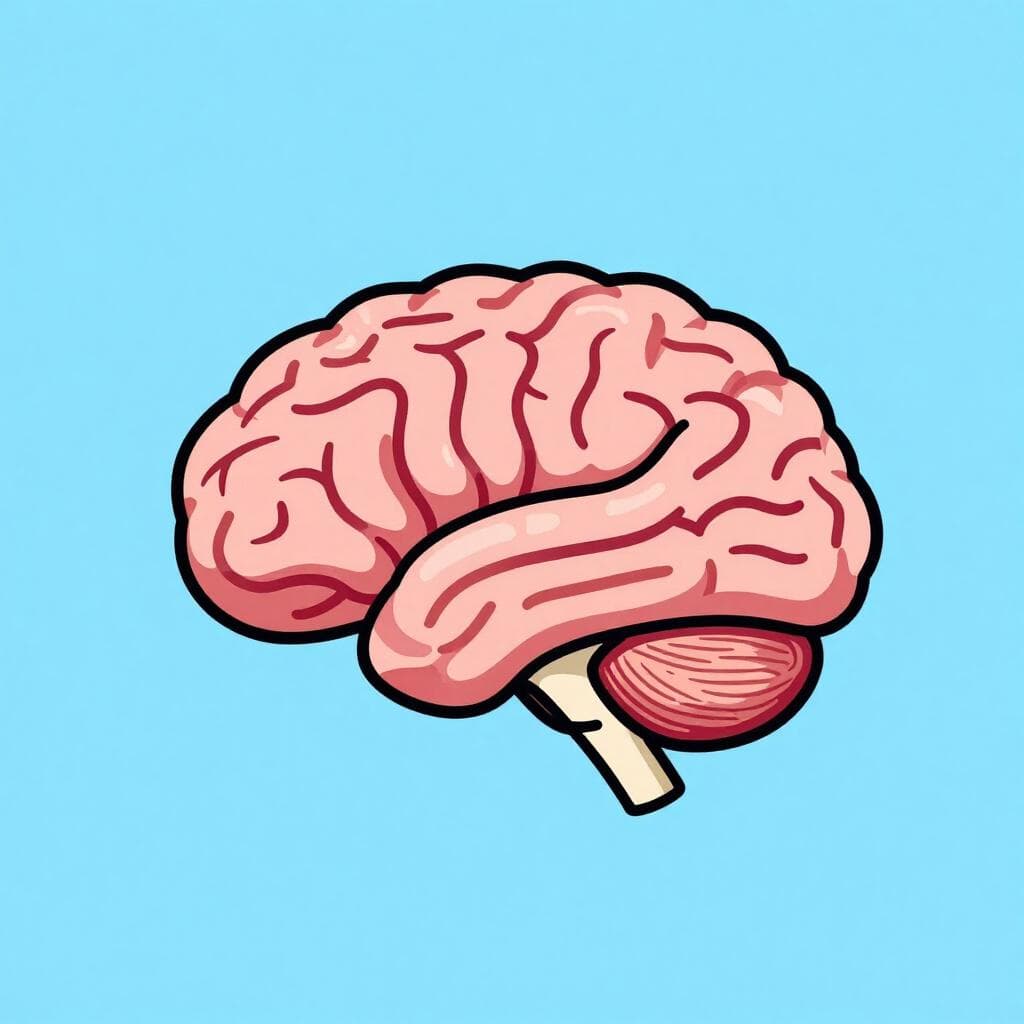

cerebro
seh-REH-brohseˈɾe.βɾo

Examples
Mi hermana es el cerebro del negocio familiar.
My sister is the brains of the family business.
Necesitamos un buen cerebro para resolver este problema.
We need a good brain (a smart person) to solve this problem.
Stays Masculine for People
When 'cerebro' means 'mastermind,' it refers to a person. Even if that person is female, the word 'cerebro' itself always stays masculine. For example: 'Ella es el cerebro del equipo' (She is the mastermind of the team).
Confusing 'Cerebro' and 'Mente'
Mistake: “Using 'cerebro' when you mean 'mind' in the sense of thoughts, feelings, or consciousness.”
Correction: Use 'mente' for 'mind' (e.g., 'Tengo muchas cosas en la mente' - I have a lot on my mind). Use 'cerebro' for the physical organ or for the 'mastermind' of an operation.
cráneo
Examples
Tienes que usar el cráneo para resolver este problema.
You have to use your head (or brains) to solve this problem.
seso
SEH-sohˈseso

Examples
Hazlo con seso y no te precipites.
Do it with judgment and don't rush.
El doctor analizó el seso del animal.
The doctor analyzed the animal's brain.
En ese restaurante sirven sesos a la plancha.
In that restaurant, they serve grilled brains.
Se dio un golpe fuerte en el seso.
He took a hard hit to the brain.
Singular vs. Plural
Use the singular 'seso' when talking about the mass of the brain, but use the plural 'sesos' when referring to it as food or the general contents of the head.
Abstract Use
When 'seso' means 'judgment,' it is often used in the singular, unless you are using the specific idiom 'devanarse los sesos'.
Seso vs. Cerebro
Mistake: “Using 'seso' to describe the brain as an anatomical system.”
Correction: Use 'cerebro' for the biological system and 'seso' for the physical substance or meat.
Thinking of 'brains' as people
Mistake: “Saying 'Él es el seso del grupo.'”
Correction: In Spanish, to call someone the 'brains' of an operation, use 'cerebro': 'Él es el cerebro del grupo.'
mentes
MEN-tehsˈmen.tes

Examples
Las mentes brillantes cambiaron el mundo.
Brilliant minds changed the world.
Necesitamos abrir nuestras mentes a nuevas ideas.
We need to open our minds to new ideas.
Hay dos mentes trabajando en este proyecto.
There are two minds working on this project.
Feminine Noun Rule
Even though many Spanish words ending in '-e' can be masculine (like 'el coche'), 'mente' is always feminine. So, remember to use 'las mentes' or 'unas mentes'.
Gender Confusion
Mistake: “Los mentes están abiertas.”
Correction: Las mentes están abiertas. (Always use the feminine article 'las'.)
Cerebro vs. Cráneo for Intelligence
Related Translations
Learn Spanish with Inklingo
Interactive stories, personalized learning, and more.