How to Say "cars" in Spanish
The most common Spanish word for “cars” is “coches” — use 'coches' for automobiles, especially common in Spain. It's a general term for personal vehicles.
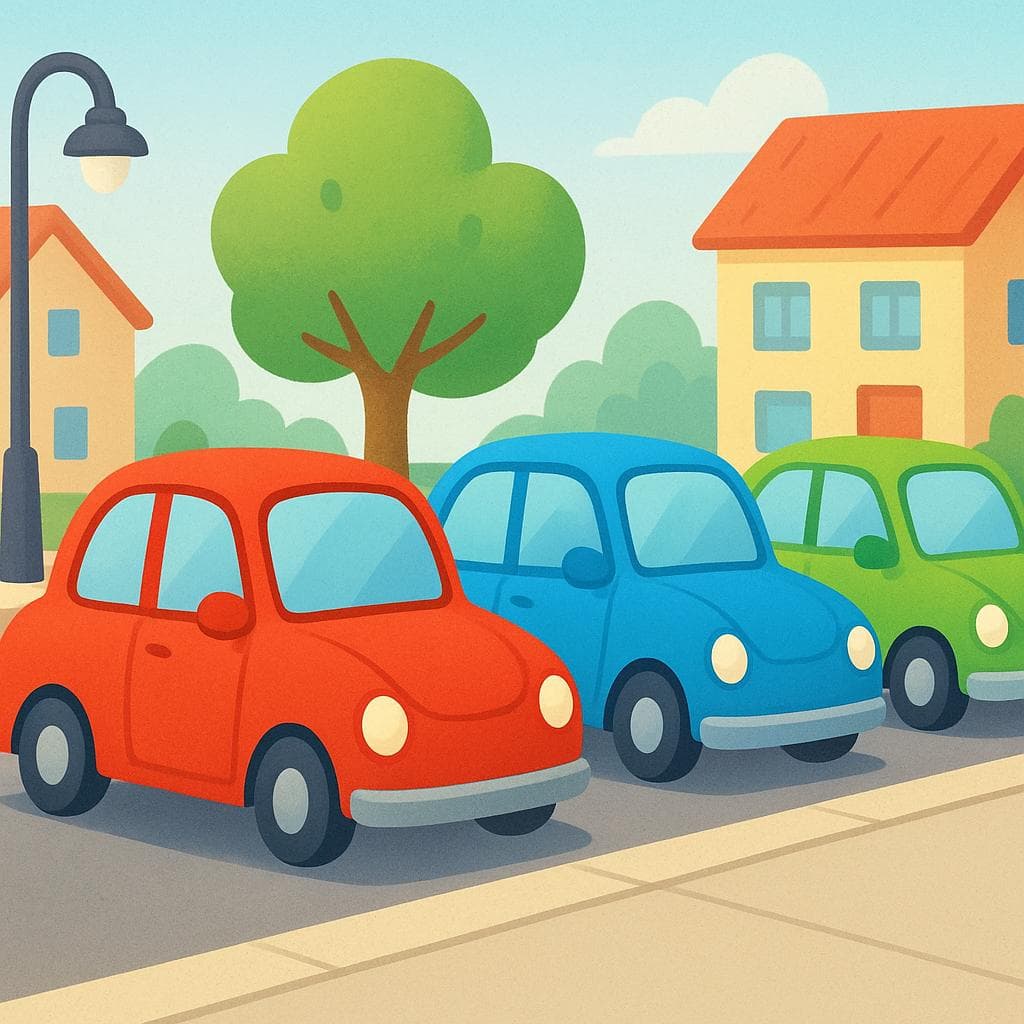
Use 'coches' for automobiles, especially common in Spain. It's a general term for personal vehicles.
Learn more →
Choose 'carros' for automobiles and personal vehicles, widely used in Latin America. It's a very common, everyday term.
Learn more →
Use 'autos' as a general term for motor vehicles, often interchangeable with 'coches' and 'carros', and common in many regions.
Learn more →Opt for 'vehículos' when referring to vehicles in a broader, more formal, or technical sense, encompassing all types of transport, not just cars.
Learn more →KOH-chehsˈko.tʃes

Examples
Hay muchos coches aparcados en la calle.
There are many cars parked on the street.
Mis padres compraron dos coches nuevos este año.
My parents bought two new cars this year.
Los coches eléctricos son más silenciosos.
Electric cars are quieter.
Plural Noun Rule
Since 'coche' ends in a vowel, you just add '-s' to make it plural: 'coche' (one car) becomes 'coches' (many cars).
Gender Confusion
Mistake: “La coches”
Correction: The singular form 'coche' is masculine, so the plural must use the masculine article: 'Los coches'.
KAH-rrohsˈkaros
Examples
Hay muchos carros en la calle hoy.
There are many cars on the street today.
Me gustan los carros rojos.
I like red cars.
Making it Plural
Since 'carro' ends in a vowel, you simply add an 's' to make it 'carros' when talking about more than one.
Matching Words
Because 'carros' is a masculine plural word, words describing it must also end in 'os', like 'carros rápidos' (fast cars).
Regional Confusion
Mistake: “Using 'carros' in Spain to refer to automobiles.”
Correction: In Spain, use 'coches' for cars. If you say 'carros' there, people might think of horse-drawn carts or shopping carts.
AH-tohsˈau̯.tos

Examples
Necesitamos dos autos para llevar a todas las personas a la fiesta.
We need two cars to take everyone to the party.
Los autos modernos tienen mucha tecnología.
Modern automobiles have a lot of technology.
Gender Reminder
Even though 'auto' ends in -o, it is the shortened form of 'automóvil', which is masculine. Always use masculine articles: 'los autos'.
Regional Confusion
Mistake: “Using 'autos' when speaking to someone from Spain who might primarily use 'coches'.”
Correction: While 'autos' is understood everywhere, try using 'coche' if you are communicating mainly with people from Spain, or stick to 'auto' for Latin America.
vehículos
Examples
Todos los vehículos tienen que pagar el peaje para pasar.
All vehicles have to pay the toll to pass.
Regional Differences: Coches vs. Carros
The most common confusion is between 'coches' and 'carros'. Remember that 'coches' is prevalent in Spain, while 'carros' is the standard in most of Latin America. Using the wrong one might sound slightly unnatural depending on where you are.
Related Translations
Learn Spanish with Inklingo
Interactive stories, personalized learning, and more.