How to Say "ceiling" in Spanish
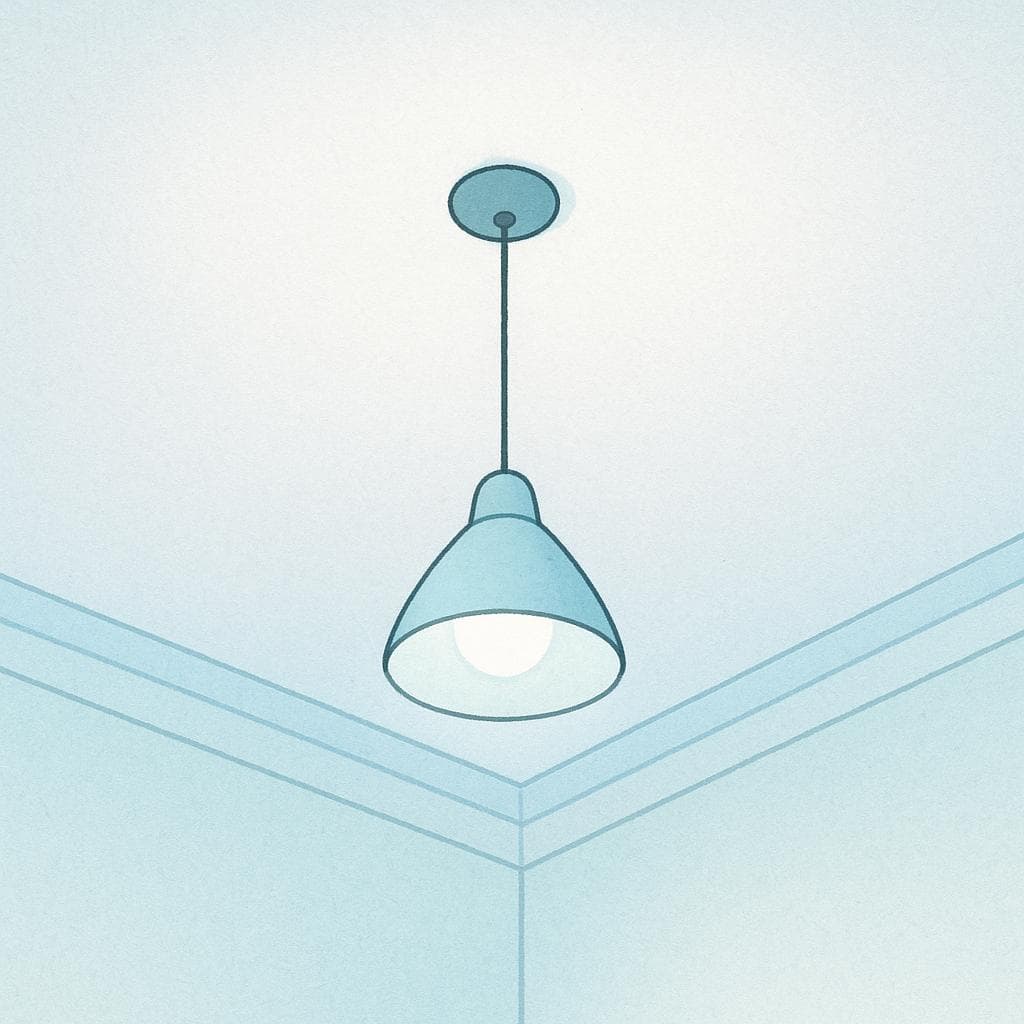
The most common Spanish word for “ceiling” is “techo” — use 'techo' for the interior upper surface of a room or building that forms the top of the space you are in.


techo
TAY-choˈte.tʃo
Examples
La pintura del techo se está pelando.
The paint on the ceiling is peeling.
La lámpara cuelga del techo de la sala.
The lamp hangs from the ceiling of the living room.
El techo es demasiado bajo; casi puedo tocarlo.
The ceiling is too low; I can almost touch it.
cielo
SYEH-lohˈsjelo

Examples
El cielo de la catedral es impresionante.
The ceiling of the cathedral is impressive.
El cielo está azul hoy.
The sky is blue today.
Vimos muchas estrellas en el cielo nocturno.
We saw many stars in the night sky.
El avión volaba por encima de las nubes, en un cielo despejado.
The plane was flying above the clouds in a clear sky.
Always Masculine
'Cielo' is a masculine word, so you always use 'el cielo' (the sky) or 'un cielo' (a sky), never 'la' or 'una'.
Using 'cielo' for 'weather'
Mistake: “El cielo está malo hoy.”
Correction: Hace mal tiempo hoy. While the sky's appearance is part of the weather, Spanish generally uses the verb 'hacer' to talk about what the weather is 'doing'.
tope
toh-pehˈto.pe

Examples
Hay un tope en la cantidad de equipaje que puedes llevar.
There is a limit/cap on the amount of luggage you can bring.
El gobierno puso un tope a los precios.
The government put a cap on prices.
Hay un tope salarial en esta empresa.
There is a salary cap in this company.
Llegamos al tope de nuestra capacidad.
We reached the limit of our capacity.
Abstract use
When used for money or numbers, it functions just like 'limit' in English.
Using 'techo' for everything
Mistake: “El techo de gastos”
Correction: El tope de gastos (While 'techo' works for 'ceiling', 'tope' is much more common for specific financial caps).
Techo vs. Cielo
Learn Spanish with Inklingo
Interactive stories, personalized learning, and more.