How to Say "creator" in Spanish
The most common Spanish word for “creator” is “creador” — use 'creador' when referring to a person who makes or invents something, especially in a general sense or when the act of creation itself is emphasized.




creador
kre-ah-DORkɾeaˈðoɾ

Examples
Él es el creador de esta famosa aplicación.
He is the creator of this famous app.
Los creadores de contenido trabajan muchas horas.
Content creators work many hours.
Muchas religiones honran a un ser supremo como el creador.
Many religions honor a supreme being as the creator.
Making it Feminine
To talk about a woman who creates, change the ending to 'creadora'. The plural for a mixed group is 'creadores'.
Creators vs. Creative
Mistake: “Using 'creador' to say someone is artistic.”
Correction: Use 'creativo' for the personality trait. Use 'creador' for the person who actually made the specific thing.
autor
ah-TOHRau̯ˈtoɾ

Examples
Gabriel García Márquez es el autor de 'Cien años de soledad'.
Gabriel García Márquez is the author of 'One Hundred Years of Solitude'.
Busqué el nombre del autor de la canción, pero no lo encontré.
I looked for the name of the song's creator, but I couldn't find it.
La autora firmará copias de su nueva novela mañana.
The author (female) will sign copies of her new novel tomorrow.
Masculine Noun, Dual Gender Use
Even though 'autor' ends in -or (masculine), it can refer to a person of any gender. However, the specific feminine form 'autora' is widely accepted and commonly used.
Using 'autor' for everything
Mistake: “The word 'autor' is usually reserved for creators of intellectual or artistic works. Do not use it for builders or manufacturers.”
Correction: Use 'fabricante' (manufacturer) or 'constructor' (builder) for physical objects, and 'autor' for books, laws, or ideas.
inventor
een-ben-TOREimbenˈtoɾ

Examples
Thomas Edison fue un inventor muy famoso.
Thomas Edison was a very famous inventor.
El joven inventor mostró su robot en la escuela.
The young inventor showed his robot at school.
Todo inventor necesita paciencia y mucha curiosidad.
Every inventor needs patience and a lot of curiosity.
The 'OR' Ending
In Spanish, adding '-or' to a root word often points to the person who does the action. It's just like how we add '-er' in English for words like 'worker' or 'teacher'.
The Sound of V
Even though this word is spelled with a 'v', in Spanish, it sounds exactly like a 'b'. Try saying 'een-ben-TORE' with a soft 'b' sound.
Using the English 'V'
Mistake: “Pronouncing 'inventor' with a vibrating English 'v' sound.”
Correction: In Spanish, 'v' and 'b' are identical sounds. Pronounce it as if it were spelled with a 'b'.
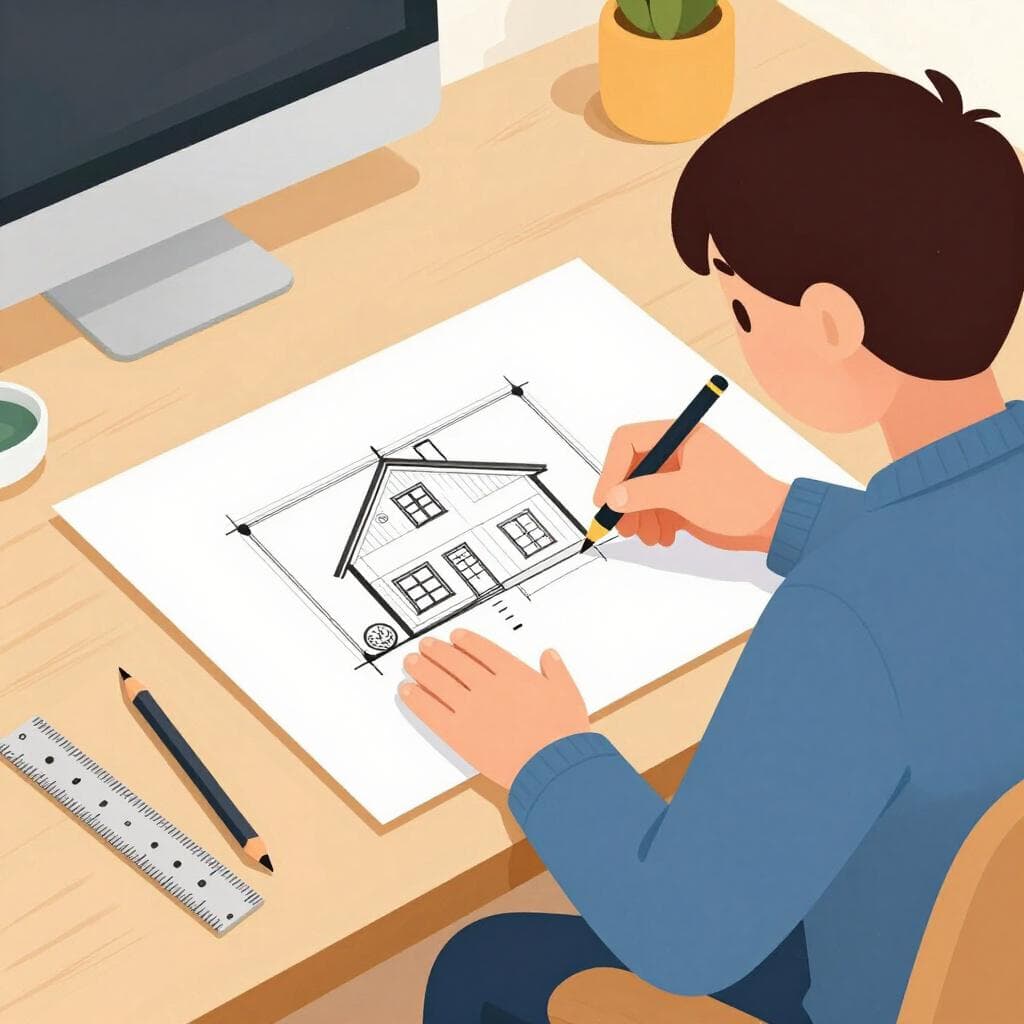
arquitecto
ar-kee-TEK-tohaɾkiˈtekto

Examples
Tú eres el arquitecto de tu propio destino.
You are the architect of your own destiny.
Fue el arquitecto de la nueva política económica del país.
He was the architect of the country's new economic policy.
Metaphorical usage
Just like in English, you can use professional titles metaphorically. It works exactly the same way to describe planning a non-physical thing.
diseñador
dee-se-nya-dordiseɲaˈðor

Examples
Mi hermano es un gran diseñador gráfico.
My brother is a great graphic designer.
El diseñador de modas presentó su nueva colección ayer.
The fashion designer presented his new collection yesterday.
Estamos buscando un diseñador de interiores para remodelar la sala.
We are looking for an interior designer to remodel the living room.
Masculine Word Ending
This word ends in -or, which usually tells us the person is male. If you want to talk about a female designer, the word changes to 'diseñadora'.
Specifying the Field
To specify what kind of designer someone is, use the word 'de' (of) followed by the field, like 'diseñador de videojuegos' (video game designer).
Avoiding Spanglish
Mistake: “Él es un buen designador.”
Correction: Él es un buen diseñador.
Confusing General Creation with Specific Roles
Related Translations
Learn Spanish with Inklingo
Interactive stories, personalized learning, and more.