How to Say "customs" in Spanish
The most common Spanish word for “customs” is “aduana” — use 'aduana' when referring to the official government agency or office at a border where goods and travelers are inspected.
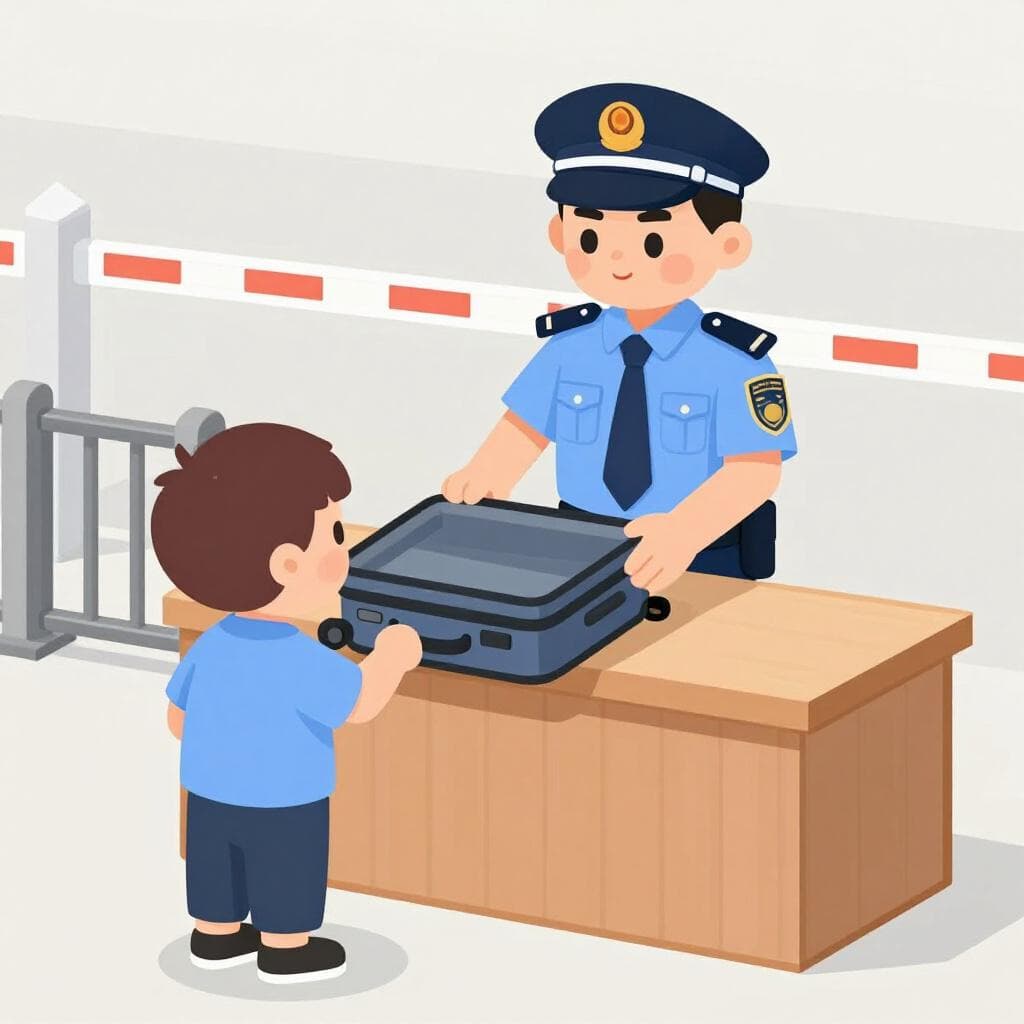

aduana
ah-DWAN-ahaˈðwana

Examples
Pasamos por la aduana al llegar al país.
We went through customs when we arrived in the country.
Tuvimos que esperar una hora en la aduana del aeropuerto.
We had to wait an hour at airport customs.
¿Tienes algo que declarar en la aduana?
Do you have anything to declare at customs?
El agente de la aduana revisó cuidadosamente mi pasaporte.
The customs agent carefully checked my passport.
Using 'la' with 'aduana'
Even though it starts with 'a', the stress is on the second syllable (a-DUA-na). This means it uses 'la' and 'una' just like most other words ending in 'a'.
Singular vs. Plural
You can use 'la aduana' (singular) to mean the specific office you are in, or 'las aduanas' (plural) when talking about the system in general.
Wrong gender
Mistake: “el aduana”
Correction: la aduana
costumbres
kohs-TOOM-brehskosˈtumbɾes

Examples
Las costumbres navideñas varían mucho de un lugar a otro.
Christmas customs vary a lot from one place to another.
Me gusta aprender sobre las costumbres de otros países.
I like learning about the customs of other countries.
Es difícil cambiar las viejas costumbres.
It is difficult to change old habits.
Las costumbres locales son muy interesantes.
The local traditions are very interesting.
Always Feminine
Even though it ends in 'es', this word is feminine. Always use 'las' or 'unas' with it (las costumbres).
Plural vs. Singular
While 'costumbre' means one habit, the plural 'costumbres' is often used to talk about the general lifestyle or culture of a place.
Gender confusion
Mistake: “los costumbres”
Correction: las costumbres. Remember that words ending in -umbre in Spanish are almost always feminine.
Aduana vs. Costumbres
Related Translations
Learn Spanish with Inklingo
Interactive stories, personalized learning, and more.